

Think you’ll see a dramatic meteor storm on April 22? Not likely.
Here’s what matters: the Lyrids peak sharply at 19:15 UTC on April 22, 2026, but the best viewing runs after local midnight through dawn when the sky is darkest.
Under dark skies expect about 10 to 15 meteors per hour at peak, with rare outbursts that can briefly reach around 100 per hour.
This guide gives clear peak times, the radiant location near Vega, and simple tips so you can plan your best viewing window.
Peak Viewing Guide for the April Meteor Shower (Lyrids)
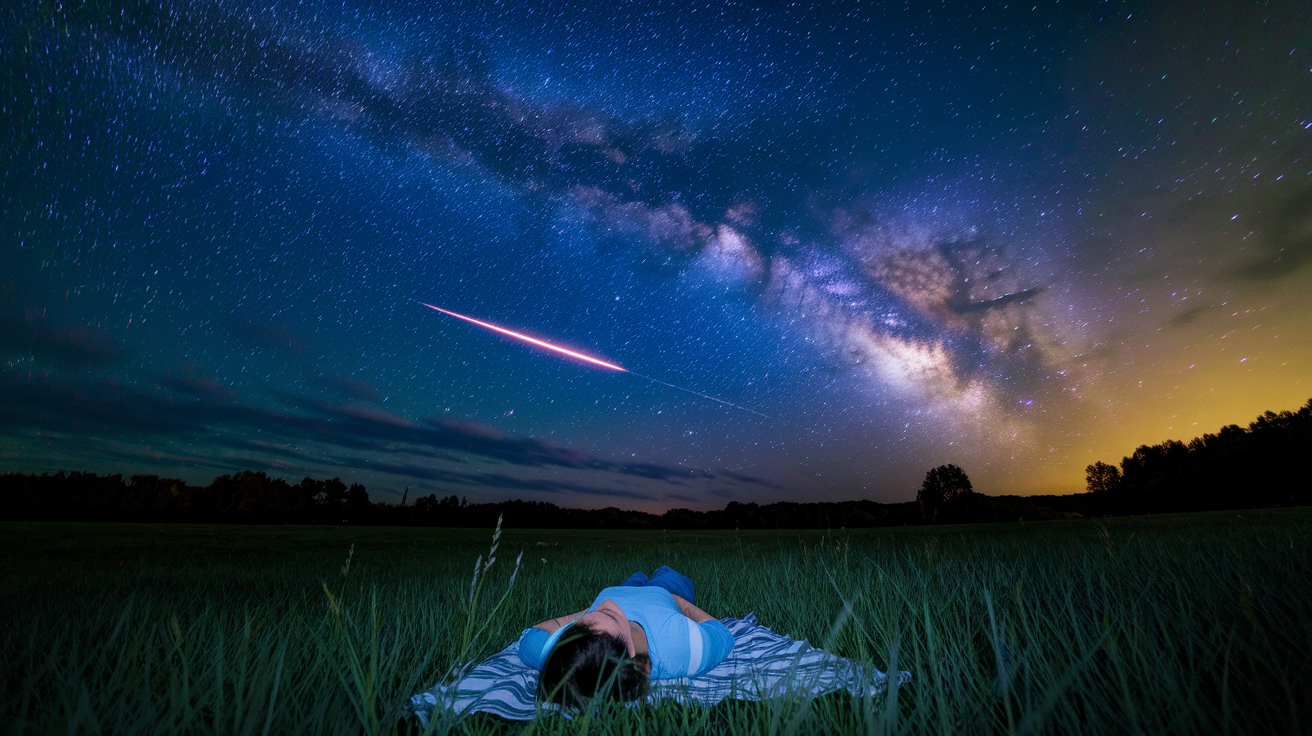
The Lyrid meteor shower peaks sharply on April 22, 2026. The predicted maximum hits at 19:15 UTC, which means you’ve got a narrow window to work with. Your best bet runs from just after midnight through dawn on the morning of April 22, when the radiant climbs high and the sky goes completely dark. The waxing crescent moon sets before midnight, so the pre-dawn hours are moonless. Perfect for catching meteors.
Under dark-sky conditions, the Lyrids typically give you 10 to 15 meteors per hour at peak. It’s not a storm. But it’s steady. And occasionally—you can’t predict when—the Lyrids surge to around 100 meteors per hour for a brief stretch. Those outbursts are rare. But they do happen.
Northern Hemisphere observers get the strongest show because the radiant sits near Vega, a bright star in Lyra, and rises around 21:00 to 22:00 local time. By midnight it’s high. Southern Hemisphere watchers see far fewer meteors since the radiant stays low or dips below the horizon.
Find a spot with minimal light pollution. Your eyes need 20 to 30 minutes to adapt fully to darkness, and meteors can appear anywhere in the sky, not just near the radiant. Lie back, scan wide, and give yourself at least an hour to see a meaningful count.
- Peak time: 19:15 UTC on April 22, 2026. Best local viewing after midnight through dawn on April 22
- Radiant location: Near Vega in the constellation Lyra. Rises around 21:00 to 22:00 local time and high overhead by dawn
- Moon and weather: Waxing crescent sets before midnight. No moonlight interference during prime hours. Check local forecasts for cloud cover
- Expected rates: 10 to 15 meteors per hour typical. Occasional historical outbursts reach around 100 per hour
- Best observation hours: After local midnight until dawn. Highest meteor counts occur in the final hours before sunrise when the radiant is highest
Radiant Location and Sky Positioning for April Meteors
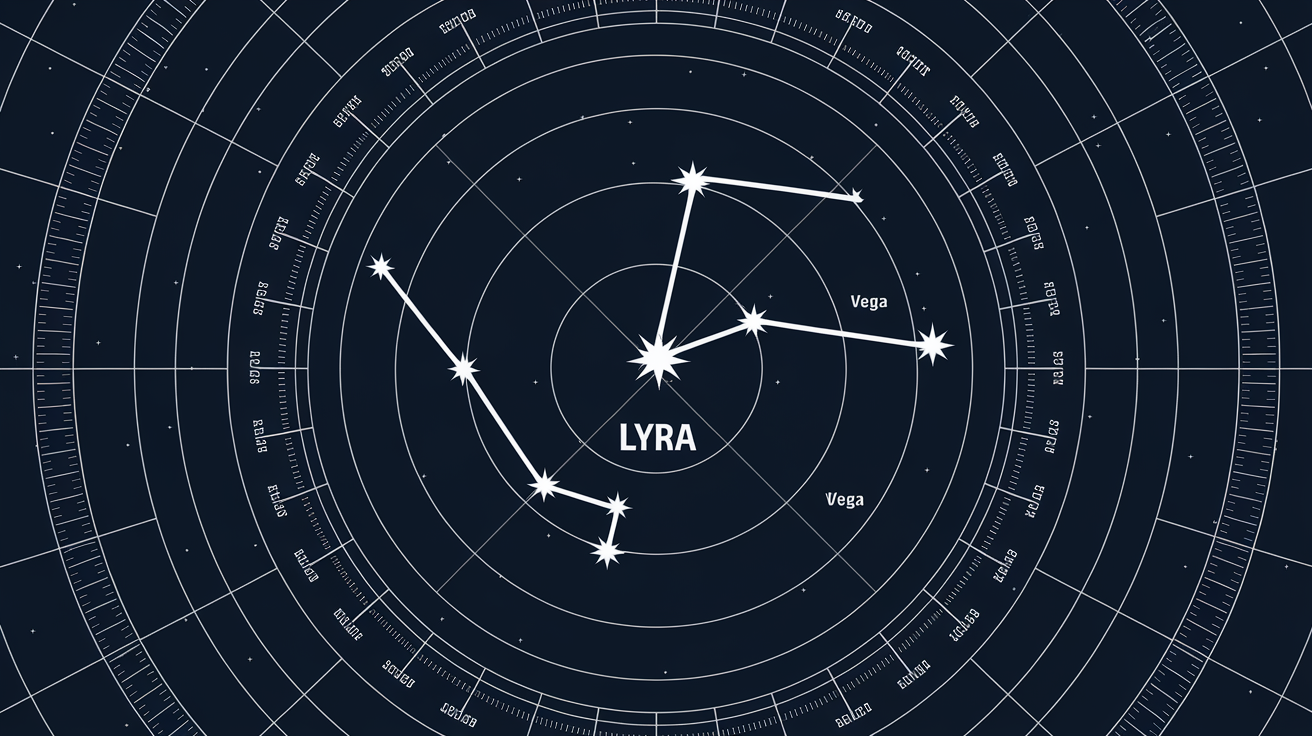
The radiant of the Lyrids sits just a few degrees from Vega, one of the brightest stars in the night sky and part of the Summer Triangle. Vega belongs to the small constellation Lyra. In April it rises in the northeast between 21:00 and 22:00 local time. By midnight, Vega is well above the horizon. By 04:00 to 05:00 it sits nearly overhead for mid-latitude Northern Hemisphere observers.
That climb matters because radiant altitude directly affects how many meteors you see.
When the radiant is low, meteors graze the atmosphere at shallow angles. Many never become visible or appear only briefly near the horizon. As the radiant rises, meteors strike the atmosphere more steeply, producing longer trails across a wider portion of the sky. That’s why the hour or two before dawn consistently delivers the strongest counts. The radiant is high, the sky is dark, and Earth is rotating into the debris stream head-on.
What to Expect: Meteor Speed, Fireballs, and April Lyrid Behavior
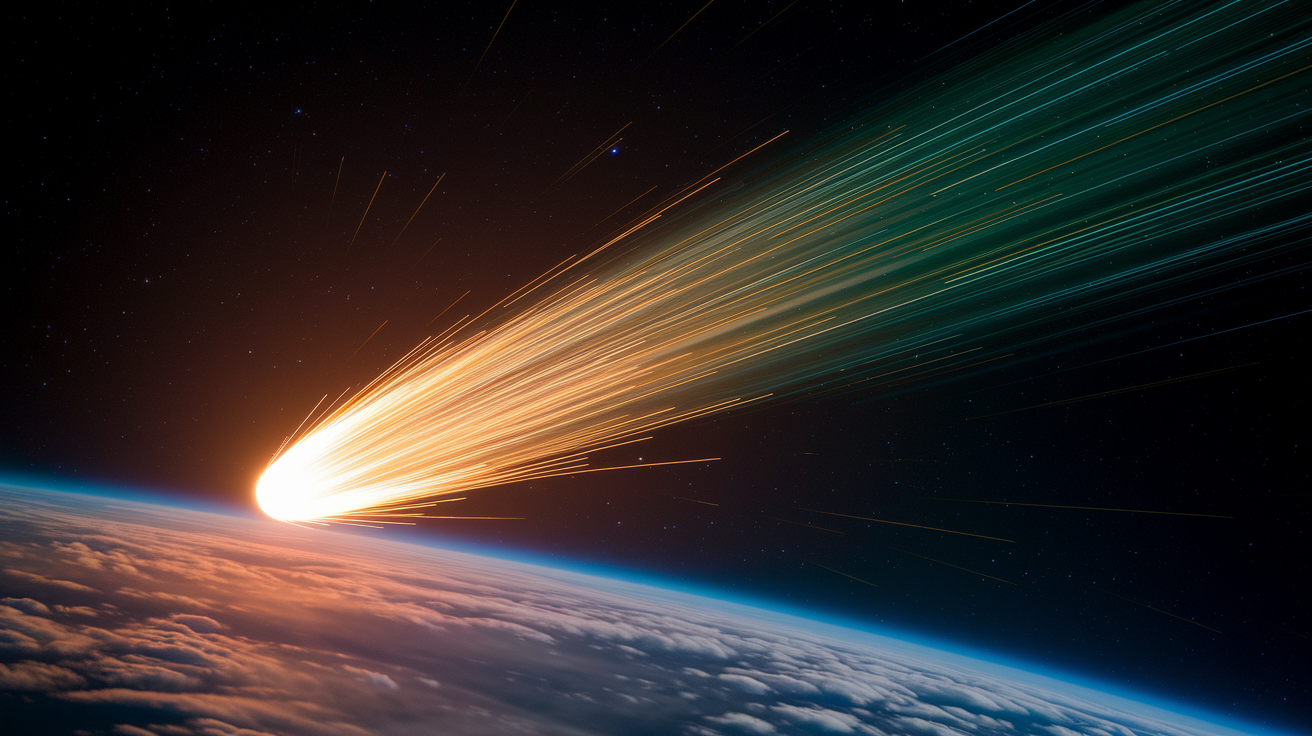
Lyrids enter the atmosphere at around 49 kilometers per second. They’re classified as medium-fast meteors. They often leave brief glowing trails and occasionally produce fireballs, exceptionally bright meteors that can rival or exceed the brightness of Venus. A fireball happens when a larger meteoroid, sometimes the size of a grape or walnut, slams into the upper atmosphere and burns intensely.
Some Lyrid fireballs leave persistent trains, glowing ionized gas streaks that hang in the sky for several seconds after the meteor itself has vanished. If you see one, note the time and direction and consider reporting it to a fireball network. These bright events are scientifically valuable.
The shower’s behavior varies year to year. Most years deliver the expected 10 to 15 meteors per hour, but the Lyrids have a history of short, sharp outbursts. Those surges are hard to predict and often last only an hour or two. Patience and a wide observing window improve your chances of catching something unusual.
Practical Viewing Tips for the April Meteor Shower
Head to a location with as little light pollution as possible. City skies wash out faint meteors, cutting your visible count by half or more. A dark rural site, a regional park, or even a quiet neighborhood road with a clear horizon can make a significant difference.
Once you arrive, turn off all white lights. Headlamps, phone screens, car interior lights. Let your eyes adjust for 20 to 30 minutes.
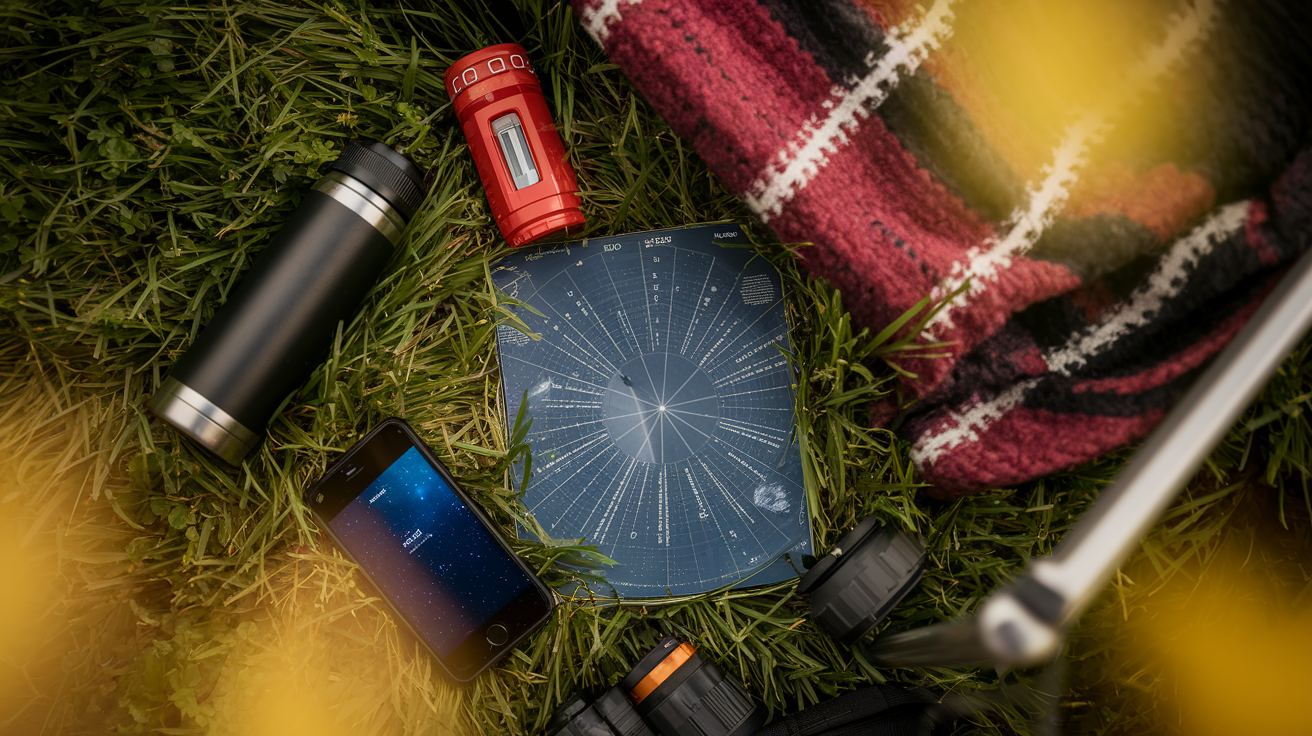
Lie flat on a reclining chair, blanket, or sleeping pad so you can scan a wide portion of the sky without neck strain. Meteors appear randomly across the sky, not just near the radiant, so looking straight up works well. Bring layers, even in April, because pre-dawn temperatures drop and sitting still magnifies the cold. A thermos, snacks, and company make the wait more comfortable. Give yourself at least an hour of continuous observing. Meteor rates fluctuate, and a quiet 15-minute stretch doesn’t mean the shower is over.
- Dress in warm layers, including a hat and gloves if temperatures are low
- Use a reclining chair, blanket, or pad to lie back comfortably and see more sky
- Allow 20 to 30 minutes for your eyes to fully adapt to darkness. Avoid looking at bright screens
- Scan the sky broadly. Meteors can appear anywhere, not just near Vega
- Keep a red-light headlamp nearby for safety and reading charts without ruining night vision
- Plan for at least one hour of observing. Meteor rates vary and patience improves your count
- Check weather forecasts and moon-rise/set times for your location before heading out
Photography Guide for Capturing April Meteors
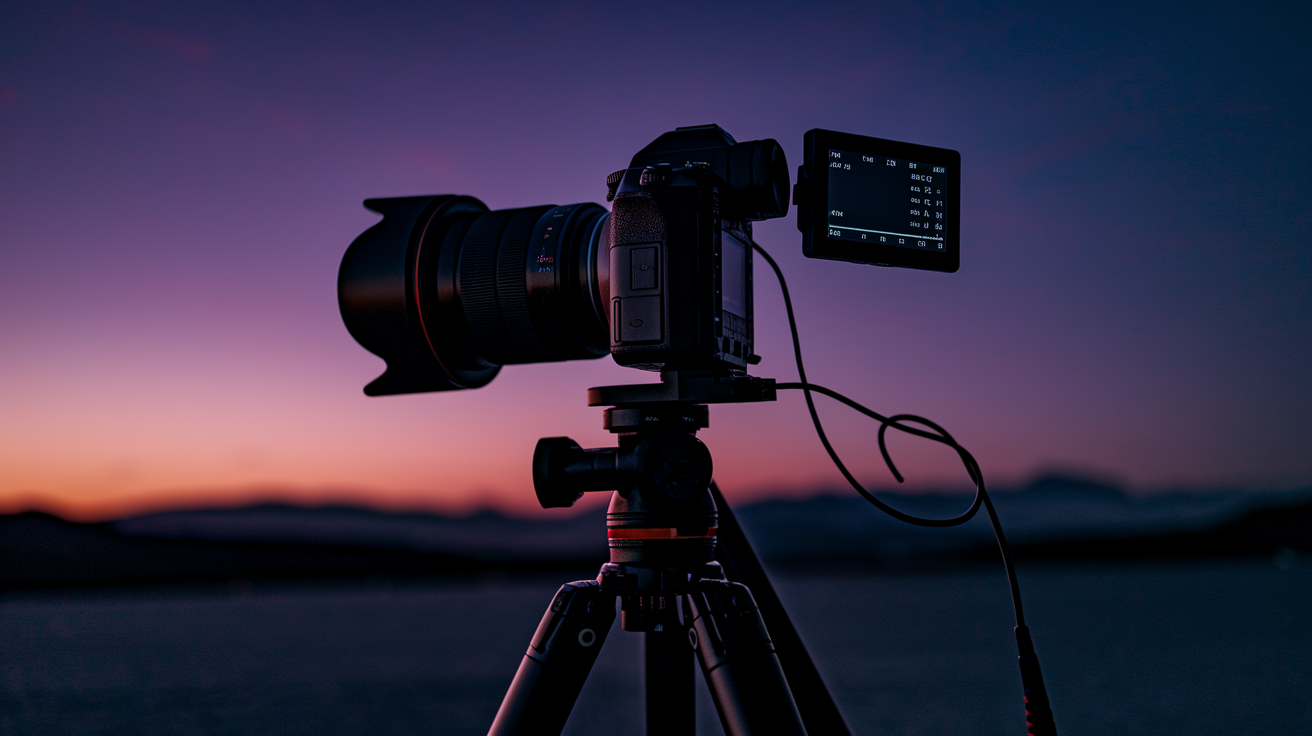
Photographing meteors requires a camera with manual settings, a sturdy tripod, and a wide-angle lens to cover as much sky as possible. Set your camera to manual mode, open the aperture as wide as your lens allows (f/2.8 or lower is ideal), and use a high ISO. Typically 1600 to 3200 depending on sky darkness and your camera’s noise performance. Start with 15 to 30 second exposures and review your test shots to check framing, focus, and sky brightness.
Point your camera toward a dark section of sky away from the radiant but still within 40 to 60 degrees of it. Meteors farther from the radiant show longer trails. Lock focus at infinity. Use live view and a bright star to confirm sharp focus. Use an intervalometer or your camera’s built-in interval timer to capture continuous frames throughout the night. Each frame is a chance to catch a meteor. Later you can stack successful captures into a composite image showing multiple trails.
Longer single exposures, 60 minutes or more using a tracking mount or very dark skies, can record several meteors in one frame. But they also increase the risk of overexposing the sky or star trails. Most astrophotographers prefer shorter exposures stacked in post-processing for cleaner results and greater flexibility.
| Setting | Recommended Range | Purpose |
|---|---|---|
| ISO | 1600 to 3200 | Increases sensor sensitivity to capture faint meteors and sky detail without overexposing |
| Exposure Length | 15 to 30 seconds | Balances meteor capture with minimal star trailing and manageable sky glow |
| Lens Focal Length | 14 to 35 mm (full frame) | Wide field of view increases the chance of capturing meteors anywhere in the frame |
Science Behind the April Meteor Shower: Comet Thatcher and Meteoroid Origins
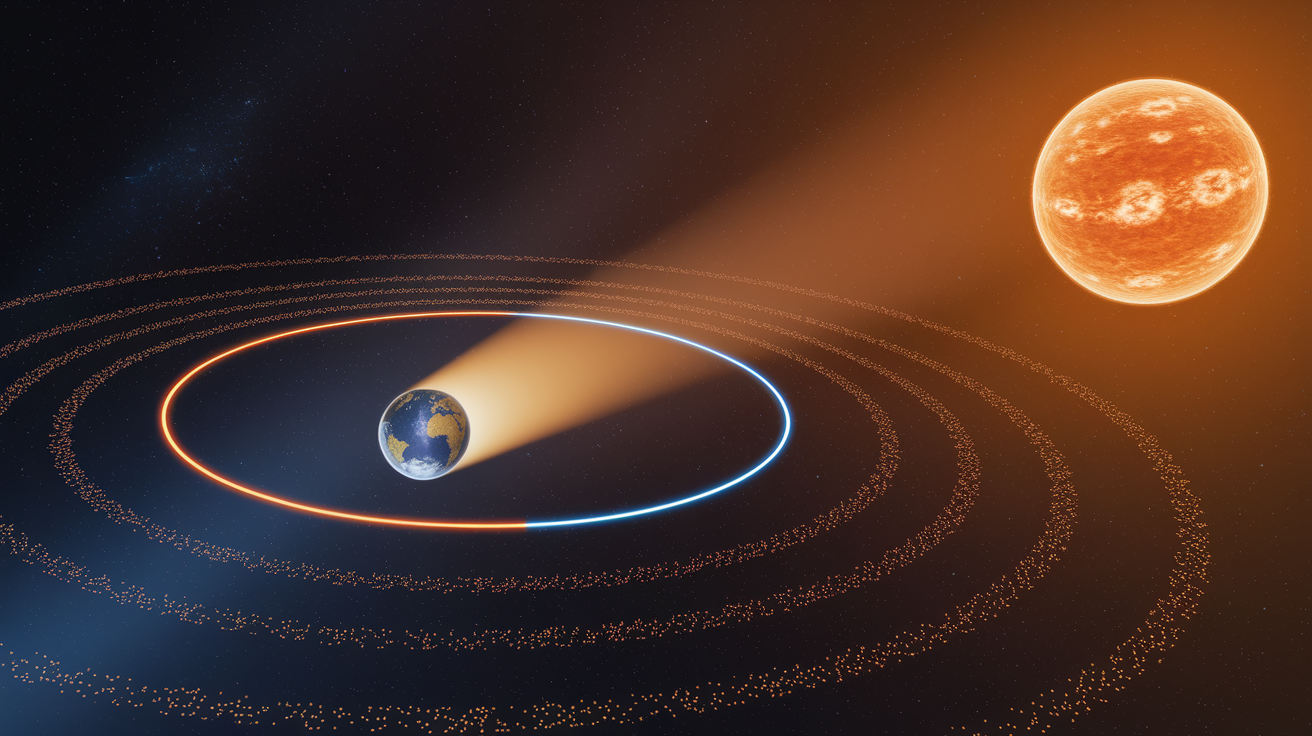
The Lyrids originate from Comet Thatcher, officially designated C/1861 G1. A. E. Thatcher discovered it on April 5, 1861, and observers tracked it as it passed perihelion, its closest approach to the Sun, later that year. Comet Thatcher follows a long, elliptical orbit with a period of roughly 415 years, swinging out to a maximum distance of about 110 astronomical units from the Sun. That’s far beyond the orbits of Neptune and Pluto. Its next return is expected in the late 2200s, around 2278 to 2283.
Every April, Earth crosses the orbital path of Comet Thatcher, plowing through a stream of dust and small rocky fragments left behind during the comet’s many passes through the inner solar system. These meteoroids, most no larger than grains of sand or pebbles, collide with Earth’s atmosphere at nearly 50 kilometers per second. Friction with air molecules heats them to incandescence, creating the bright streaks we call meteors.
The debris stream isn’t evenly distributed. Denser clumps can produce brief outbursts when Earth passes through them, while thinner sections yield the steady background rate of 10 to 15 meteors per hour. The stream’s structure shifts slowly over centuries due to gravitational tugs from Jupiter and other planets, making long-term rate predictions difficult.
History of the April Lyrids and Notable Past Outbursts
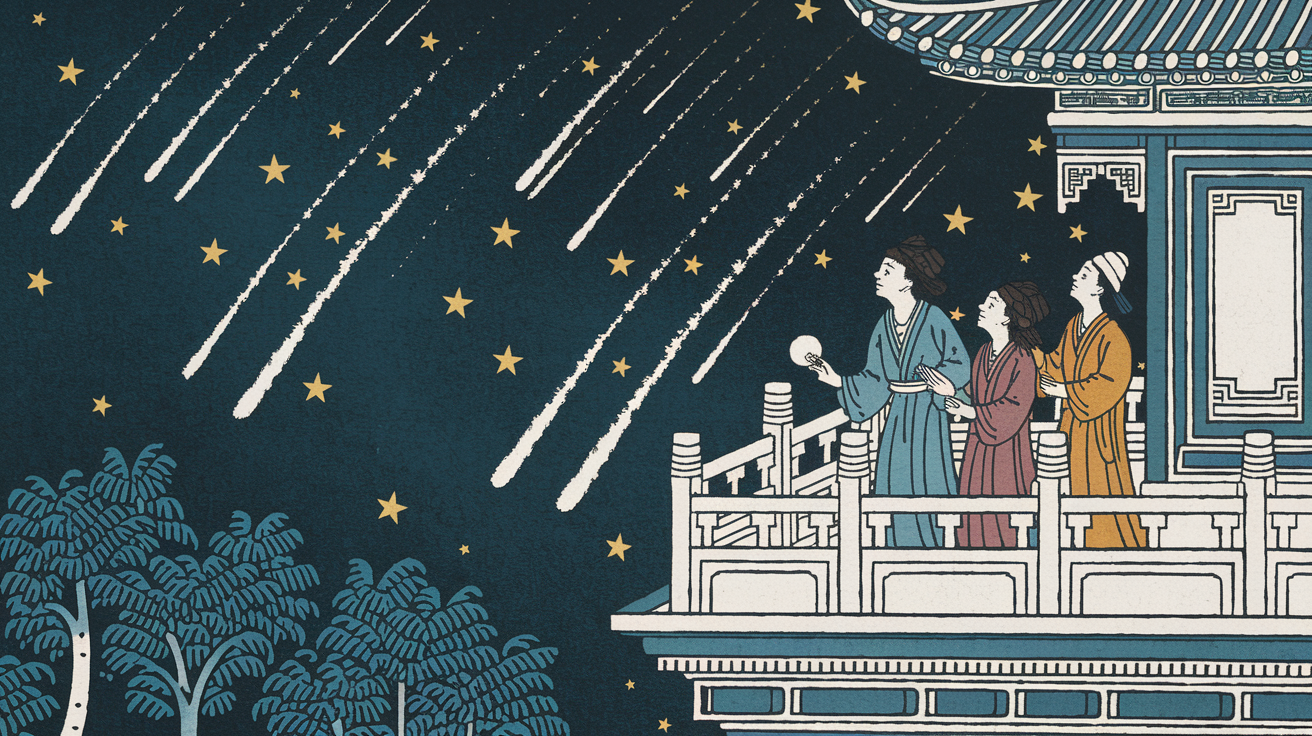
The Lyrids are one of the oldest documented meteor showers, with observations stretching back roughly 2,700 years. Chinese astronomers recorded a shower in 687 BCE that modern researchers believe corresponds to the Lyrids. Those early records describe “stars falling like rain,” a phrase repeated in accounts of later outbursts.
Several historical years stand out. In 1803, observers in the eastern United States reported meteor rates reaching hundreds per hour for a short window. Another surge occurred in 1922. Rates climbed again in 1982 when some watchers counted close to 100 meteors per hour near the peak. These outbursts are short-lived, often lasting only an hour or two, and they don’t follow a predictable cycle. The stream’s internal structure likely contains dense filaments that Earth encounters irregularly.
Most years, the Lyrids behave predictably. They deliver moderate rates and a handful of bright fireballs. That consistency, combined with the occasional surprise outburst, keeps the shower interesting for both casual observers and researchers tracking how comet debris evolves over time.
Southern Hemisphere and Late‑April Observing: Lyrids and the Eta Aquarids
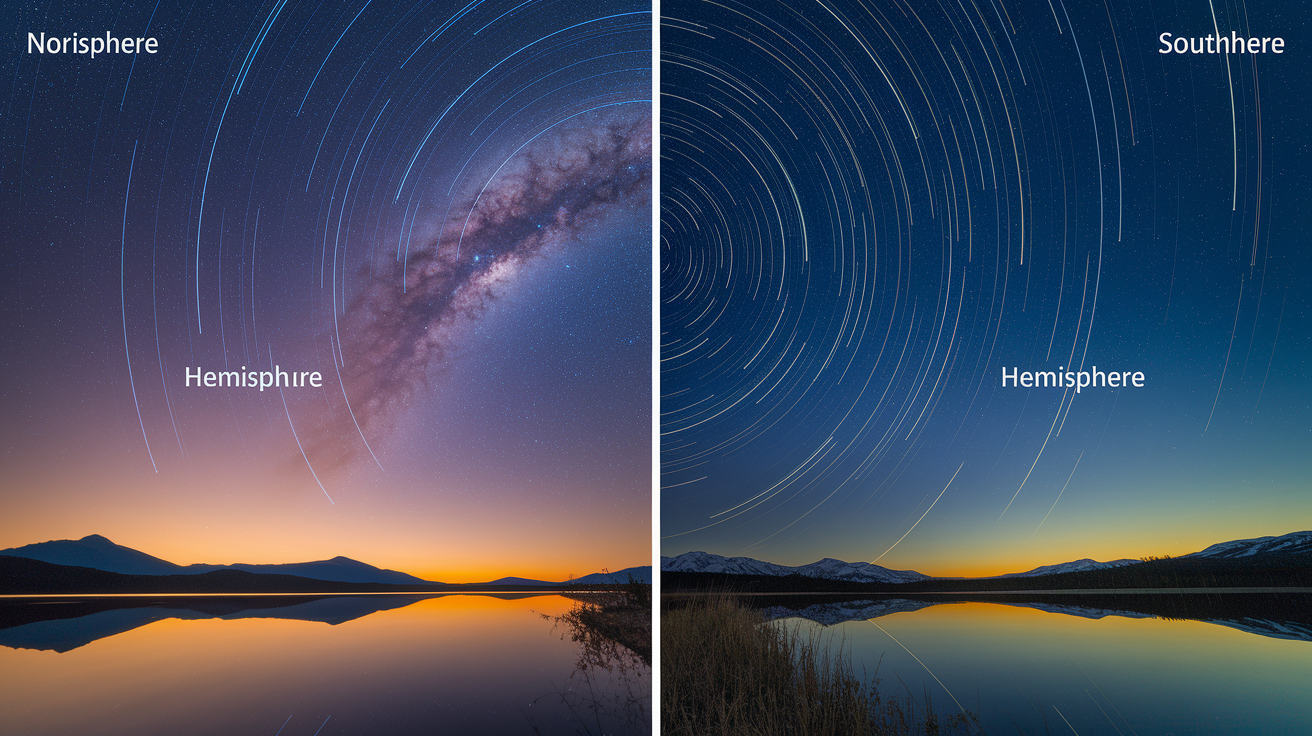
Southern Hemisphere observers face a fundamental geometry problem with the Lyrids. The radiant sits far north in the sky. For locations south of the equator it never climbs high. From Sydney, Johannesburg, or Buenos Aires, Vega barely clears the northern horizon in the pre-dawn hours, if it rises at all. That low radiant altitude cuts visible meteor counts dramatically, often to just a few per hour even under dark skies.
Late April and early May bring a better option for southern watchers: the Eta Aquarids. This shower, fed by debris from Halley’s Comet, peaks around May 5 to 6 each year. Its radiant lies in Aquarius and rises well before dawn for southern latitudes, producing strong rates. Often several dozen meteors per hour under ideal conditions, especially for observers in the Southern Hemisphere.
- Northern Hemisphere advantage: Lyrids favor northern latitudes. Radiant high overhead at dawn
- Southern Hemisphere limitation: Radiant low or below horizon. Expect single-digit hourly counts
- Alternative for southern observers: Eta Aquarids peak early May with better southern visibility and higher rates
Final Words
Catch it in action: the Lyrids peak on April 22, 2026, with a sharp maximum at 19:15 UTC. Best viewing is after midnight and before dawn, when Vega (the radiant) climbs and the waxing crescent moon sets. Expect 10–15 meteors per hour under dark skies, with rare surges.
Head to a dark spot, lie back, and give your eyes 20–30 minutes to adapt. No optics needed; scan wide and be patient.
If you plan ahead and pick a clear window, the april meteor shower can be a short, rewarding night of skywatching.
FAQ
Q: When can I see the Lyrid meteor shower? Is there a meteor shower in April? Is April 22 a meteor shower?
A: The Lyrid meteor shower is April’s main shower, peaking April 22, 2026. Sharp maximum at 19:15 UTC, but best visible after midnight into pre-dawn under moonless skies; expect 10–15 meteors/hour.
Q: What time is best to see the meteor showers tonight?
A: The best time to see meteor showers tonight is after local midnight until dawn; for the Lyrids, look after Vega rises (about 21:00–22:00 local), with strongest visible rates pre-dawn.