

What if a meteor shower usually gives you nothing, yet once in a while shoots 50–100 meteors an hour?
That’s the June Boötids — active June 22–July 2, peaking around June 27 — mostly 0–1 meteors per hour but capable of sudden outbursts.
If you’re in the mid-northern latitudes, late June is worth watching: these slow, long streaks are easy to follow, and a little patience can pay off; read on for best times and viewing tips.
Key Details About the Bootids Meteor Shower (Immediate Viewing Essentials)
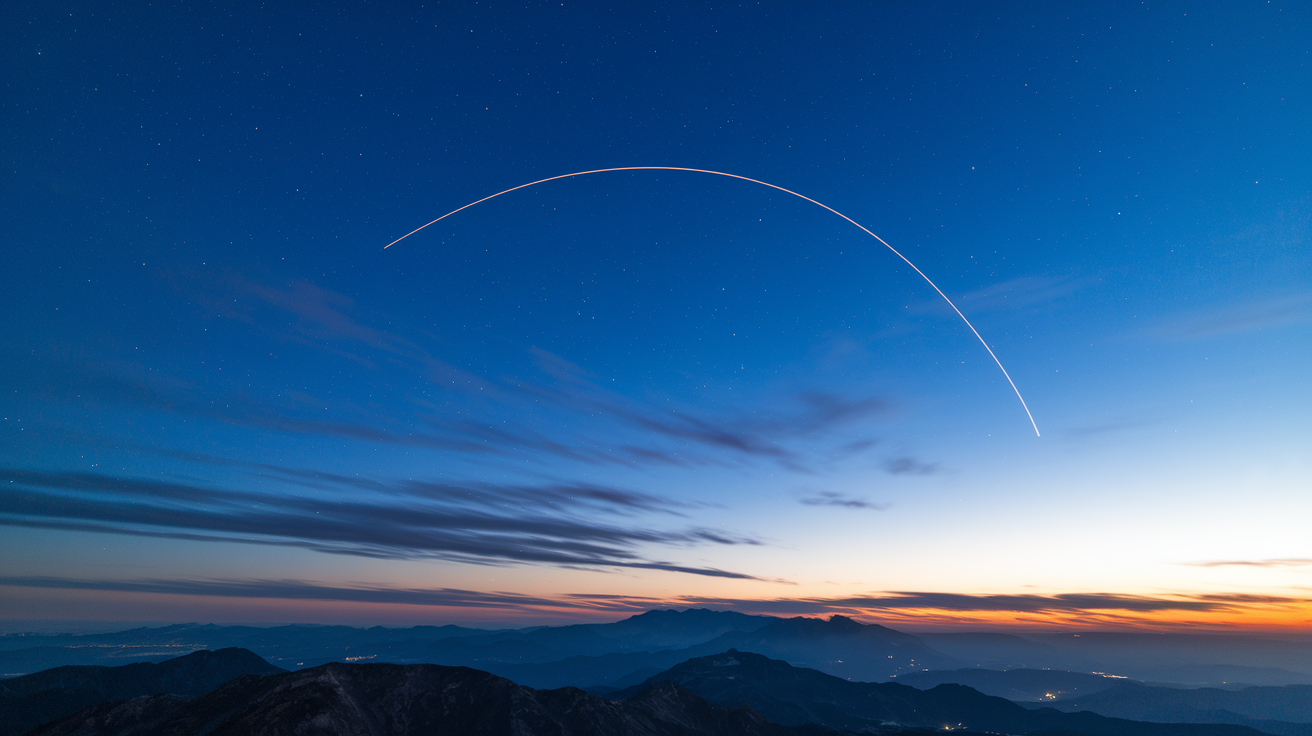
The June Boötids (you’ll see “Bootids” spelled both ways) are active every year from June 22 through July 2, peaking around June 27. But calling them predictable would be a joke. Most years they produce almost nothing. We’re talking maybe one meteor per night, if that. Yet every so often, the Boötids wake up and put on a show that catches everyone off guard.
The radiant sits inside the constellation Boötes at right ascension 14 hours 56 minutes, declination +48 degrees. For observers at mid-northern latitudes, that spot climbs nearly overhead by 10:00 p.m. local time during the peak and stays visible all night. Meteoroids slam into Earth’s atmosphere at roughly 18 kilometers per second, about 40,000 mph. Sounds fast. By meteor standards, though, it’s very slow, which gives each Boötid a long, leisurely streak you can actually follow with your eyes.
The American Meteor Society calls the June Boötids a “Class III” variable shower. Translation: it can swing from near-zero activity to sudden, dramatic outbursts. On June 27, 1998, observers worldwide saw zenithal hourly rates climb to 50 or 100+ meteors for more than 12 hours. Nobody expected it. A smaller outburst followed in 2004, delivering rates around 50 meteors per hour on June 23. Since then? Video monitoring by the International Meteor Organization has detected only very weak annual signals near June 24, with radiants appearing roughly 10 degrees south of the expected position.
The parent comet sheds debris in clumps rather than an even stream, so Earth may pass through a dense pocket one year and empty space the next. That unpredictability is what makes the Boötids worth watching. Patience and a bit of luck can reward you with a rare show. Or you may see nothing at all. Northern hemisphere observers get the best view, though anyone north of about 30 degrees south latitude can glimpse the radiant above their horizon during late June evenings.
What to know at a glance:
- Active dates: June 22 to July 2 each year.
- Peak date: Typically June 27.
- Radiant: Constellation Boötes, high overhead for mid-northern latitudes by 10 p.m.
- Meteor speed: ~18 km/s, slow and long compared to most showers.
- Expected rates: Usually 0 to 1 per hour; rare outbursts can deliver 50 to 100+ per hour.
Origins of the Bootids Meteor Shower and Its Parent Comet
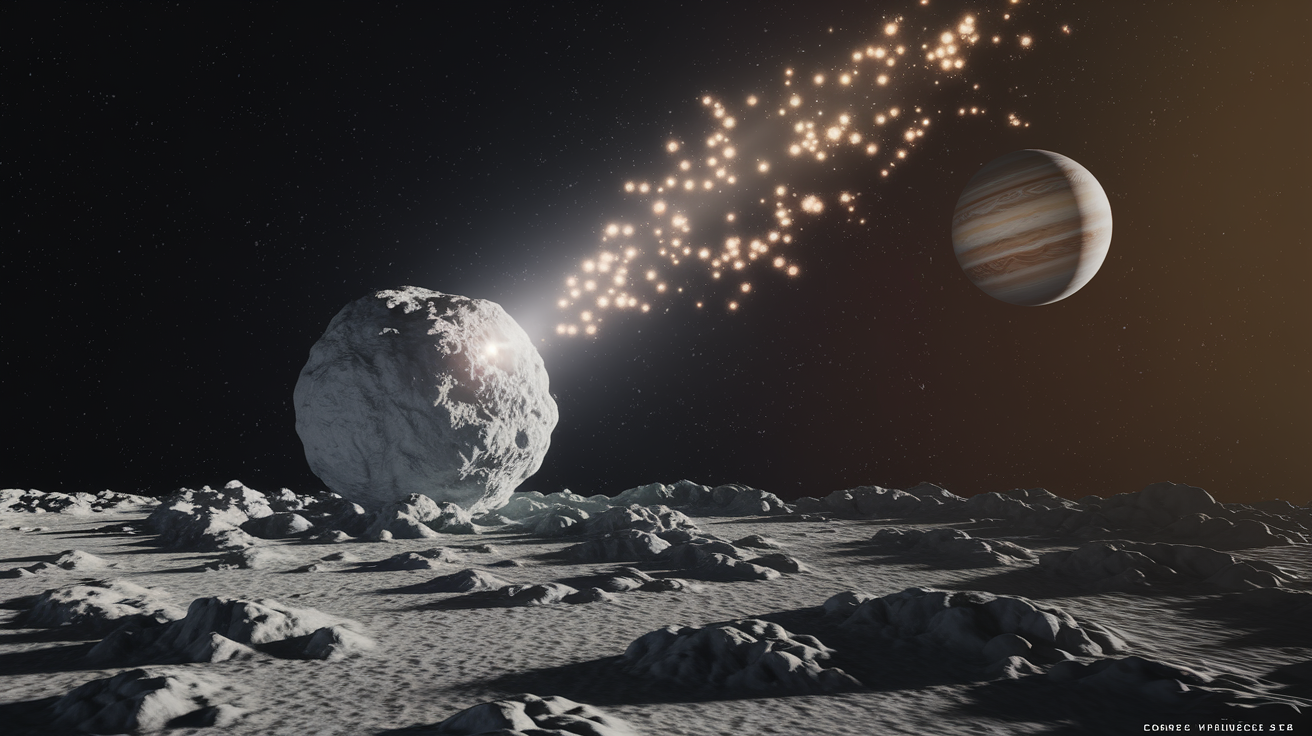
The June Boötids exist because of comet 7P/Pons–Winnecke, a roughly 5-kilometer-wide ball of ice, rock, and dust that orbits the Sun every 6.37 years. As the comet swings from near Earth’s orbit out past Jupiter and back again, solar heating vaporizes surface ice and releases trapped dust particles into space. Over thousands of orbits, that debris has spread along the comet’s path, forming a loose stream that Earth crosses each late June. When one of those dust grains hits our atmosphere at 18 kilometers per second, friction heats it until it glows and we see a meteor streak across the sky.
Unlike well-behaved showers such as the Perseids, which spread their debris relatively evenly, comet 7P/Pons–Winnecke’s tail is noticeably clumpy. Dense pockets of material drift along the orbital path, shepherded by gravitational tugs from Jupiter and other planets. When Earth passes through one of those clumps, observers see a brief outburst. When we sail through empty stretches, the shower is nearly invisible. The 1998 surge, for example, came from dust trapped in a 1:2 mean-motion resonance with Jupiter. Particles had been corralled into a stable orbital pocket and released all at once when Earth’s path intersected that pocket.
The comet’s most recent close approach to the Sun occurred on January 30, 2015. No corresponding spike in Boötid activity followed. Historical records show no clear correlation between the comet’s perihelion passages and meteor outbursts. That lack of predictability keeps the June Boötids firmly in the “variable” category, where forecasting any given year’s activity remains more art than science.
Bootids Radiant Location in the Boötes Constellation
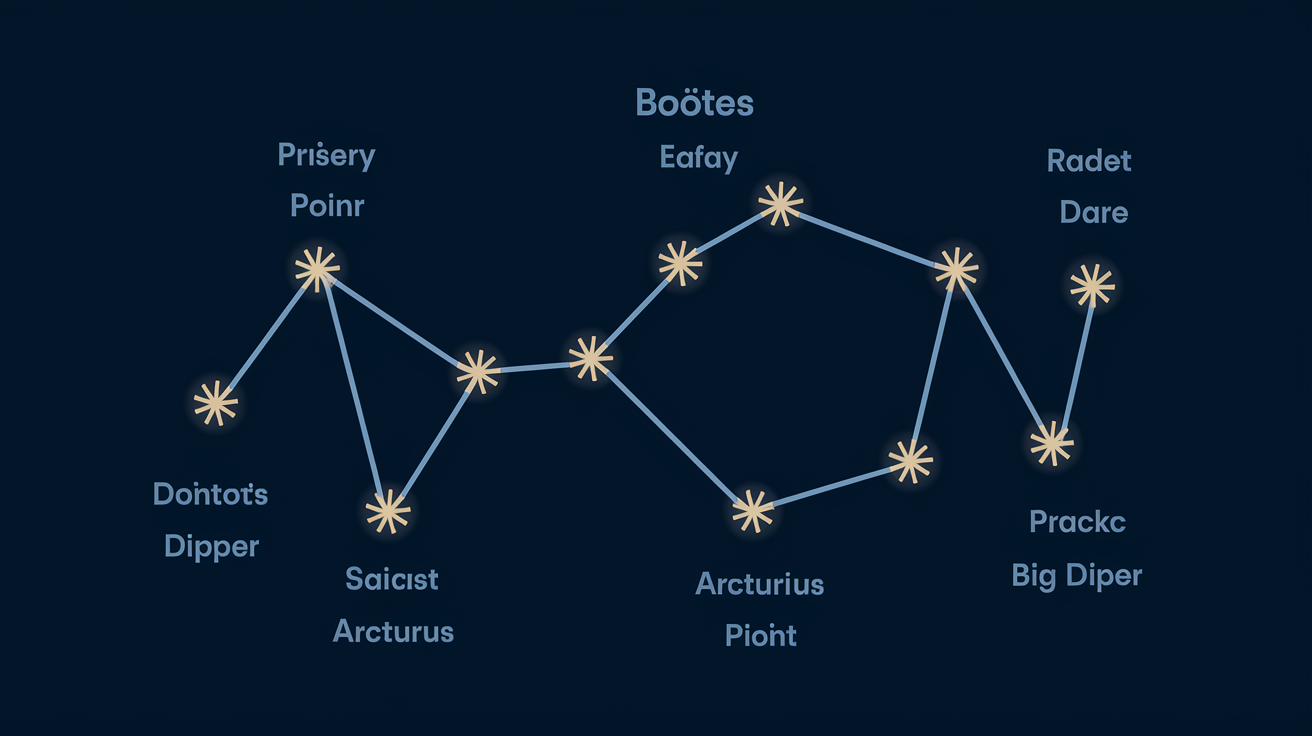
The radiant for the June Boötids lies within the constellation Boötes, the herdsman, which sits high in the northern sky during late spring and early summer evenings. In 1998, the measured radiant coordinates were right ascension 14 hours 56 minutes and declination +48 degrees, placing it roughly halfway between the bright star Arcturus (the constellation’s anchor) and the bowl of the Big Dipper. Video detections by the International Meteor Organization have shown that the June 24 activity component produces radiants about 10 degrees south of that nominal position, so the effective radiant “wanders” slightly depending on which dust stream Earth is sampling on any given night.
For observers at mid-northern latitudes (roughly 35 to 50 degrees north), the Boötes radiant is nearly overhead by 10:00 p.m. local time on June 27 and remains visible all night, dipping toward the northwestern horizon only as dawn approaches. That high elevation is an advantage. Meteors can appear anywhere in the sky, but those farther from the radiant trace longer paths and are easier to spot. By looking about 40 degrees away from the radiant (roughly four fist-widths at arm’s length, since a clenched fist spans about 10 degrees) you position yourself to catch the longest and most dramatic trails.
How to locate the Boötids radiant in five steps:
- Find Arcturus first. Use a stargazing app or locate the Big Dipper, then follow the arc of its handle downward to a brilliant orange star. That’s Arcturus, the fourth-brightest star in the night sky.
- Trace Boötes upward. From Arcturus, imagine a kite shape extending north and slightly east. That forms the body of Boötes.
- Mark the midpoint. The Boötids radiant sits roughly halfway between Arcturus and the Big Dipper’s bowl.
- Check around 10 p.m. At that hour during late June, the radiant will be high in the sky, nearly overhead for mid-northern observers.
- Don’t stare at the radiant. Instead, look 40 degrees away, toward the zenith or along the horizon, where meteor trails appear longest and brightest.
Historical Bootids Outbursts and Their Unpredictable Nature
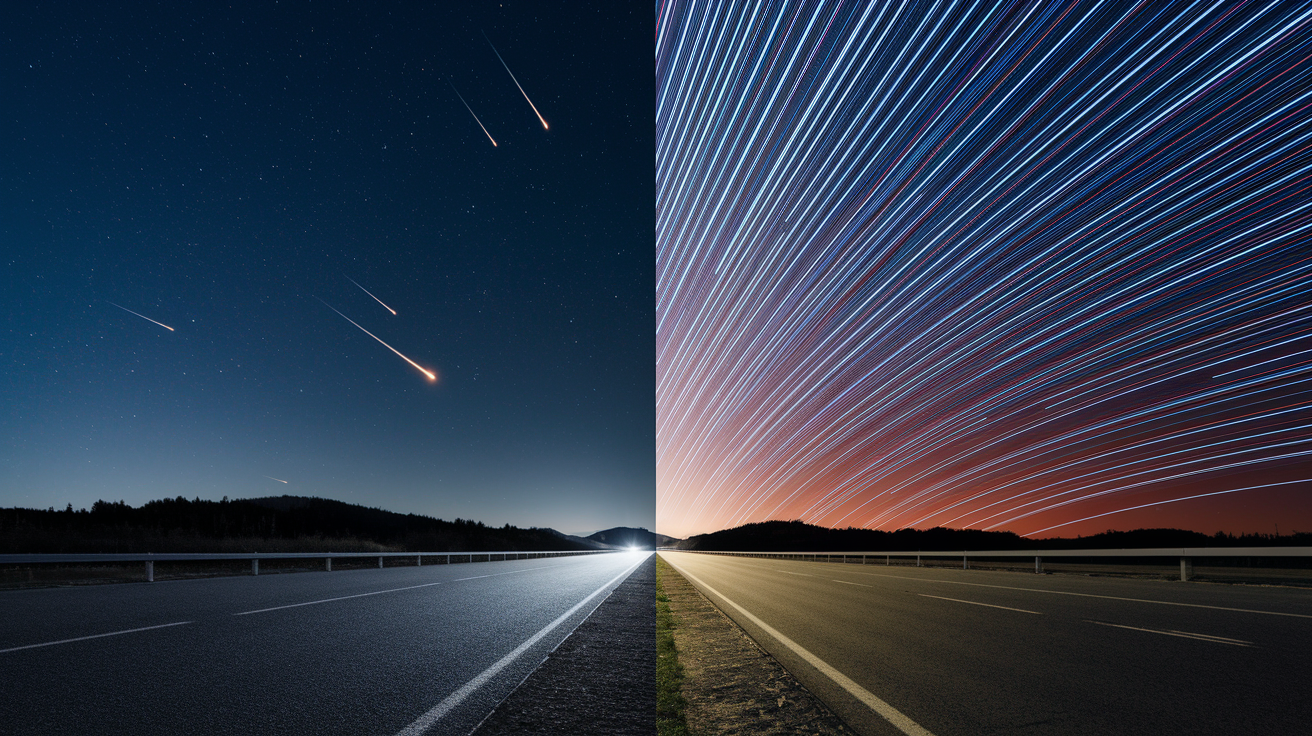
Before 1998, the June Boötids were known only from a handful of early 20th-century observations. Astronomers recorded modest returns in 1916, 1921, and 1927, but nothing dramatic, and for decades afterward the shower dropped off most observing lists entirely. That all changed on June 27, 1998, when reports flooded in from around the world describing rates of 50 to 100 or more meteors per hour sustained for over 12 hours. The outburst was so unexpected that many observers initially wondered whether they were witnessing a new shower altogether. Orbital analysis later revealed that the 1998 dust had been captured in a 1:2 mean-motion resonance with Jupiter, a gravitational lock that kept those particles bunched together until Earth finally crossed their path.
Encouraged by the 1998 event, researchers calculated that similar dust might return in 2003 or 2004. Forecasts for 2003 predicted a peak around June 27 at approximately 19:30 UT (3:30 p.m. Eastern Daylight Time), with the Middle East, southeastern Europe, and southern Asia expected to see the best activity. North American observers were told to watch a few hours after the nominal peak. When 2003 came and went with minimal activity, attention shifted to 2004. On June 23 that year, the Boötids delivered a modest outburst with zenithal hourly rates near 50. A weak enhancement was predicted for June 23 to 24, 2010, but observers reported almost nothing.
What makes the June Boötids so difficult to forecast is the absence of any clear link between the parent comet’s perihelion and meteor activity. Comet 7P/Pons–Winnecke last passed perihelion on January 30, 2015, yet no corresponding surge appeared in subsequent June observing sessions. The shower’s clumpy structure means that even precise orbital models can miss. If Earth’s path shifts by just a few thousand kilometers, we sail past the dense filament entirely and see nothing. Every June 27 remains a roll of the dice, and that uncertainty is part of the Boötids’ strange appeal.
Expected Bootids Meteor Rates and What “Slow Meteors” Look Like

In a typical year, the June Boötids produce so few meteors that dedicated observers may count only one or two per night, if any at all. The American Meteor Society’s “Class III” designation captures this reality. The shower is capable of rare, strong outbursts, but it’s equally capable of near-total silence. Compare that to reliable performers like the Perseids or Geminids, which routinely deliver 60 to 100+ meteors per hour at peak, and it becomes clear why the Boötids often go unnoticed. For anyone hoping to see a meteor storm, the odds are long. For anyone content to lie back and watch the sky with no expectations, even a single slow Boötid can be a memorable sight.
The defining characteristic of a Boötid meteor is its leisurely speed. At roughly 18 kilometers per second, these meteoroids enter the atmosphere at less than half the velocity of a typical Perseid (59 km/s) or Leonid (71 km/s). That slow entry stretches each visible trail across a longer arc of sky and gives the meteor a lazy, almost floating quality. Before the 1998 outburst, veteran observers described Boötid meteors as drifting like embers across the summer sky, bright enough to notice but slow enough to track with your eye. The extended visibility makes it easier to distinguish a true Boötid from a random sporadic meteor, especially if you note that the trail, when traced backward, points toward the Boötes radiant. Sporadics typically move faster and show no consistent radiant, so a slow, radiant-aligned streak is your best clue that you’ve just witnessed a piece of comet 7P/Pons–Winnecke burning up overhead.
Best Viewing Conditions for the Bootids and How to Maximize Your Chances
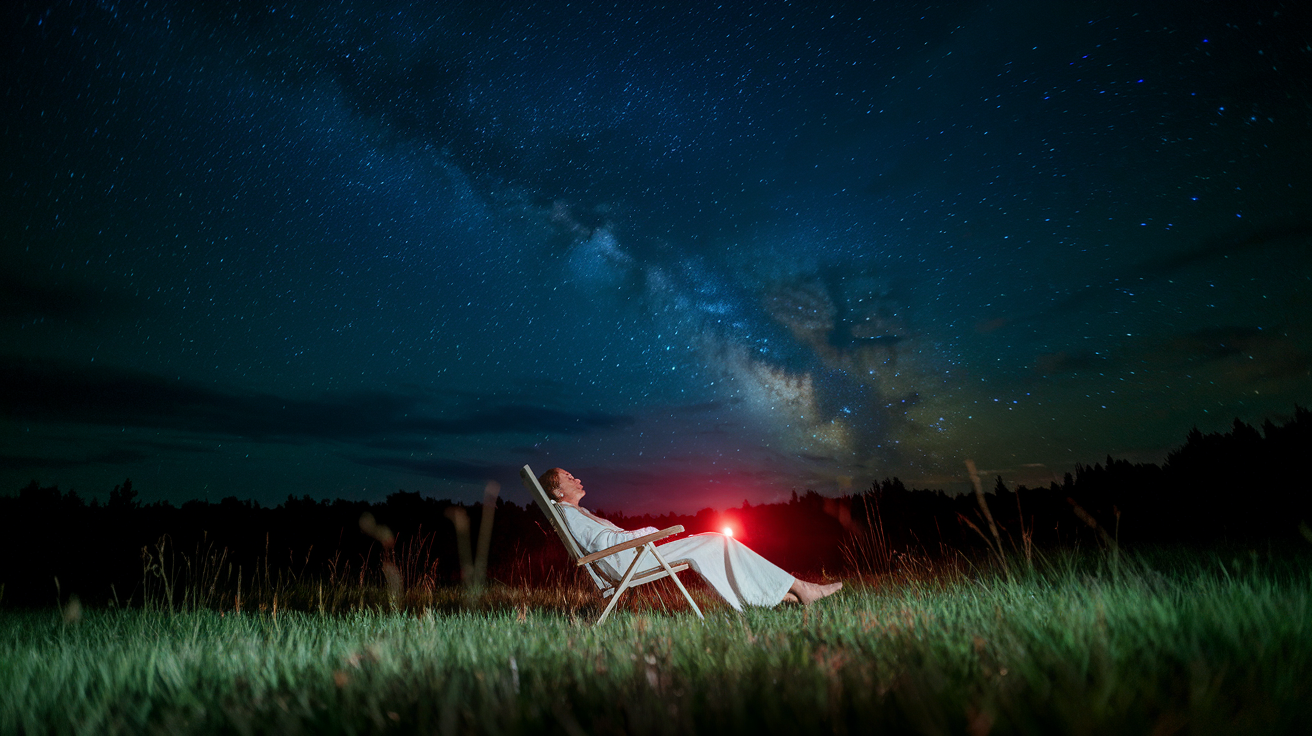
Timing and sky conditions matter more for the June Boötids than for almost any other shower, because the baseline activity is so low that even modest interference can hide what little is there. The good news: around the typical June 27 peak, the Moon is often near its new phase, providing darker skies and better contrast for faint meteors. The bad news: late June nights are short and never fully dark at higher northern latitudes. In Britain, for example, midsummer twilight lingers until well past 11:00 p.m. and returns before 4:00 a.m., squeezing the useful observing window into just a few hours. Even so, the 1998 outburst was visible to casual observers across the British Isles, proving that when the Boötids decide to perform, they can punch through twilight and moonlight alike.
For the best chance of catching any Boötid activity (whether a single meteor or a surprise outburst), plan your session around the nights of June 24 and June 27. International Meteor Organization video data suggest weak annual signals near June 24, while June 27 remains the anniversary of the 1998 surge and the nominal date of the shower’s traditional peak. The radiant sits high in the sky all night for mid-northern observers, but looking directly at it is counterproductive. Meteors close to the radiant show only short, faint trails. Instead, recline so you can scan a wide swath of sky and aim your gaze roughly 40 degrees away from the radiant, about four fist-widths at arm’s length. That geometry maximizes the length and brightness of any trails you do see.
Light pollution remains the single biggest obstacle. Even a modest glow from nearby streetlights or buildings can wash out faint meteors, and the Boötids, when active at all, tend to be dim. A dark-sky location away from urban centers will reveal two to three times as many meteors as a suburban backyard, and that difference can mean the gap between seeing nothing and catching a handful of slow streaks. If you can’t travel to a truly dark site, at least position yourself so that nearby lights are behind a building or tree, shielding your eyes from direct glare.
Ideal sky conditions for observing the Bootids:
- Moon phase: New or thin crescent, providing maximum darkness around the June 27 peak.
- Cloud cover: Clear skies with no haze or high clouds that scatter light.
- Light pollution: Bortle class 4 or darker (rural or better); avoid urban zones.
- Horizon: Unobstructed view of the northern and overhead sky.
- Weather: Comfortable temperatures and low humidity to reduce atmospheric scattering.
- Time: Between 10:00 p.m. and 3:00 a.m. local time, when the radiant is highest.
Practical Bootids Observation Tips and Equipment Advice
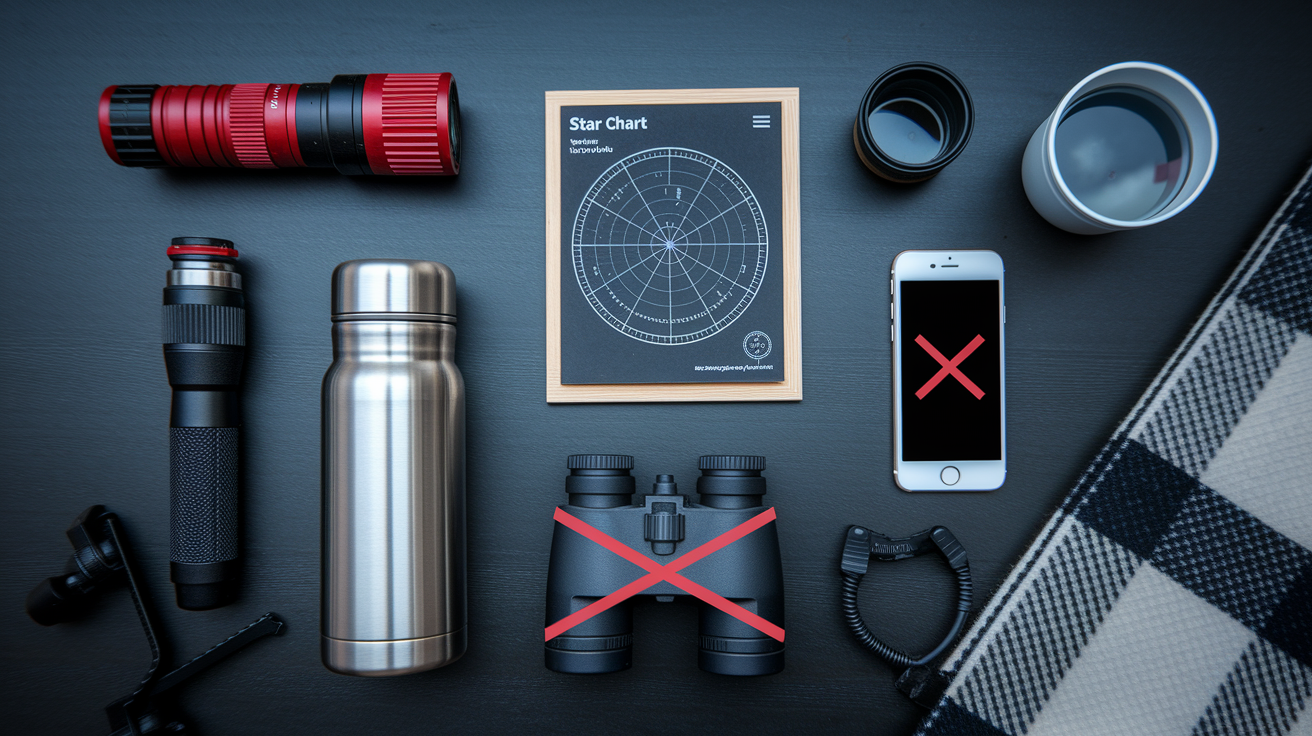
Meteor observing is one of the few branches of astronomy where expensive equipment actively works against you. Binoculars and telescopes shrink your field of view to a tiny patch of sky, and since meteors can appear anywhere, you need to see as much sky as possible at once. Your naked eyes, given time to adapt to the dark, are the best tool for the job. Plan to spend at least 20 minutes (ideally 30) sitting or lying still before you start counting. Your pupils need that time to fully dilate and your retinal chemistry needs to shift into its most sensitive mode. Any exposure to white light during that period resets the clock, so bring a red flashlight or cover a regular flashlight with red cellophane to preserve your night vision when checking charts or notes.
Comfort is not optional. A reclining lawn chair, a sleeping bag spread on the ground, or even a car hood covered with a blanket will keep you warm and relaxed during what may be a long, uneventful wait. Dress in layers. Even summer nights grow chilly after midnight. Keep insect repellent within reach. Bring water, snacks, and a charged phone loaded with a stargazing app so you can confirm the radiant’s position if you lose your bearings. Observing with a friend or a group is more enjoyable and safer, especially in remote locations, and it gives you someone to compare notes with when a meteor does appear. Remember that Boötids can show up anywhere in the sky, though their trails, if extended backward, will all point toward Boötes.
Seven steps to set up a successful Bootids observing session:
- Scout your site in daylight. Identify a spot with a clear view north and overhead, away from trees and buildings.
- Arrive 30 minutes before you plan to observe. Give yourself time to set up and let your eyes adapt.
- Spread a blanket or set up a reclining chair. Lie back so you can scan a wide portion of sky without straining your neck.
- Turn off all white lights. Use only red light for reading charts or taking notes.
- Pick a watch window. Start around 10:00 p.m. and observe until at least 1:00 a.m., when the radiant is highest.
- Scan 40 degrees from the radiant. Don’t stare at Boötes itself. Look toward the zenith or along the horizon for longer trails.
- Keep a simple log. Note the time, sky conditions, and how many meteors you see each hour, even if the count is zero.
Bootids Meteor Shower Photography and Long-Exposure Techniques

Photographing the June Boötids requires patience, a sturdy tripod, and a willingness to shoot dozens of frames in the hope that one captures a meteor. Use a digital camera with manual exposure controls and mount a wide-angle lens (14mm to 24mm full-frame equivalent works well) to cover as much sky as possible. Point the camera about 40 degrees away from the radiant, aiming toward the local zenith or along the northern horizon, and set your exposure to 10 to 25 seconds at f/2.8 or wider, ISO 1600 to 3200. The Boötids’ slow speed means that any meteor captured will stretch across more of the frame than a fast Perseid, giving you a longer, more graceful streak if you get lucky.
Lock focus at infinity (test by focusing on a bright star through live view) and shoot continuously in intervalometer mode, leaving only a one or two-second gap between exposures. Over the course of an hour you might accumulate 100 to 150 frames, most of which will show only stars and the occasional airplane or satellite trail. Review your images in the field using the camera’s playback zoom function, checking for any streak that traces back toward Boötes when you mentally extend its path. Even if you see no meteors visually, your camera may catch a faint one your eyes missed, and the slow exposure allows you to record the meteor’s color and any persistent train it leaves behind.
Regional Visibility of the Bootids Across the Northern and Southern Hemispheres

The June Boötids favor northern hemisphere observers by a wide margin. The radiant’s declination of +48 degrees places it high in the sky for anyone north of the equator, and observers at mid-northern latitudes (between 35 and 50 degrees north) enjoy the best view, with the radiant nearly overhead by 10:00 p.m. and visible all night. At latitudes above 50 degrees north, the radiant becomes circumpolar, meaning it never sets, though the extended twilight of high-latitude summer nights limits the useful observing window. For observers in southern Canada, the northern United States, Europe, and northern Asia, the Boötids are well-placed and worth monitoring, even in years when activity is expected to be low.
Southern hemisphere observers face a tougher challenge. The Boötes constellation skims the northern horizon for anyone south of about 30 degrees south latitude, and the radiant never climbs high enough to produce long, dramatic meteor trails. Observers in southern Australia, South Africa, and Argentina may glimpse a few Boötids near the horizon if they have an unobstructed view north, but rates will be sharply reduced compared to what northern observers see. For practical purposes, the June Boötids are a northern-hemisphere phenomenon, and anyone planning a dedicated observing session should be positioned north of the equator.
June Bootids vs. January Bootid Confusion (Quadrantids Comparison)

The term “Bootids” has caused confusion for over a century, because it’s been applied to more than one meteor shower. The June Boötids (the shower covered in this article) are active in late June and early July, peak around June 27, and produce extremely variable rates. But historical records also refer to a January shower once called the “Bootids,” which we now know as the Quadrantids, one of the year’s most reliable and prolific displays. The Quadrantids peak around January 3 to 4 and routinely deliver zenithal hourly rates above 100, with a sharp, intense maximum lasting only a few hours. The two showers share nothing but an old naming accident. They have different parent bodies, different radiants, and completely different activity profiles.
The Quadrantids’ radiant lies in the constellation Boötes during early January, which is why early observers attached the “Bootids” name. The June shower’s radiant also sits in Boötes, leading to the same label, but the similarity ends there. The Quadrantids are the product of asteroid 2003 EH₁ (a probable extinct comet nucleus), while the June Boötids come from active comet 7P/Pons–Winnecke. Astronomers eventually renamed the January shower “Quadrantids” after an obsolete constellation, Quadrans Muralis, that once occupied the same patch of sky, but casual references to “Bootids” in old literature can still cause mix-ups. To avoid confusion, always specify “June Boötids” or note the active dates when discussing either shower.
| Shower Name | Active Dates | Typical Rates (ZHR) | Parent Object |
|---|---|---|---|
| June Boötids | June 22 – July 2 | 0–1 (rare outbursts: 50–100+) | Comet 7P/Pons–Winnecke |
| Quadrantids | December 28 – January 12 | 60–120 | Asteroid 2003 EH₁ |
Final Words
Under late‑June skies the Bootids can surprise. The shower is active June 22–July 2, usually quiet but with a June 27 peak that has produced sudden outbursts in the past.
The radiant sits in Boötes and meteors move slowly (~18 km/s), so trails last longer. For best odds, watch from a dark northern‑hemisphere site around 10 p.m., let your eyes adapt, and try wide‑angle, 10–25 s exposures for photos.
Keep expectations modest. Most years are calm, but every outing holds the chance of a show—enjoy the bootids meteor shower and clear skies.
FAQ
Q: Where can you see the bootids meteor shower?
A: The Bootids meteor shower can be seen best from mid‑to‑high northern latitudes, where the radiant in Boötes climbs high; choose a dark site and look about 40° from the radiant.
Q: What time is best to see the meteor shower?
A: The best time to see the Bootids meteor shower is late evening through pre‑dawn; for mid‑northern viewers the radiant is often near overhead by about 10 p.m., with chances improving after midnight.
Q: What time is the meteor shower on July 29th?
A: The Bootids meteor shower is not active on July 29; its annual activity runs roughly June 22–July 2, with a typical peak near June 27, so July 29 falls outside the usual window.
Q: Is there a meteor shower on June 22nd?
A: Yes, the Bootids become active starting June 22; activity is usually very weak early in the window and tends to increase toward the typical peak around June 27.