

Think the Aurigid meteor shower barely shows up anymore?
It can look weak some years, but the right night and spot still reward patient viewers.
The shower runs late August into early September and peaks the night of August 31 into the early hours of September 1.
This post gives the clear peak times, explains why counts are usually low, and shares simple viewing tips that raise your odds: when to watch, where to look, and what to bring for darker, longer, and more comfortable observing sessions.
Key Facts and Peak Timing for the Aurigid Meteor Shower
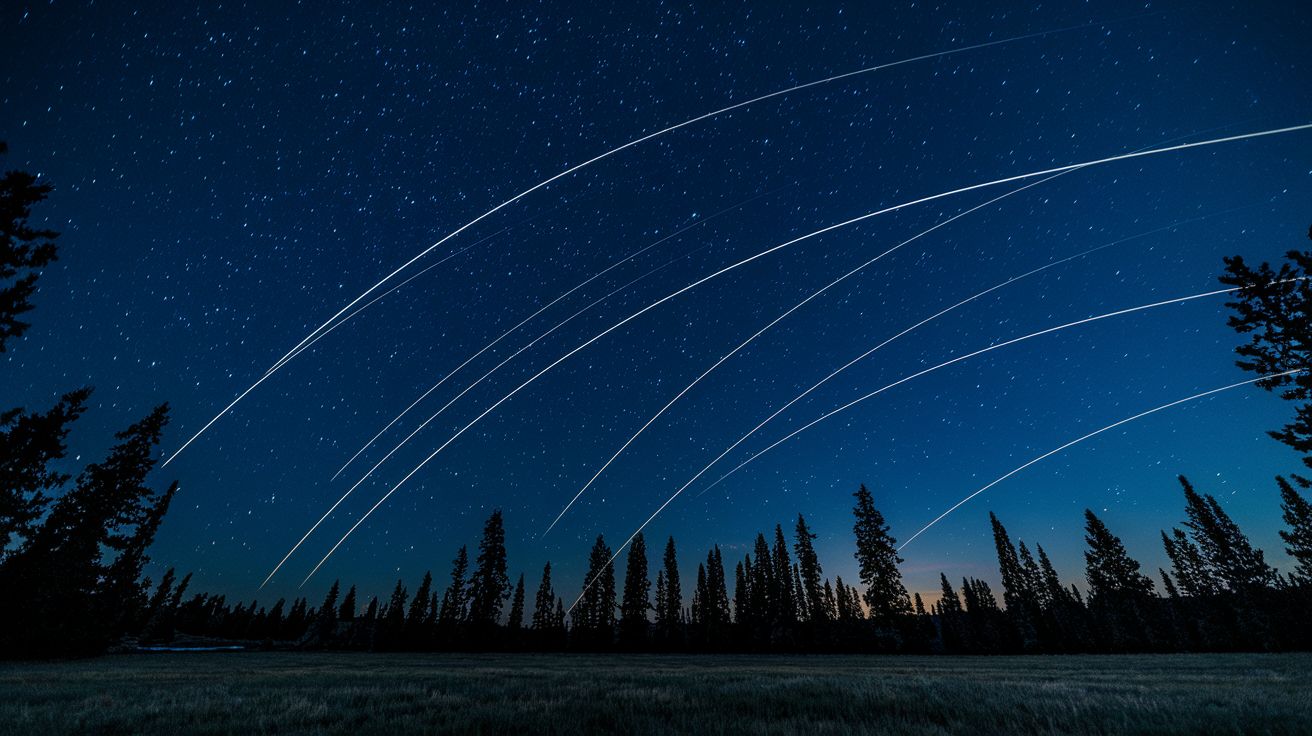
The Aurigid meteor shower runs from about August 28 through September 5, peaking on the night of August 31 into the early hours of September 1. In 2025, forecasts put the peak at 11:00 p.m. EDT on August 31 (03:00 GMT on September 1), though rates can tick up a bit in the hours just before local dawn when the radiant sits highest in the eastern sky. Typical zenithal hourly rate (ZHR) values hover around 6 meteors per hour under perfect dark skies. Real counts? Often closer to 1 through 5 visible meteors per hour, especially if you’re watching from suburban areas or dealing with a bright Moon. The radiant sits in the constellation Auriga, near the star Theta Aurigae.
For most Northern Hemisphere watchers, the best viewing window is that last hour before morning twilight. That’s when Auriga has climbed well above the northeastern horizon and the sky is darkest. These meteors travel at roughly 67 kilometers per second, making them swift and often faint. Patience and a dark observing site will improve your odds. September nights naturally offer more hours of darkness than August and a higher background rate of sporadic meteors, so even when the Aurigids are quiet, you might still catch a few shooting stars from other sources.
Before heading outside, keep these five essentials in mind:
- Peak night: August 31 into September 1, with the last hour before dawn favored.
- Expected rate: 1 through 6 meteors per hour. Outbursts are rare but possible.
- Meteor speed: Around 67 km/s. Fast and often dim.
- Moon phase: Check a lunar calendar. A bright Moon washes out faint meteors.
- Location: Dark rural skies yield the best counts. Even a few streetlights reduce visibility.
Understanding the Aurigid Radiant in the Auriga Constellation
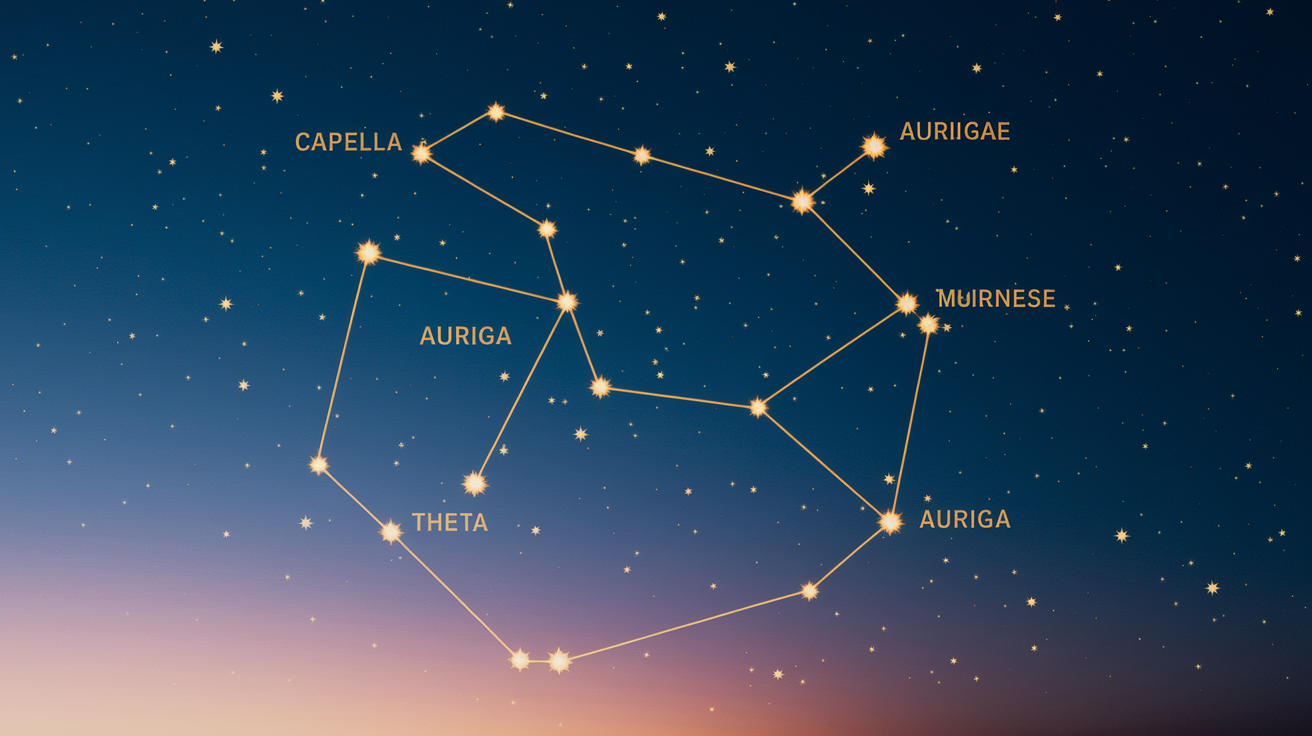
Auriga is a bright constellation in the northern sky, most easily recognized by the brilliant star Capella (Alpha Aurigae), which shines at magnitude +0.08. It’s one of the brightest stars visible from Earth. Capella rises in the northeast during late summer evenings and climbs higher as the night progresses. To locate the Aurigid radiant, first find Capella. Then look for the fainter star Theta Aurigae about two degrees to the south-southeast. Theta Aurigae glows at magnitude +2.6 and marks the approximate center of the radiant. A smartphone astronomy app can overlay constellation lines and star labels, making it easier to pinpoint Theta Aurigae in real time.
Auriga reaches its highest altitude in the last few hours before dawn. That’s why pre-dawn viewing is strongly recommended. The radiant’s altitude directly influences how many meteors you see. When it sits low on the horizon, most meteors burn up on the far side of the sky or are blocked by Earth itself. As Auriga climbs higher, the portion of the meteor stream entering your local sky increases, and meteors appear to radiate outward from the constellation in all directions. Follow these steps to orient yourself:
- Locate Capella in the northeastern sky after midnight.
- Use Capella as an anchor to find Theta Aurigae, roughly two degrees south-southeast.
- Note the approximate position of the radiant near Theta Aurigae.
- Don’t stare at the radiant itself. Instead, scan the sky around it.
Using Simple Sky Geometry
A fist held at arm’s length covers roughly 10 degrees of sky. Handy rule for estimating angular distances without instruments. To maximize your chances of spotting Aurigid meteors with visible trails, aim your gaze about 40 degrees (four fist-widths) above Theta Aurigae, toward your local zenith. Meteors that appear closer to the radiant show shorter trails because you’re looking along their path of travel. Those farther from the radiant trace longer, more dramatic streaks across the sky. Positioning your sightline this way balances trail length and detection probability, giving you the best overall meteor-watching experience.
Meteor Rates, Velocity, and What Makes Aurigids Unique
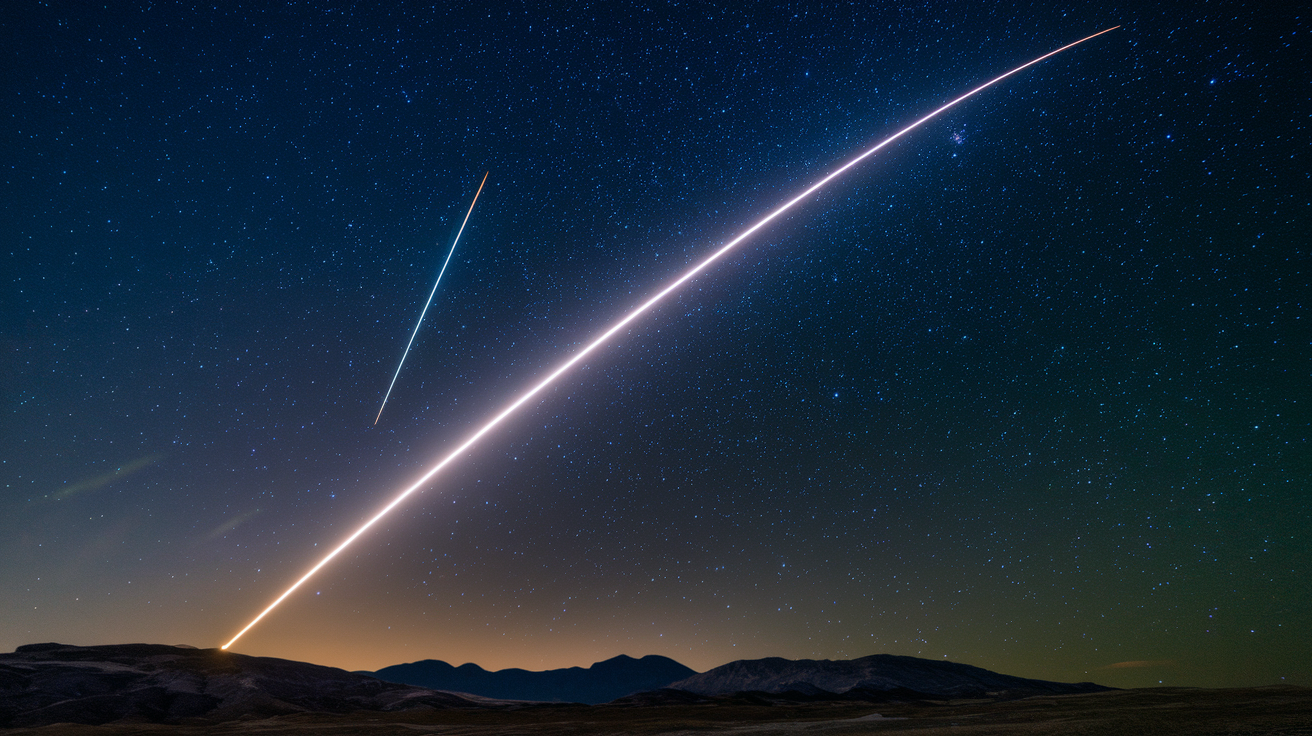
The Aurigid meteor shower rarely delivers high counts. Typical zenithal hourly rates sit around 6 meteors per hour, but observational reports from rural dark sites often record only 1 to 5 meteors per hour during normal years. These meteors are both faint and extremely fast, entering Earth’s atmosphere at approximately 67 kilometers per second. That’s roughly 150,000 miles per hour. That high velocity means they spend only a fraction of a second visible, and their light output is often too dim to compete with moonlight, haze, or light pollution. Unlike slower showers such as the Taurids, which produce bright fireballs, Aurigids tend to generate swift, modest streaks that demand sharp attention and patient watching.
September nights naturally favor meteor observers in the Northern Hemisphere. The longer periods of darkness compared to August, combined with a statistical uptick in sporadic meteors (random meteors not associated with any particular shower), mean you may see a handful of shooting stars even when the Aurigids are underperforming. The shower’s parent comet, C/1911 N1 Kiess, left behind a narrow, tenuous debris stream, so Earth intersects only a thin ribbon of particles each year. This geometry explains both the low annual rates and the occasional surprise outbursts, when Earth passes through a denser clump of ancient comet dust.
| Property | Value |
|---|---|
| Entry Velocity | ~67 km/s (~150,000 mph) |
| Typical ZHR (Ideal Conditions) | ~6 meteors/hour |
| Expected Visibility (Real-World) | 1–5 meteors/hour from rural sites |
The Aurigid Parent Comet and Historical Outbursts
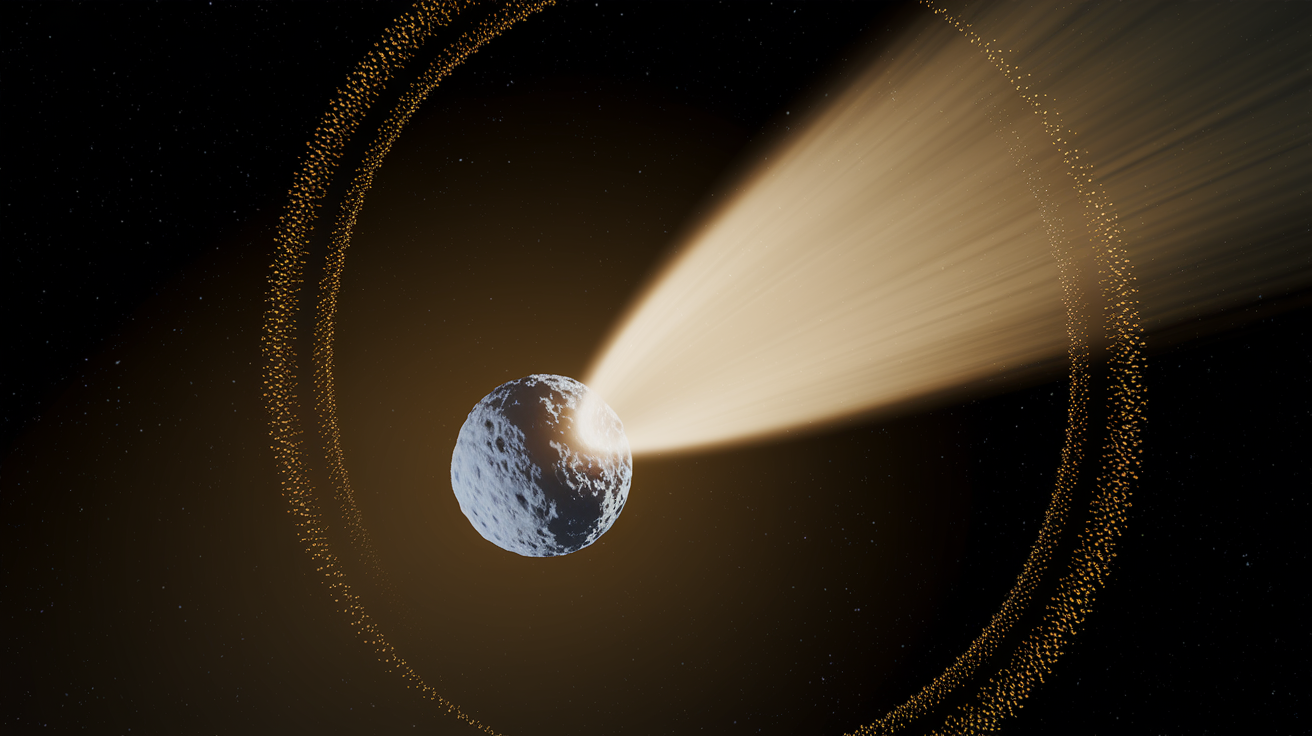
The Aurigid meteor shower originates from debris shed by long-period comet C/1911 N1, also known as Comet Kiess after the astronomer who discovered it. Orbital calculations suggest this comet last ventured through the inner solar system roughly 2,000 years ago, leaving behind a trail of dust and small rocky fragments that now intersect Earth’s orbit each late August and early September. Because the comet’s orbital period spans millennia, its debris field isn’t spread into a broad, uniform torus like those of short-period comets. Instead, the material remains concentrated in narrow, discrete trails. Earth encounters these trails only occasionally, which is why the Aurigids usually produce modest activity but can surprise observers with brief, intense outbursts.
The shower was first recognized on the night of August 31, 1935, when observers reported an unexpected flurry of meteors radiating from Auriga. Subsequent outbursts were recorded in 1986, 1994, 2007, and 2019. The 2007 event stands out as the most intensively studied. Ground-based observers in North America and Scandinavia reported peak rates exceeding 100 meteors per hour in some locations, though shorter-term airborne observations recorded a rate of about 40 meteors per hour. That airborne campaign, known as the Aurigids Multi-instrument Aircraft Campaign (Aurigids MAC), ran from August 30 to September 2. It involved 24 scientists using specialized instruments aboard aircraft to capture high-resolution data on meteor composition, velocity, and trajectory.
The 2019 outburst reached rates of approximately 30 to 50 meteors per hour, again demonstrating the shower’s capacity for sudden bursts of activity. Yet the European Space Agency has noted that the specific dust trail responsible for the 2007 enhancement won’t be crossed in the same favorable geometry for about 70 years. That illustrates how rare these peak encounters truly are. Between outbursts, the Aurigids remain one of the weakest annual showers, far less reliable than the Perseids or Orionids.
Why Aurigid Outbursts Are So Rare
Narrow stream geometry and the parent comet’s long orbital period combine to make Aurigid predictions uncertain. Short-period comets, which return every few years or decades, continuously replenish and spread their debris, creating broad streams that Earth intersects reliably each year. Comet Kiess, by contrast, hasn’t passed perihelion in recorded history, so its debris remains locked in the orbital position it occupied millennia ago. When Earth’s path crosses a dense filament of that ancient material, rates spike. When we miss the filament by even a small margin, the shower barely registers. Predicting these encounters requires precise modeling of both Earth’s orbit and the subtle gravitational perturbations that have nudged the comet’s dust over two thousand years. Challenging calculation with significant uncertainty.
Practical Viewing and Dark-Sky Tips for Aurigid Observers
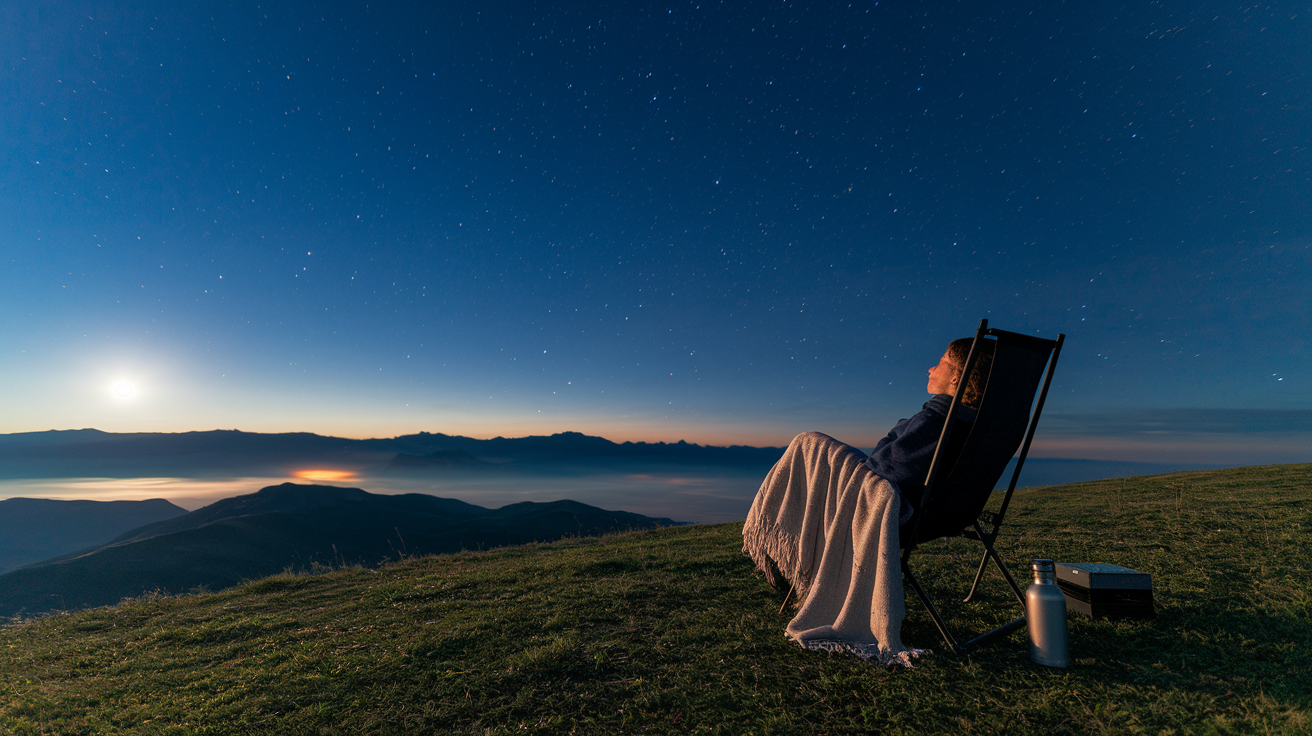
The Aurigid meteor shower is best visible from the Northern Hemisphere, where the radiant in Auriga rises well before dawn and climbs to a useful altitude in the last few hours of the night. For Southern Hemisphere observers, the radiant appears much later (typically around 3:00 to 4:00 a.m. local time) and remains low on the northern horizon, allowing only a narrow window before sunrise washes out the sky. Even during that brief window, the shallow radiant angle reduces the effective meteor rate, so Southern Hemisphere counts are usually lower than those reported from northern latitudes. If you’re observing from the north, plan to start watching after 1:00 a.m. local time, with the best hour arriving in the 60 minutes immediately before the first glow of morning twilight.
Moon phase plays a critical role in detecting faint Aurigid meteors. In 2026, the peak occurs roughly three days after the Full Moon, when the Moon is still about 84 percent illuminated and rises in the early evening, flooding the sky with light for much of the night. Under these conditions, only the brightest meteors will be visible. Position yourself so that a building, hill, or tree blocks the Moon from your direct line of sight, or turn your back to it and focus on the darker portion of the sky. Even a partially obscured Moon significantly improves contrast and allows dimmer meteors to register against the background. Here are six practical tips to maximize your experience:
- Allow at least 20 minutes for your eyes to fully adapt to darkness. Avoid checking your phone without a red-light filter.
- Choose a location far from streetlights, porch lights, and car headlights.
- Dress warmly. Even summer nights can be cool in the pre-dawn hours.
- Bring a reclining chair or blanket so you can comfortably scan a large area of sky without neck strain.
- Look about 40 degrees above the radiant rather than directly at it. Meteors farther from the radiant show longer, more visible trails.
- Time your arrival for at least one hour before local dawn to catch the radiant at its highest altitude.
Photography and Imaging Techniques for the Aurigid Meteor Shower
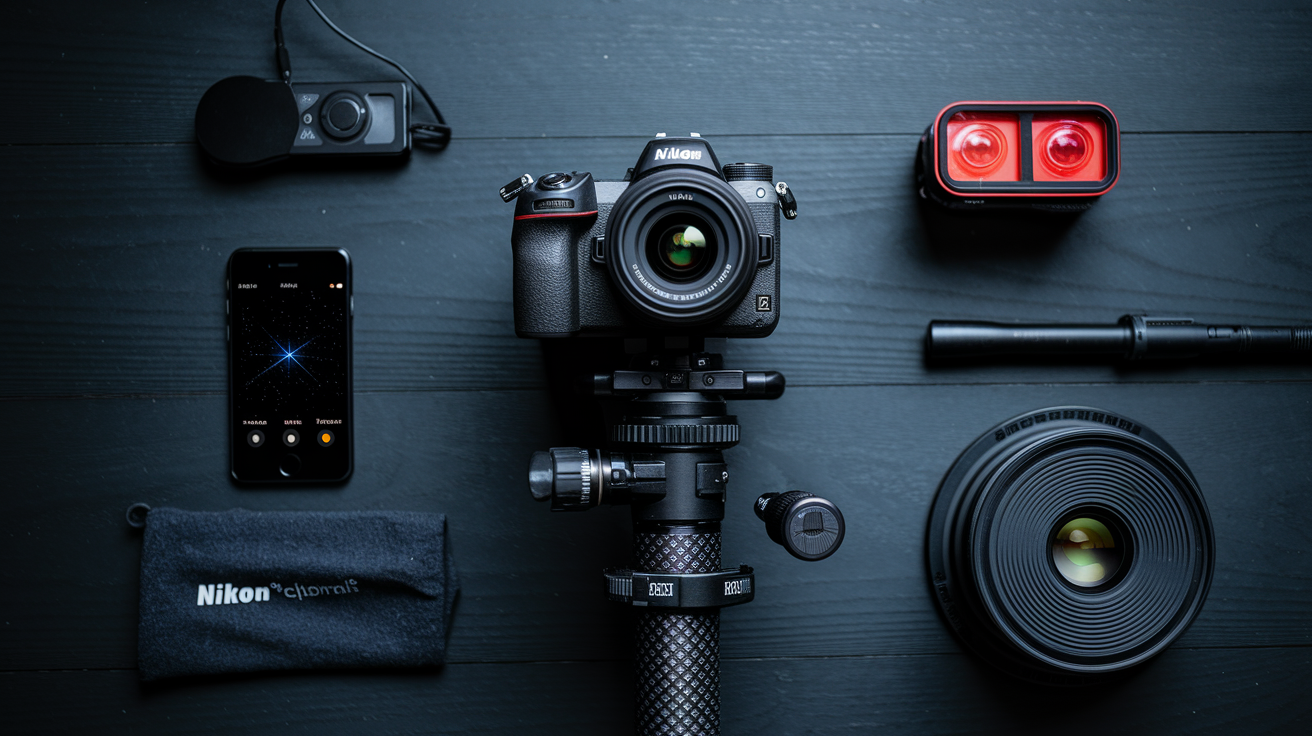
Capturing Aurigid meteors on camera demands wide-field lenses, long exposures, and patience. Because these meteors are both faint and fast, a full-frame camera with strong low-light performance (such as the Nikon Z6 II or similar weather-sealed models) gives you the best chance of recording successful trails. Mount your camera on a sturdy tripod, frame a broad section of sky that includes the area around Auriga without centering the radiant itself, and use a fast wide-angle lens (14 through 24 mm, f/2.8 or wider if possible). Set your ISO between 1600 and 3200 to gather enough light from dim meteors, and choose shutter speeds of 15 to 30 seconds to balance star trailing and meteor capture. Longer exposures may turn stars into short streaks due to Earth’s rotation, but they also increase the likelihood of recording a meteor during the exposure window.
Interval shooting, or time-lapse mode, automates the process by taking continuous frames with minimal gaps, ensuring you don’t miss a meteor between manual shutter presses. Configure your camera to shoot one frame every 20 to 30 seconds, then let it run for an hour or more. Review the sequence later to find successful meteor captures. Composition matters. Include an interesting foreground element (a tree line, hilltop, or distant mountain) to anchor the image and provide context. Avoid placing bright artificial lights in the frame, as they cause lens flare and reduce contrast. Smartphone cameras struggle with meteor photography because their small sensors and limited manual controls can’t gather enough light from faint, fast-moving objects, though recent flagship models with dedicated night modes may capture the occasional bright fireball if you’re lucky.
Key camera settings and workflow tips include:
- ISO: 1600 through 3200. Higher values for very dark sites, lower if moonlight is present.
- Shutter speed: 15 through 30 seconds. Experiment to find the sweet spot between meteor capture and star trailing.
- Aperture: widest available (f/2.8 or wider). Faster glass gathers more light.
- Focus: manual focus set to infinity. Use live view and a bright star to confirm sharpness.
- Interval shooting: enable time-lapse or intervalometer mode to automate continuous frames. Set a 1 through 2 second gap between exposures to minimize dead time.
Final Words
Under the pre-dawn sky, Auriga climbs and the night of Aug 31–Sept 1 often gives the best chance to catch quick, faint streaks.
We covered the active window (Aug 28–Sept 5), expected rates (typically 1–6 per hour), speeds around 67 km/s, how to find the radiant near Theta Aurigae, and simple viewing and camera tips for darker skies.
If you can watch in the last hour before dawn, the aurigid meteor shower can still surprise you with a bright streak or two. Happy watching. Clear skies.
FAQ
Q: Where can I see the Aurigid meteor shower?
A: The Aurigid meteor shower can be seen best from the Northern Hemisphere, with the radiant in Auriga; watch the pre-dawn sky during Aug 28–Sept 5, peaking around Aug 31–Sept 1.
Q: What time is best to see the meteor showers tonight?
A: The best time to see meteor showers tonight is the last hour before local dawn when the radiant is highest; arrive early to let your eyes adapt and avoid bright lights and moonlight.
Q: Where can I see the Arietid meteor shower?
A: The Arietid meteor shower can be seen from the Northern Hemisphere near sunrise, but it’s mainly a daytime shower; visual rates are low, so radio or radar observations detect its peak more reliably.
Q: What time is the meteor shower on the 29th of July?
A: The meteor shower on the 29th of July is typically best viewed in the last hour before local dawn; check which shower peaks that date, the local peak time, and the moon phase.