

Don’t wait until after midnight—this year’s Draconid meteor shower favors early evening, not the usual late-night show.
The 2026 peak is at 1:00 UTC on October 9, but the best window opens as soon as full darkness falls on the evening of October 8 and runs into the early hours of October 9.
Northern Hemisphere viewers have a big advantage because Draco climbs high just after sunset.
This post shows the best times, where to look in the sky, and the top dark-sky spots to escape city lights and catch whatever the Draconids might send our way.
Key Details for Watching the Draconid Meteor Shower in 2026
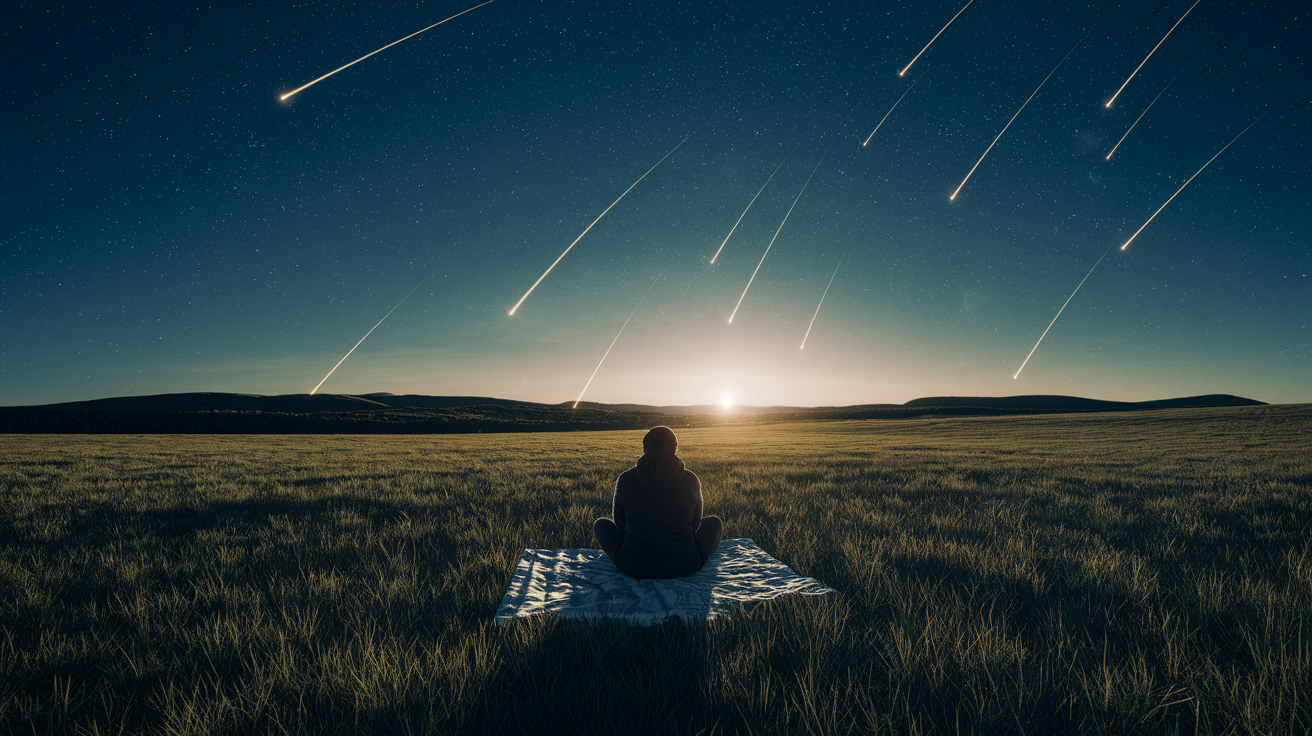
The 2026 Draconid meteor shower hits peak activity at 1:00 UTC on October 9. You can catch meteors from October 6 through October 10, but your best window runs from full darkness on the evening of October 8 into the early hours of October 9. If you’re in the Northern Hemisphere, you’ve got a serious advantage. The radiant sits in Draco, and that constellation climbs high right after nightfall.
Here’s where the Draconids break from the usual meteor shower playbook. Most showers put on their best show after midnight, but the Draconids favor evening hours. The radiant stands highest at nightfall, then drops as the night wears on. So settle in early.
Moon conditions? Excellent. A waning crescent moon means minimal interference on peak night. New moon arrives at 15:50 UTC on October 10, so you’ll have dark skies for spotting even the faintest streaks.
What you need to know for 2026 Draconid viewing:
- Expected rate: Around 10 meteors per hour at zenith under perfect dark-sky conditions
- Best hours: Start watching the moment full darkness settles on October 8. Early evening beats post-midnight.
- Hemisphere advantage: Northern Hemisphere observers win big. Southern Hemisphere? Draco barely clears the north-northwestern horizon, if at all.
- Radiant location: Look near Eltanin and Rastaban, the two stars marking Draco’s head
- Darkness requirement: Get away from city lights. Even moderate light pollution kills the shower’s typically dim meteors.
- Unpredictability factor: The Draconids have spiked to hundreds of meteors per hour before, so forecasts aren’t guarantees
The 2026 setup favors comfortable viewing with no moon to wash things out. The predicted rate stays modest, but if you’re willing to spend an evening outside, you’ve got a decent shot at catching something unexpected.
Locating the Draconids: Understanding the Radiant in Draco
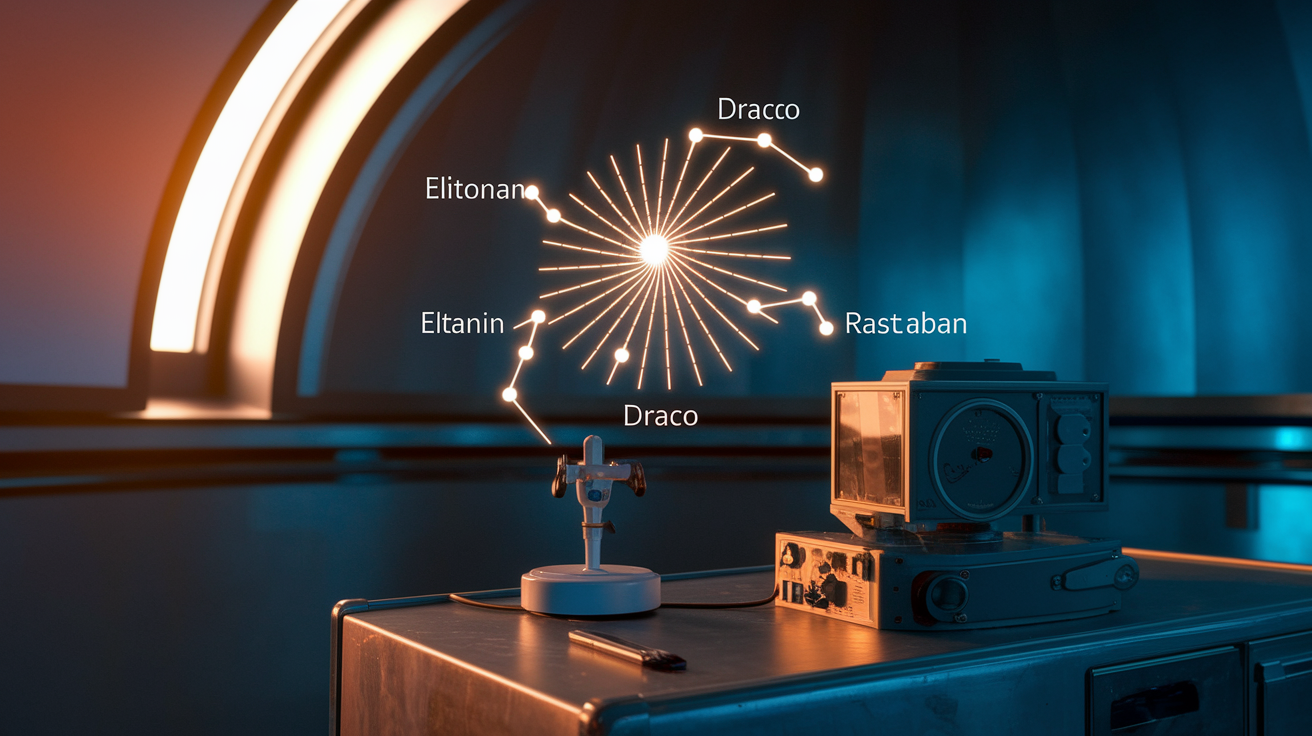
The Draconid radiant sits near Eltanin and Rastaban, two moderately bright stars that form the head of Draco. Draco itself sprawls across the far northern sky, winding between better-known constellations.
To star-hop there, start with the Big Dipper. Find the two stars on the outer edge of the bowl, then trace an imaginary arc northward. Keep going past the handle, and you’ll reach the quadrilateral of stars marking Draco’s head. Another approach: locate the Summer Triangle (Vega, Deneb, Altair), then trace north from Vega toward the circumpolar region. Draco weaves between the Big Dipper and the Summer Triangle.
Why does radiant location matter? Meteors appear to diverge from this point, though they can streak across any part of the sky. Knowing where the radiant sits helps you orient your view and understand what you’re seeing.
Radiant altitude matters even more. Higher placement means better visibility. The Draconids’ evening-favored radiant gives northern observers excellent geometry right after sunset. Farther south, Draco hugs the horizon or sets early, cutting your observable meteors and shrinking your viewing window.
Here’s how altitude changes by latitude:
| Latitude Example | Radiant Altitude Approximation |
|---|---|
| 55°N (e.g., Glasgow, Scotland) | High overhead at nightfall; circumpolar |
| 40°N (e.g., Denver, Colorado) | Moderate to high in the northern sky |
| 10°N (e.g., Caracas, Venezuela) | Low on northern horizon; sets mid-evening |
| 12°S (e.g., Darwin, NT, Australia) | Very low NNW horizon; sets shortly after dark |
Higher northern latitudes deliver longer visibility and higher meteor counts. South of the equator? You’ll see few Draconids, if any, unless you’re positioned very close to 0° latitude.
Origins of the Draconids: Comet 21P/Giacobini‑Zinner and Its Dust Trails
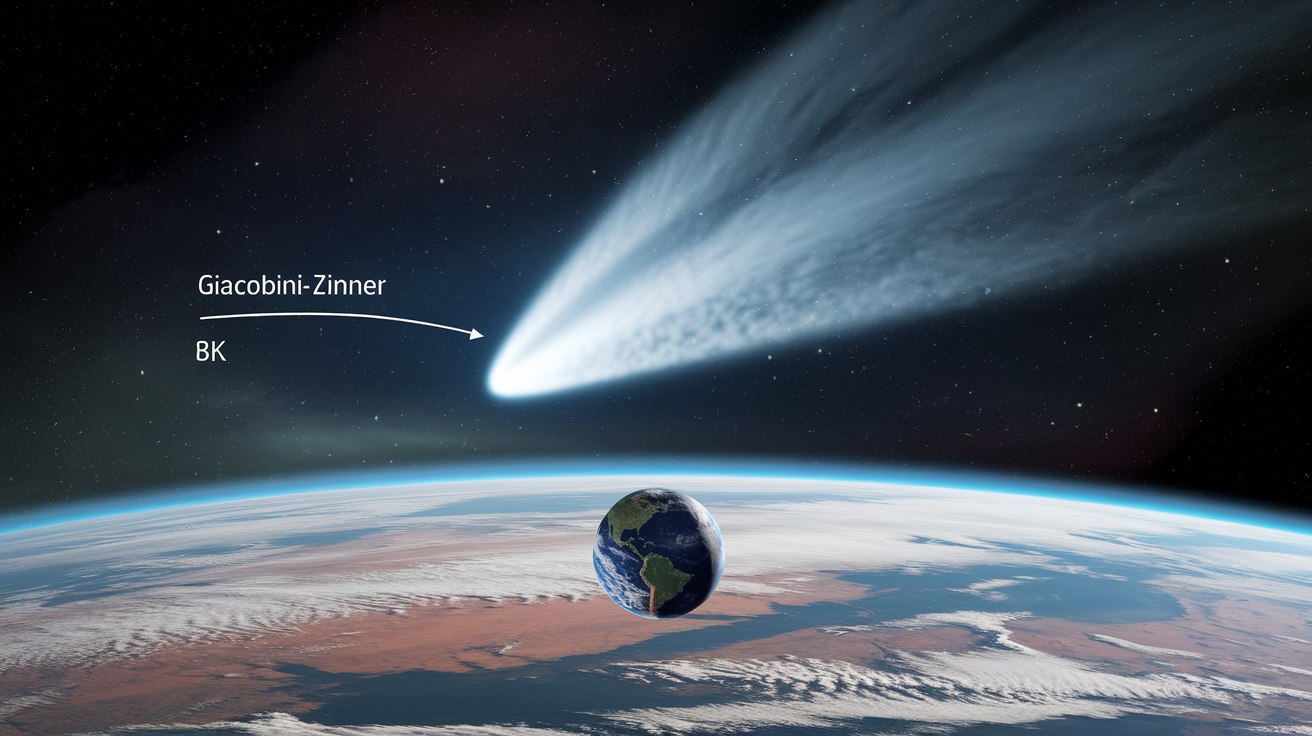
The Draconid meteor shower comes from debris shed by periodic Comet 21P/Giacobini‑Zinner. This small comet measures roughly 1.24 miles (2 kilometers) across and orbits the Sun every 6.6 years. It swings through perihelion, its closest approach to the Sun, every six to seven years. Recent passes happened on September 10, 2018 and March 29, 2025.
Each perihelion heats the comet’s icy nucleus. Ice sublimates, releasing fresh dust and small rock fragments that spread along the comet’s orbital path. When Earth crosses this meteoroid stream in early October, those tiny fragments enter our atmosphere at high speed and vaporize. The visible streaks? That’s what we call meteors.
The dust particles trail behind the comet, forming a broad stream through space. Over time, gravitational tugs and solar radiation pressure stretch and reshape the stream. Dense concentrations of material remain clustered near the comet’s recent perihelion positions. These concentrated filaments drift slowly outward from the comet’s orbit.
Dense filament crossings explain why the Draconids can jump from a handful of meteors per hour to hundreds, even thousands, without warning. Earth’s trajectory occasionally intersects tightly packed debris left during a recent comet passage. When alignment is poor or the stream is diffuse, activity stays low. When Earth slices through a fresh, narrow filament, observers get a dramatic outburst or full meteor storm.
Four processes that create Draconid meteors:
- Sublimation: Solar heating vaporizes ice in the comet nucleus, releasing embedded dust particles
- Dust release: Gas jets carry solid fragments into space, seeding the meteoroid stream
- Stream evolution: Orbital mechanics and radiation pressure spread debris along and across the comet’s path
- Earth intersection: Our planet’s October orbit intersects the stream, sweeping up particles that burn as meteors
Draconid Outbursts and Storms: A History of Surprising Sky Shows
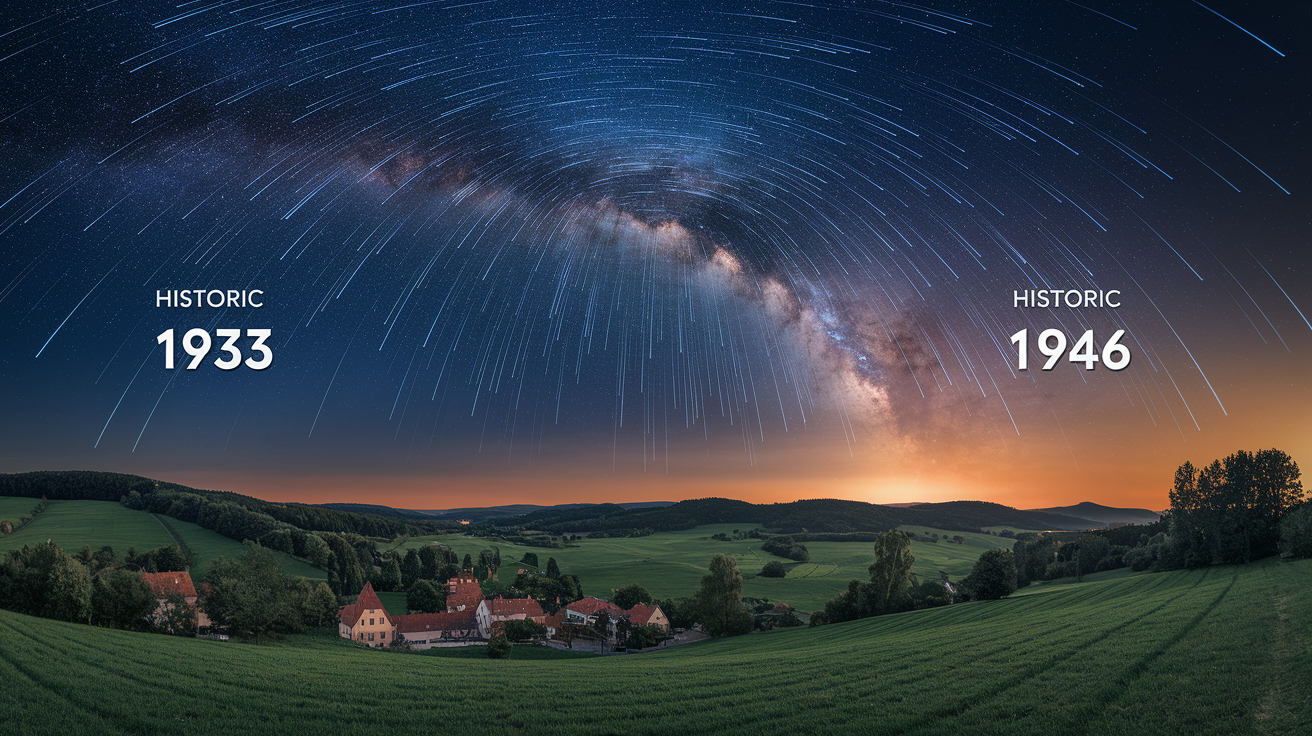
The Draconids earned their unpredictable reputation through rare but spectacular meteor storms. In 1933 and 1946, observers across Europe watched thousands of meteors per hour fall like rain. Rates so extreme they redefined what the shower could do. Most years, though, the Draconids produce modest activity that leaves casual observers underwhelmed.
Unpredictability comes from uneven debris distribution. Fresh material released near perihelion stays tightly clumped for decades before dispersing. If Earth’s orbit intersects one of these dense pockets, rates skyrocket. Miss them by even a small margin? The shower disappoints.
Scientists can model stream positions, but small uncertainties in comet outgassing, past ejection velocities, and gravitational nudges from Jupiter make precise prediction tough. So each October carries a low but real chance of surprise.
Notable years for Draconid activity:
- 1933 – European observers reported rates exceeding several thousand meteors per hour in a brief, intense storm.
- 1946 – A second major storm produced similar rates, confirming the shower’s storm potential.
- 1985 – Modest enhancement observed. Rates rose above baseline but didn’t approach storm levels.
- 1998 – Increased activity noted. Scattered reports of dozens of meteors per hour in favorable locations.
- 2011 – European observers documented rates around 600 meteors per hour during a brief outburst window.
- 2018 – An outburst coincided with the comet’s September 10 perihelion, delivering elevated rates to well-placed observers.
Viewing the Draconids Across the Globe: Northern vs Southern Hemisphere
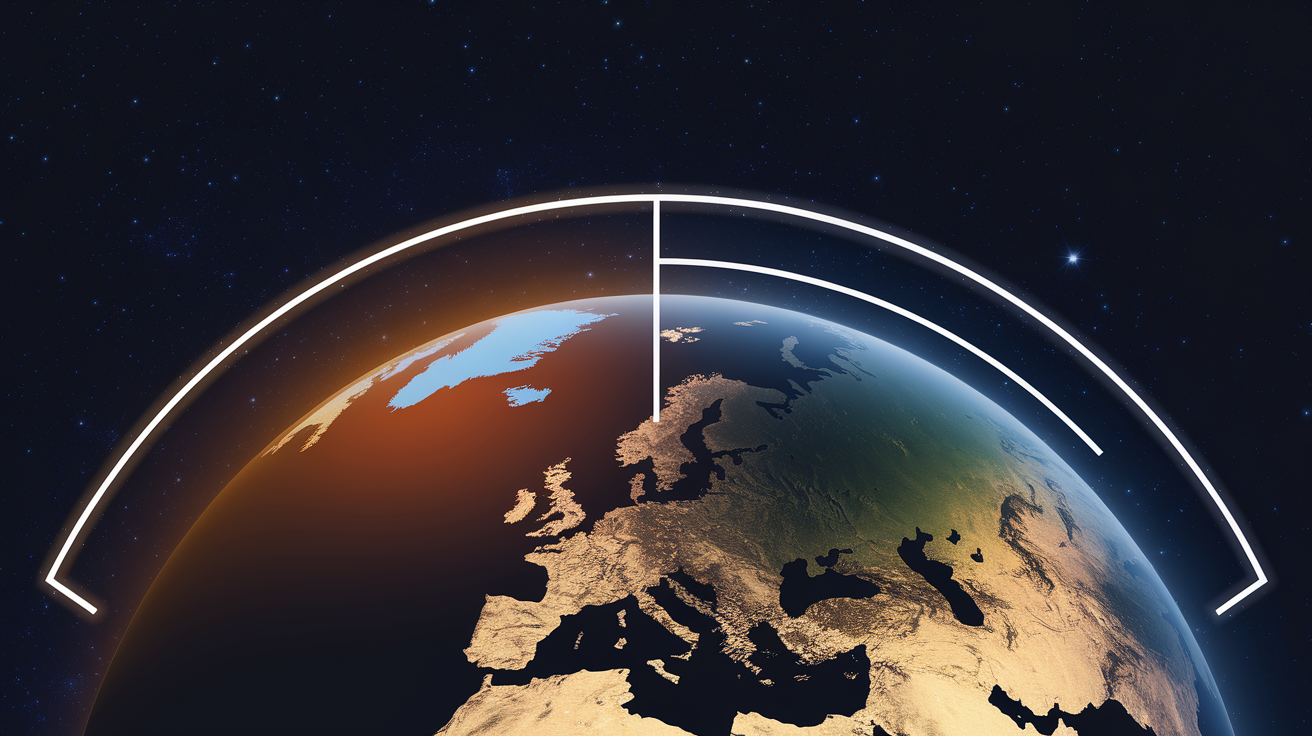
The Draconids strongly favor Northern Hemisphere observers. The radiant constellation Draco is circumpolar or sits high in the northern sky. At latitudes above 40°N, Draco stays visible all night, and the radiant stands comfortably high during the critical evening viewing window. Observers in northern Europe, Canada, the northern United States, and northern Asia enjoy optimal geometry and the longest potential viewing periods. Meteors radiate from an overhead or near-overhead point shortly after nightfall.
Southern Hemisphere visibility drops sharply. Draco skims the northern horizon or never rises at all below roughly 15°S latitude. At the equator and just south (Darwin, Northern Territory at around 12°S, for example), the head of Draco appears very low on the north-northwestern horizon shortly after dark and sets within a few hours. That sharply limits observable meteor counts. Observers farther south see no Draconids.
The evening timing of peak activity compounds this disadvantage. By the time full darkness arrives, the radiant may already be setting or below the horizon for southern viewers.
Prioritize dark-sky sites regardless of hemisphere. Light pollution kills faint meteors. The Draconids typically produce dim, slow-moving streaks that vanish against urban skyglow. Choose rural locations with unobstructed northern horizons, check cloud forecasts carefully, and plan to arrive before full darkness. That gives you time to secure comfortable viewing positions and let your eyes adjust.
Practical Draconid Viewing Tips for 2026
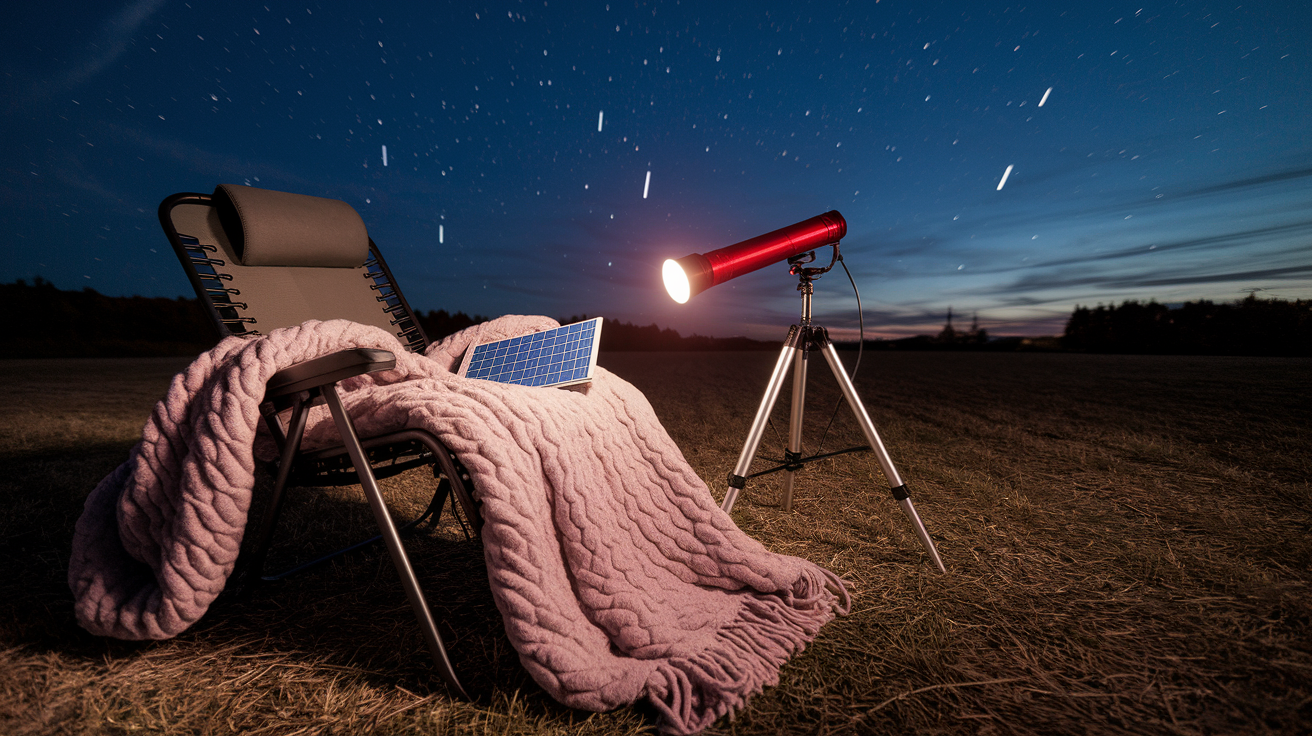
Start watching as soon as full darkness falls on the evening of October 8, 2026. The Draconids peak early, and the radiant stands highest at nightfall. You don’t need a telescope, binoculars, or special equipment. Optical aids actually restrict your field of view and reduce meteor counts. Naked-eye observation covers the widest swath of sky, maximizing your chances of spotting meteors anywhere overhead.
Give your eyes 20 to 30 minutes to fully adapt to the dark. Avoid looking at phone screens, flashlights, or any bright light source during this period. Even brief exposure resets adaptation and cuts your sensitivity to faint meteors.
Choose a location with minimal light pollution and a clear view of the northern sky. Face generally north, but don’t stare directly at the radiant. Meteors farther from Draco will display longer, more dramatic trails. Lean back in a reclining chair or lie on a blanket so you can comfortably scan a broad overhead region without straining your neck.
Dress warmly in layers. October evenings grow cold, and you may spend an hour or more outdoors. Stay patient. Meteor showers deliver bursts and lulls. The Draconids can surprise with brief spikes of activity even when rates are predicted to be low.
Draconid observing checklist for 2026:
- Warm clothing: layers, hat, gloves. Even mild evenings turn chilly after dark.
- Reclining chair or blanket: comfort sustains longer observing sessions
- Red flashlight: preserves night vision if you need to check notes or adjust gear
- Sky app or star chart: helps confirm radiant location and identify constellations
- Positioning: face north with your back to any remaining moonlight or stray light sources
- Avoid bright lights: turn off phone screens, car headlights, and nearby outdoor lights
- Observing duration: plan for at least one hour. Storms or outbursts may occur suddenly.
- Activity reports: check online meteor forums or social media for real-time reports from earlier time zones to gauge whether rates are rising
Draconid Meteor Photography and Imaging Basics
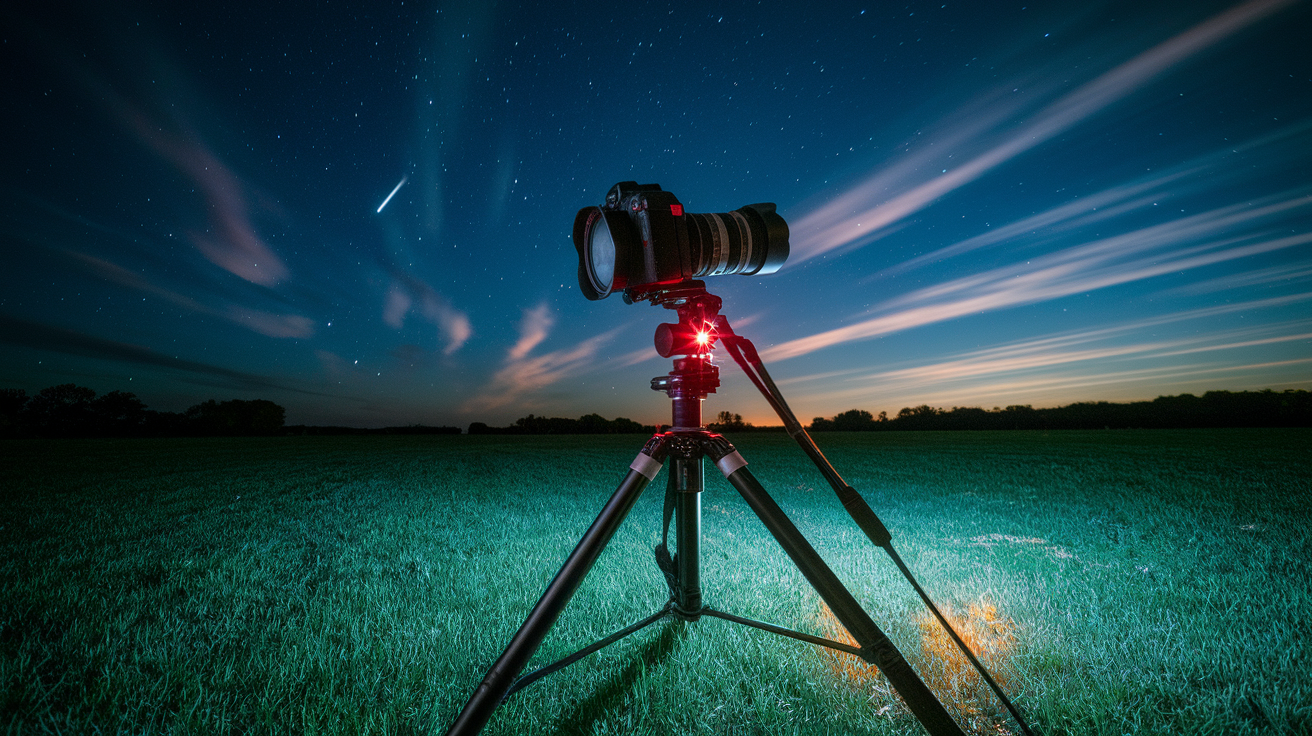
Wide-field coverage is non-negotiable for meteor photography. You can’t predict where a meteor will appear. Use a wide-angle or ultra-wide-angle lens (14 to 24 mm on full-frame, or equivalent) to capture a large section of sky in each frame. Mount your camera on a sturdy tripod and aim toward the northern sky. Include the Draco radiant in one portion of the frame but leave ample space around it. Meteors farther from the radiant produce longer, more photogenic trails.
A remote shutter release or intervalometer automates continuous shooting. You can capture dozens or hundreds of frames over several hours without touching the camera.
Set your camera to manual mode. Use a relatively high ISO (1600 to 3200 for modern sensors; test and adjust based on light pollution and sky brightness), a wide aperture (f/2.8 or faster if available), and an exposure length of 15 to 30 seconds. Longer exposures risk star trailing unless you’re using a tracking mount. Shorter exposures may miss faint meteors. Balance sensitivity and star sharpness through test shots before the peak hours begin.
In-camera noise reduction can help reduce grain, but it may slow your shooting interval. Disable it if you plan rapid-fire imaging, then apply noise reduction in post-processing.
Composition strategies for the evening Draconid shower include framing interesting foreground elements (trees, hills, buildings) to anchor your images and provide scale. Make sure the northern horizon stays unobstructed. Because the radiant is high at nightfall, consider a composition that shows the foreground, mid-sky, and overhead regions.
Timelapse sequences and image stacking can reveal subtle activity and boost faint meteors. Stack multiple frames in software to combine meteor trails into a single composite image that shows the radiant’s apparent divergence point.
Five recommended settings and techniques for Draconid meteor photography:
- ISO range: 1600 to 3200 (adjust based on lens speed and sky darkness; avoid overexposing the sky background)
- Exposure length: 15 to 25 seconds (captures meteors while minimizing star trailing; test to find your lens and sensor’s sweet spot)
- Aperture: f/2.8 or wider (maximizes light collection and sensitivity to faint meteors)
- Interval shooting: set your intervalometer to shoot continuously with minimal gap between exposures (1 to 2 seconds) to avoid missing brief events
- Noise reduction: apply in post rather than in-camera to maintain fast shooting cadence. Use dark-frame subtraction or software algorithms to clean up long-exposure noise.
Assessing the 2026 Draconid Forecast and Storm Potential

The 2026 Draconid meteor shower is expected to produce a zenith hourly rate near 10 meteors per hour under ideal conditions. There’s a low to moderate chance of enhanced activity. The parent comet, 21P/Giacobini‑Zinner, reached perihelion in March 2025 and remained relatively near Earth’s orbit into 2026. That raises the possibility of encountering a moderately dense debris filament.
Modeling efforts by meteor astronomers haven’t identified a high-probability storm scenario for October 2026, though. Expectations center on typical low-level activity, possibly punctuated by brief, minor enhancements.
The March 2025 perihelion matters. Fresh dust released during that passage will have dispersed only modestly by October 2026. If Earth intersects a concentrated stream of particles ejected during the 2025 perihelion, observers could see rates climb into the tens or low hundreds per hour. Well above the baseline forecast, but far short of the historic 1933 and 1946 storms. Past outbursts in 2011 and 2018 followed similar comet-passage timing, showing that elevated activity is possible even when a full storm isn’t likely.
Full-scale Draconid meteor storms remain rare and tough to predict with precision. Small changes in the comet’s activity, the exact distribution of ejected particles, and Earth’s intersection geometry can shift rates dramatically. While 2026 doesn’t appear poised for a major event, the Draconids have surprised observers before.
Your best strategy? Stay alert throughout the evening of October 8 and early October 9. Watch for early reports from eastern time zones. If counts start rising, you’ll know to keep watching.
Final Words
Step outside on the evening of October 8, since the predicted peak falls near 1:00 UTC on October 9 and activity runs from October 6–10 with an expected ZHR around 10.
You now know where to look (radiant near Eltanin and Rastaban in Draco), why the stream comes from comet 21P, and how past filaments make the shower’s behavior uneven.
With a waning crescent moon and modest enhancement odds, the draconid meteor shower should be a pleasant, low‑interference show for northern viewers. Bring a chair, a dark sky, and patience, and enjoy.
FAQ
Q: Where can you see the Draconids meteor shower and where is their radiant?
A: The Draconids are best seen from the Northern Hemisphere after nightfall, especially October 8-9. Their radiant sits near Eltanin and Rastaban in Draco; look north-northwest from a dark site.
Q: What time is the meteor shower on October 8th?
A: The meteor shower on October 8th is best viewed from local nightfall through early October 9, with the predicted peak at 01:00 UTC on October 9; activity runs October 6–10.
Q: What time is best to see the meteor showers tonight?
A: The best time to see the meteor showers tonight is after full darkness, start 20-30 minutes after lights-off, and watch through the first few hours after nightfall, with peak chances near local midnight to 01:00 UTC.