

Could a world 244 light-years away really be telling us it holds water in its air?
JWST’s Near Infrared Spectrograph recorded clear water-vapor fingerprints in the atmosphere of TOI-421 b during two transits (when the planet crossed its star).
Those are specific absorption lines in the near-infrared that earlier telescopes often missed for sub-Neptune planets.
This matters because it shows JWST can resolve molecules on smaller, hotter planets and gives us a new way to test how such worlds form, keep, or lose their atmospheres.
Overview of JWST’s Water Vapor Discovery
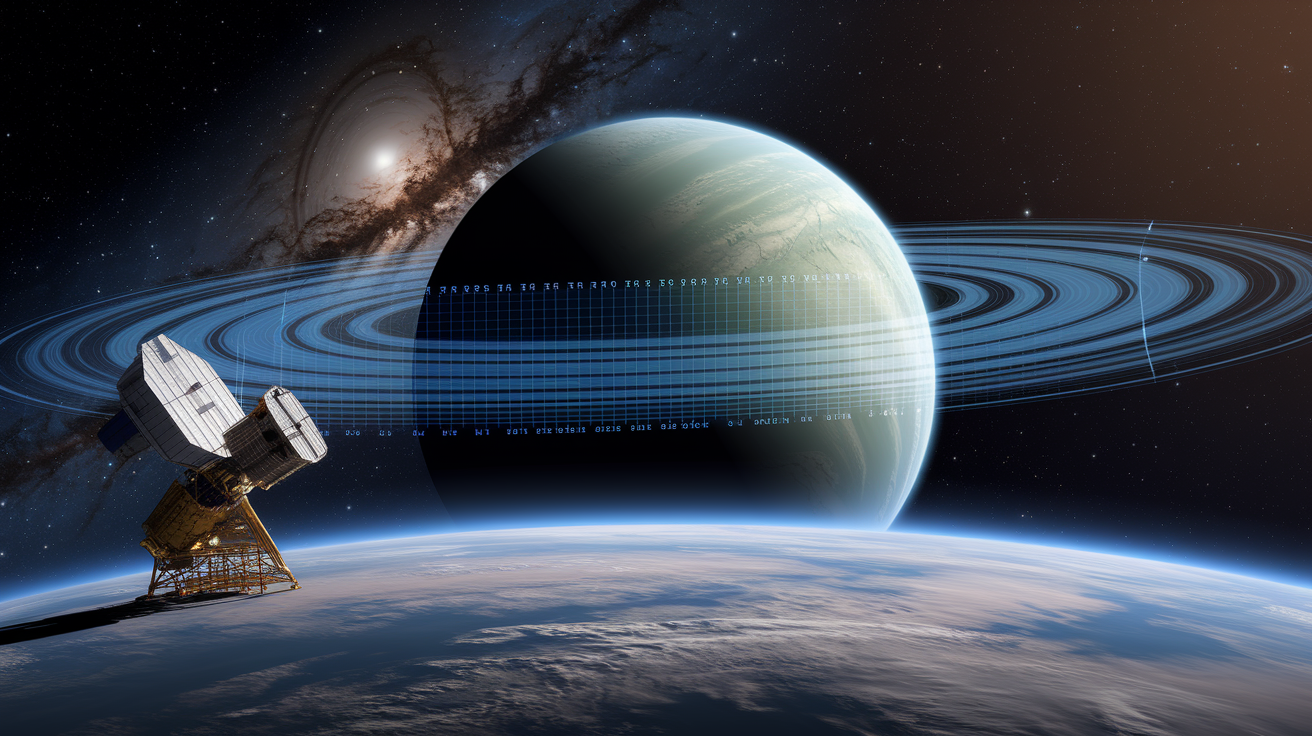
JWST detected water vapor in the atmosphere of TOI-421 b, a distant exoplanet sitting about 244 light-years from Earth. The telescope used its Near Infrared Spectrograph, working alongside the Near Infrared Imager and Slitless Spectrograph, capturing data during two separate transits. What makes this discovery matter isn’t just the detection itself. It’s that JWST picked up clear spectral signatures, those molecular absorption patterns that earlier instruments couldn’t resolve nearly as well, especially for a sub-Neptune like this one.
TOI-421 b sits in the sub-Neptune category. Bigger than Earth, smaller than Neptune. Its atmosphere runs hot at roughly 1,340°F (727°C). Beyond water vapor, the team spotted possible traces of carbon monoxide and sulfur dioxide. Methane and carbon dioxide? Absent. The atmosphere appears hydrogen-rich, matching the bulk makeup of its host star. That challenges some earlier thinking that sub-Neptunes would carry heavy-molecule, high-metallicity atmospheres.
Why does water vapor detection here actually mean something? It confirms smaller exoplanets can hold onto atmospheres we can analyze. JWST’s sensitivity opens doors that were closed before. And it raises fresh questions about how sub-Neptunes come together and change over time, especially when their atmospheric chemistry looks so different from the cooler examples we’ve studied.
How JWST Detected Water Vapor
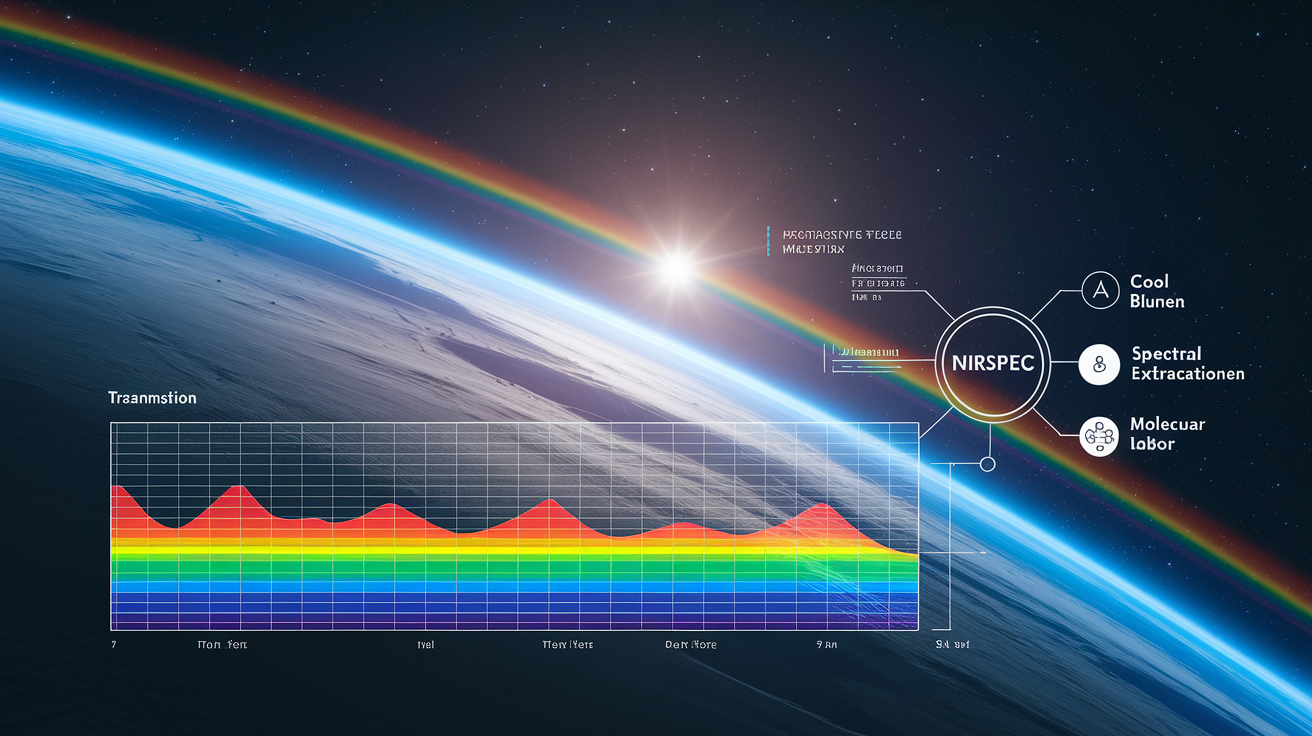
JWST relied on transmission spectroscopy to find water vapor on TOI-421 b. When the planet crosses between its star and the telescope, some starlight filters through the planet’s atmosphere before reaching JWST’s instruments. Molecules in that atmosphere absorb specific infrared wavelengths, leaving dark absorption lines in the spectrum. NIRSpec records these across near- and mid-infrared ranges with high resolution, letting scientists match what they see to laboratory fingerprints of known compounds.
Water vapor leaves characteristic absorption marks in the near-infrared, especially around 1.4 micrometers and across broader bands in the 2 to 3 micrometer range. NIRSpec captured these features clearly enough to separate water vapor from other atmospheric ingredients and from background noise. High spectral resolution was critical. It meant the instrument could isolate water’s fingerprint from overlapping signals like carbon monoxide and sulfur dioxide.
The water vapor signatures showed up as multiple absorption bands that lined up with H₂O molecular transitions. Stronger than instrumental noise, stronger than stellar noise. That gave the team a confident detection they could analyze quantitatively to estimate how much water vapor sits in the observable atmospheric layers. The absence of methane, which would’ve produced its own absorption features in similar wavelength regions, helped confirm the signals really were water vapor and not something else getting mixed up.
Steps in JWST’s water vapor detection process:
- Transit observation: JWST watches the host star’s brightness as TOI-421 b transits, collecting light before, during, and after to establish baseline and in-transit spectra.
- Spectral extraction: NIRSpec splits the starlight into a spectrum, recording intensity at thousands of individual wavelengths across the near-infrared.
- Comparison and subtraction: The out-of-transit spectrum gets subtracted from the in-transit spectrum to isolate absorption caused by the planet’s atmosphere.
- Molecular identification: The resulting transmission spectrum is compared to molecular absorption databases to match observed features with known compounds like water vapor, CO, and SO₂.
- Retrieval modeling: Statistical models fit the observed spectrum to pull out atmospheric composition, temperature structure, and abundances, accounting for uncertainties and potential contamination from clouds or stellar activity.
Scientific Context and Comparison to Previous Observations
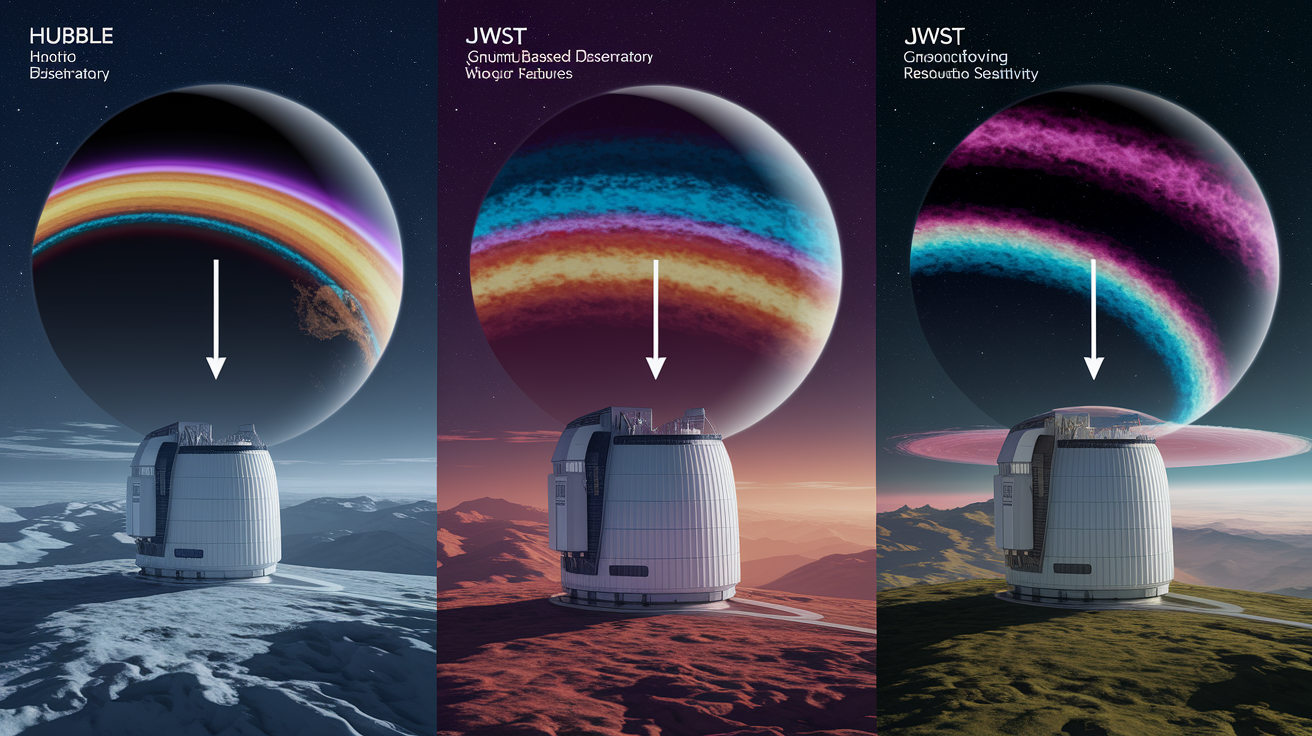
Before JWST, water vapor detections in exoplanet atmospheres came from Hubble and ground-based observatories. But those detections often struggled with limited spectral resolution and sensitivity. Hubble’s Wide Field Camera 3 could pick up broad water vapor features in hot Jupiters and some larger planets. Many sub-Neptunes, though? They produced flat or featureless spectra. No clear molecular absorption lines. High-altitude hazes or clouds blocked deeper atmospheric layers from view. Ground-based telescopes with adaptive optics and high-resolution spectrographs detected water vapor in a handful of bright targets, but atmospheric distortion and limited wavelength coverage held back the quality and reliability of those measurements.
JWST changed the game with sharper spectral detail and better sensitivity. The telescope sits at the Sun-Earth L2 Lagrange point, eliminating atmospheric interference. Its cooled instruments reach wavelengths Hubble or most ground facilities can’t touch. For TOI-421 b, JWST resolved spectral features that would’ve drowned in noise or gone undetected with earlier instruments. The team confirmed water vapor and identified additional molecules in one set of observations. This improved accuracy refines estimates of atmospheric depth, composition, and thermal structure. It turns atmospheric studies from tentative hints into something you can actually measure.
| Telescope | Detection Capability |
|---|---|
| Hubble Space Telescope | Broad water vapor features in favorable targets; limited resolution; many sub-Neptunes produced flat spectra due to hazes |
| Ground-based telescopes | High-resolution spectra for bright targets; atmospheric distortion and limited wavelength coverage; sporadic water vapor detections |
| JWST | High sensitivity and spectral resolution across near- and mid-infrared; clear molecular signatures in smaller, cooler exoplanets; no atmospheric interference |
Implications for Exoplanet Atmospheres and Formation

Finding water vapor in TOI-421 b’s atmosphere tells us something important about the planet’s thermal properties and chemical makeup. Water vapor being there means the atmosphere isn’t completely stripped by stellar radiation. Temperatures allow some volatile molecules to stick around in gas form rather than getting photochemically destroyed or condensed out at high altitudes. The hydrogen-rich composition, with water vapor, CO, and SO₂ but no methane or CO₂, suggests the planet’s atmosphere might reflect where it formed or how it evolved afterward. Migration, atmospheric escape, or chemical reactions driven by intense stellar heat at 1,340°F could all play a role.
Planetary formation models predict sub-Neptunes could pick up water and other volatiles two main ways. They could form beyond the ice line where water condenses as ice, then migrate inward. Or they could capture hydrogen-rich gas envelopes during early formation that later mix with icy or rocky material. TOI-421 b’s star-like, hydrogen-heavy atmosphere supports the idea that it formed or evolved in a way that kept primordial gas rather than piling up a thick, heavy-molecule envelope from outgassing or comet impacts. The absence of methane, which stays stable at cooler temperatures but breaks down into CO at high heat, lines up with the planet’s temperature and suggests chemical equilibrium processes are happening. That’s a testable prediction for atmospheric models.
Broader implications for similar exoplanets? Not all sub-Neptunes are built the same. Cooler ones like TOI-270 d have shown evidence of heavy-molecule or hazy atmospheres. TOI-421 b’s clear, water-bearing atmosphere points to a diversity of outcomes depending on formation history, stellar environment, and atmospheric dynamics. That variability means generalizing from one sub-Neptune detection is risky. JWST’s ongoing survey of dozens of sub-Neptunes will help map the range of atmospheric compositions and spot patterns tied to planet mass, orbital distance, and host-star type. Understanding this diversity sharpens what we know about how planetary systems assemble and what conditions lead to atmospheric retention versus loss.
Expert Insights and Ongoing Research

Astronomers working on the TOI-421 b study stressed that repeated JWST observations will be essential to refine atmospheric models and confirm the initial water vapor detection. Single-transit or two-transit spectra give you a snapshot. Additional observations can average out noise, catch variability from weather or stellar activity, and measure trace molecules at lower abundances. The team pointed out that TOI-421 b got selected because its temperature hinted at a haze-free atmosphere. The clear spectral features confirmed that prediction, showing that strategic target selection based on earlier Hubble data and theoretical work can squeeze more science out of JWST.
Ongoing research includes expanding the sample of sub-Neptunes observed with JWST’s NIRSpec and other instruments like the Mid-Infrared Instrument. The MINDS program and related surveys aim to observe 60 to 70 exoplanet atmospheres over the next few years, building a catalog of molecular signatures that will show whether water vapor is common, rare, or tied to specific planetary properties. Additional instruments and techniques, including emission spectroscopy that measures thermal emission from the planet’s day side and phase-curve observations tracking temperature variations as the planet orbits, will add complementary data to transmission spectra.
Next steps in observation and analysis:
- Additional JWST transits of TOI-421 b and similar sub-Neptunes to boost signal-to-noise and detect trace species like HDO (deuterated water) for isotopic analysis.
- Comparative studies across sub-Neptunes with different temperatures, host-star types, and orbital distances to map atmospheric diversity and test formation hypotheses.
- Retrieval model refinement incorporating new laboratory data on molecular opacities, cloud properties, and photochemical networks to cut down uncertainties in derived abundances and thermal profiles.
Final Words
JWST’s NIRSpec grabbed clear infrared fingerprints of water vapor in the exoplanet’s atmosphere, revealing molecular absorption lines that point to a warm, retained layer.
The team combined high-resolution spectra and models to move beyond earlier, fuzzier hints from Hubble and ground telescopes; that sharper data helps test formation and migration ideas.
Ongoing observations will refine composition and temperature estimates, and the growing evidence for water vapor found by JWST promises richer catalogs of exoplanet atmospheres and brighter clues about how worlds form.
FAQ
Q: What did JWST detect in the exoplanet’s atmosphere?
A: JWST detected water vapor signatures in an exoplanet’s atmosphere, identifying molecular absorption patterns in infrared light that indicate retained atmospheric gas and clues about the planet’s formation conditions.
Q: Which JWST instrument found the water vapor and how did it work?
A: The NIRSpec instrument on JWST used near‑infrared spectroscopy to split starlight, revealing molecular absorption lines from water vapor and allowing scientists to infer atmospheric composition and temperature.
Q: What does a water vapor signature look like in JWST data?
A: A water vapor signature appears as distinct absorption lines—drops in infrared intensity at specific wavelengths—matching known water molecule fingerprints and indicating the molecule’s presence and abundance.
Q: How confident are scientists that JWST really detected water vapor?
A: Scientists are confident because high‑resolution NIRSpec spectra show clear absorption patterns, but they stress repeated observations and cross‑instrument confirmation to rule out clouds or data artifacts.
Q: How does JWST’s detection compare to earlier telescopes like Hubble?
A: JWST provides sharper, higher‑resolution spectra than Hubble or ground telescopes, turning tentative, low‑resolution hints of water into clearer molecular identifications and improved atmospheric depth estimates.
Q: What does finding water vapor tell us about atmosphere and planet formation?
A: Finding water vapor indicates the planet retained gas, helps measure thermal structure, and supports models of migration and volatile delivery during formation, refining where and how the planet formed.
Q: Does detecting water vapor mean the exoplanet could support life?
A: Detecting water vapor alone does not mean the planet could support life; it’s one ingredient, but habitability also needs suitable surface conditions, stable climate, and other biosignatures.
Q: What are the next steps after JWST’s water vapor detection?
A: Next steps include repeated JWST observations, complementary measurements from other instruments, and building catalogs of atmospheric signatures to refine models and confirm findings across multiple targets.