

Think meteor showers are just slow, steady fireworks across the sky?
They’re not.
In one night you’ll see quick, thin streaks that flash and vanish, a few bright fireballs that hang like brief lanterns, and sometimes ghostly glowing trails called persistent trains (glowing trails that linger for seconds).
Colors range from white and yellow to green or blue, depending on what the rocks contain.
This post shows what to expect, why meteors look different, and how moonlight and city glow change the view, so you’ll know what to watch for.
Visual Appearance of a Meteor Shower in the Night Sky
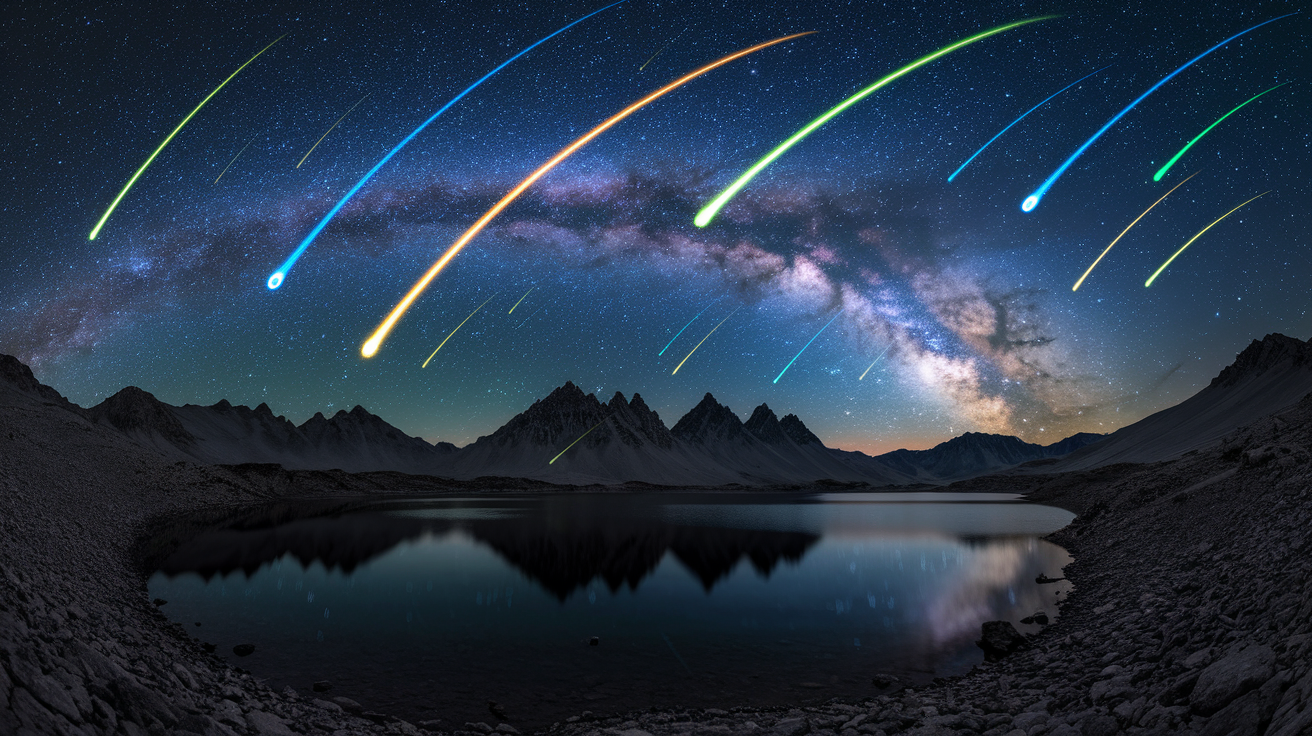
A meteor shower looks like fast, bright streaks racing across the dark sky. Each one appears and vanishes in a split second to maybe a few seconds. Most are brief flashes, thin lines that zip from one point to another and disappear before you can fully register them. Some leave glowing trails that fade slowly, hanging in the air for a few extra seconds after the meteor itself has burned up. These lingering trails are called persistent trains, and they add a quiet, ghostly elegance to the more dramatic streaks.
Colors vary widely. Most meteors appear white or yellowish, but you’ll also see green, blue, orange, and occasionally red. The color depends on what metals are burning up as the tiny rock enters the atmosphere. Sodium produces yellow-orange, magnesium glows blue-white, and iron can create yellow or green hues. Brightness ranges from faint streaks barely visible in dark skies to fireballs brighter than Venus, lighting up the ground for a moment. Fireballs are rare but unforgettable. Intensely bright, often colorful, and sometimes fragmenting into sparks as they break apart.
How many you’ll see depends on the shower, the moon, and your location. During a strong shower like the Perseids or Geminids, you might count 60 to 120 meteors per hour under perfectly dark skies with no moon. More typical showers, or viewing from a location with some light pollution, might yield 10 to 20 per hour. Even during a prolific shower, meteors arrive unpredictably. Sometimes three in quick succession, then a ten-minute gap with nothing.
Key visual traits you’ll notice:
- Streak length: Short to medium, occasionally very long if the meteor crosses a large arc of sky
- Speed: Fast, especially in showers like the Perseids or Leonids. Slower in the Taurids
- Trail duration: Most vanish instantly. Some leave persistent trains glowing for several seconds
- Color variation: White, yellow, green, blue, orange, or red depending on composition
- Fireball brightness: Occasional meteors are dramatically brighter, sometimes casting shadows
What Causes the Visual Features of Meteor Showers
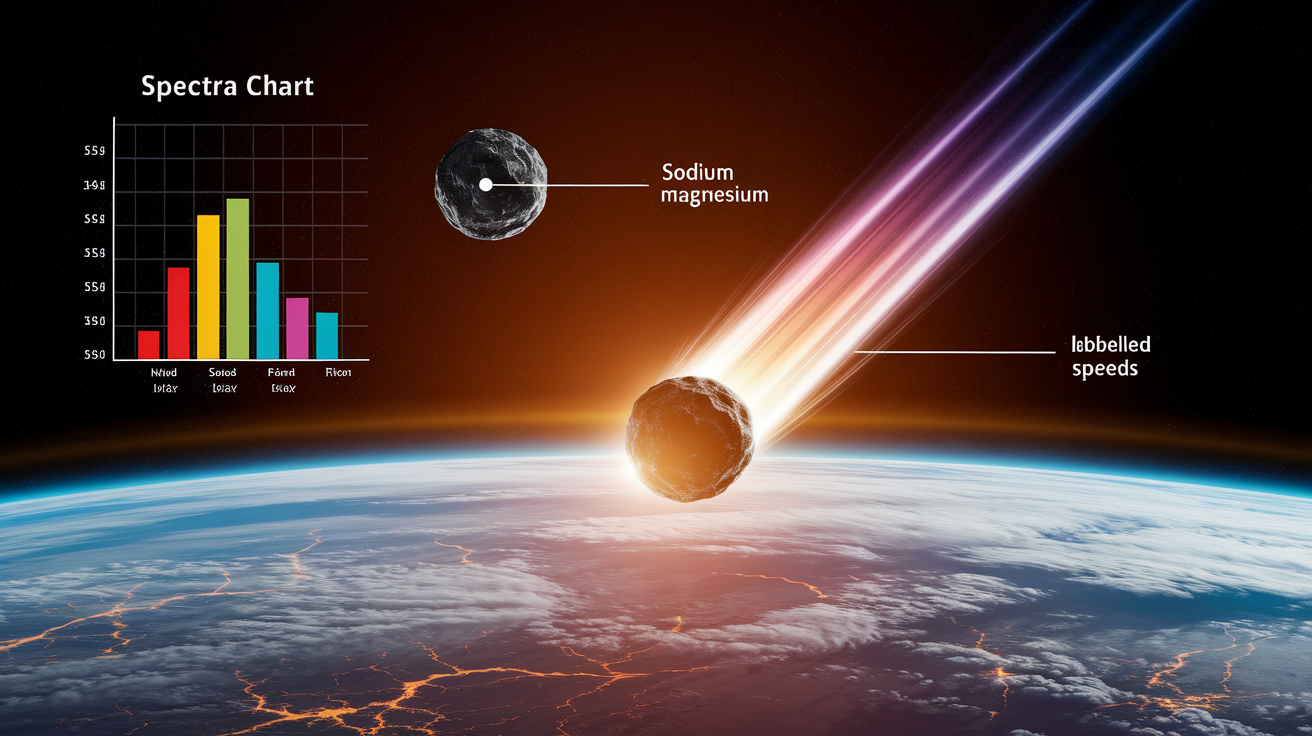
The streaks you see are caused by friction and compression heating as a small rock (usually pebble-sized) slams into Earth’s atmosphere at speeds between 25,000 and 160,000 miles per hour. The air in front of the meteoroid compresses and heats until it glows, ionizing the surrounding gas and creating a visible streak. That ionized gas forms the trail, which can persist for a few seconds as a faint glow even after the rock has vaporized. Fast showers like the Orionids produce thin, sharp streaks because the meteoroids are moving at extremely high velocity. Slower showers like the Taurids create longer-lasting, broader trails because the particles are moving more slowly relative to Earth.
Colors come from emission spectra. The characteristic light that different elements emit when heated. Sodium glows yellow-orange, magnesium blue-white, iron yellow-green, and calcium violet. The mix of elements in each meteoroid determines the color you see. A green meteor likely contains magnesium or nickel. A bright orange one probably has sodium. The ionized atmospheric gases (mostly nitrogen and oxygen) also contribute faint blue and red tints, though those are harder to see with the naked eye.
| Visual Feature | What It Means |
|---|---|
| Streak length vs. meteor speed | Higher velocity creates brighter, sharper streaks. Slower meteoroids produce longer-lasting, broader trails as they burn through more atmosphere. |
| Color vs. chemical element | Each metal emits a specific wavelength of light when heated. The visible color reveals which elements are present in the meteoroid. |
| Persistent trains vs. ionization | Ionized gas left in the meteor’s wake continues to glow for seconds. The glow fades as the gas recombines with electrons and cools. |
How the Radiant Point Shapes the Look of a Meteor Shower
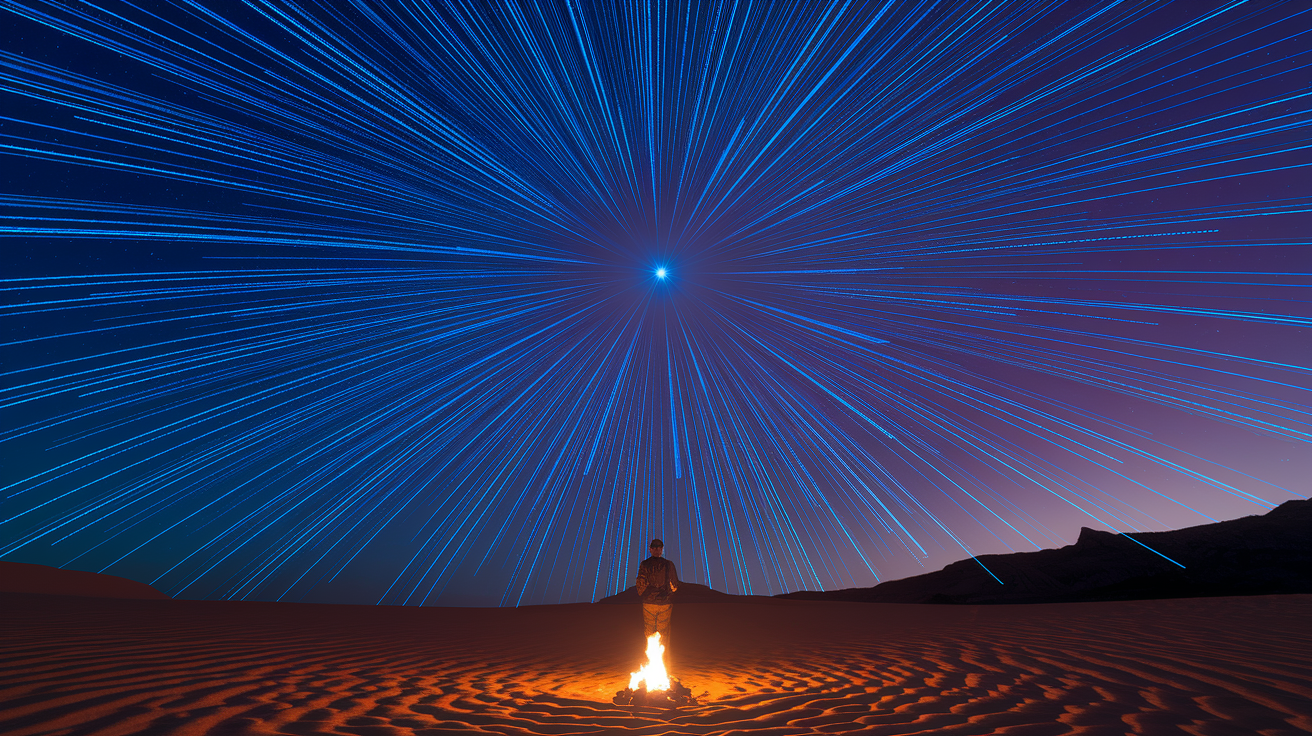
All the meteors in a shower appear to radiate from a single point in the sky called the radiant. This happens because Earth is plowing through a stream of debris left behind by a comet, and all those particles are moving in roughly parallel paths. From your viewpoint on the ground, perspective makes them look like they’re spreading out from a single spot. Like standing on train tracks and watching the rails seem to converge at the horizon. The Perseids radiate from the constellation Perseus, the Geminids from Gemini, and so on. You’ll see meteors anywhere across the sky, but if you trace their paths backward, they all point to the radiant.
The radiant’s position affects what you see. When the radiant is low on the horizon, you see fewer meteors because half the sky is blocked by the Earth, and the meteors that do appear near the horizon often look longer and slower because you’re viewing them at a shallow angle. When the radiant is high overhead (usually after midnight and into the pre-dawn hours) you’re looking straight into the debris stream, so you see more meteors, and they appear shorter and faster. Meteors seen far from the radiant look longer because you’re watching them cross a larger arc of the sky. If you look near the radiant, meteors appear short. If you look away from it, the same meteors appear as longer streaks because you’re seeing them from the side.
Meteor Frequency, Brightness, and What You’ll Actually See Per Hour
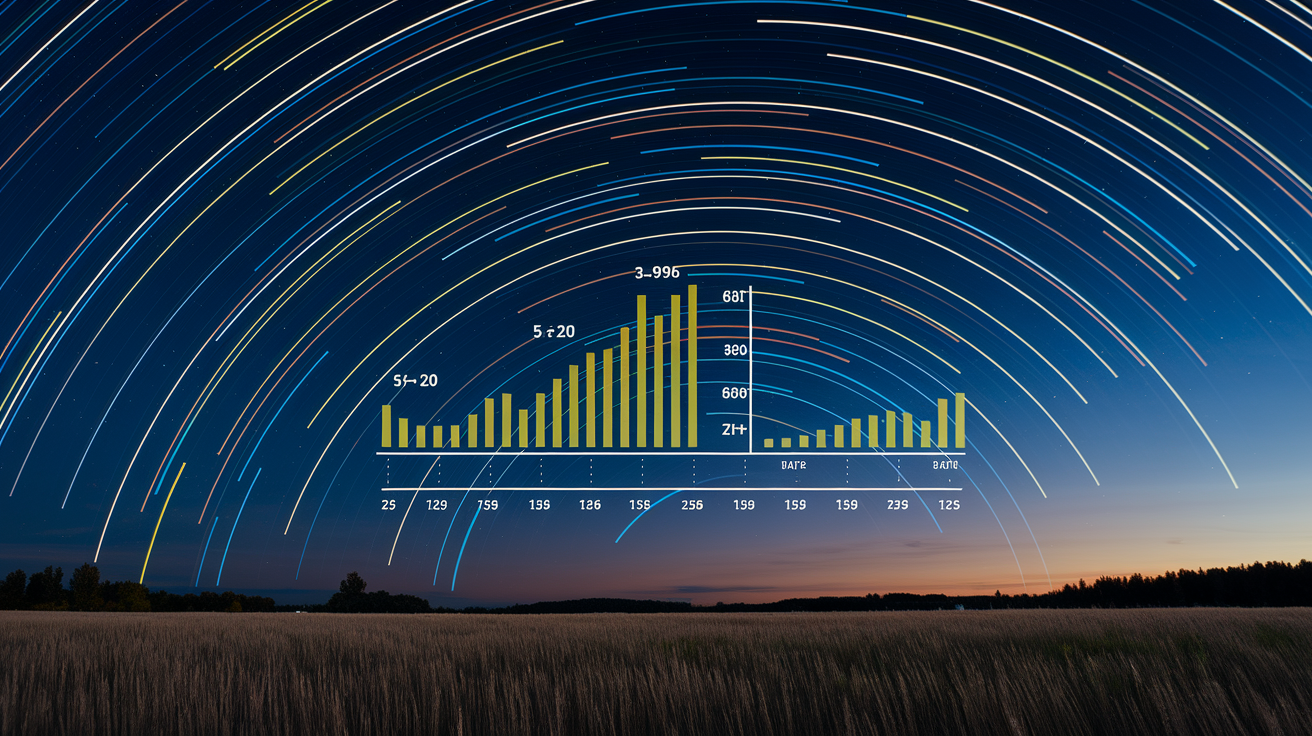
During a typical meteor shower, you’ll see anywhere from 5 to 20 meteors per hour under reasonably dark skies. Strong showers like the Perseids or Geminids can push that number to 90 or 120 per hour at peak, assuming perfect conditions. No moon, no light pollution, and the radiant high in the sky. The number quoted in forecasts is usually the Zenithal Hourly Rate, or ZHR, which assumes the radiant is directly overhead and you’re under a perfectly dark sky. Real-world rates are almost always lower. A bright moon can cut visible meteors by half or more, erasing all but the brightest streaks. City lights do the same thing, dimming faint meteors until only the occasional fireball punches through.
Brightness varies wildly within a single shower. Most meteors are magnitude +2 or fainter, about as bright as a medium star. A few per hour might reach magnitude 0 or –1, comparable to the brightest stars or planets. Rare fireballs can hit magnitude –4 or brighter, rivaling the full moon for a split second. Historically, the Leonids have produced meteor storms with thousands of meteors per hour, but those events are rare and unpredictable. Most years, the Leonids deliver a modest 10 to 15 per hour.
Variability is normal. You might see three meteors in one minute, then wait ten minutes for the next one. Showers have internal clumps and gaps in the debris stream, so the rate fluctuates even during the peak hour. Patience is part of the experience.
Four factors shape what you’ll actually count:
- Light pollution — Even modest suburban glow erases faint meteors. Rural or dark-sky parks are far better.
- Moon phase — A full or gibbous moon floods the sky with light, cutting visibility dramatically. New moon weeks are ideal.
- Radiant altitude — The higher the radiant, the more sky you’re looking into. Post-midnight viewing is almost always better.
- Observer’s field of view — Lying back to see a wide swath of sky increases your chances. Staring at one patch reduces them.
What Popular Meteor Showers Look Like Throughout the Year
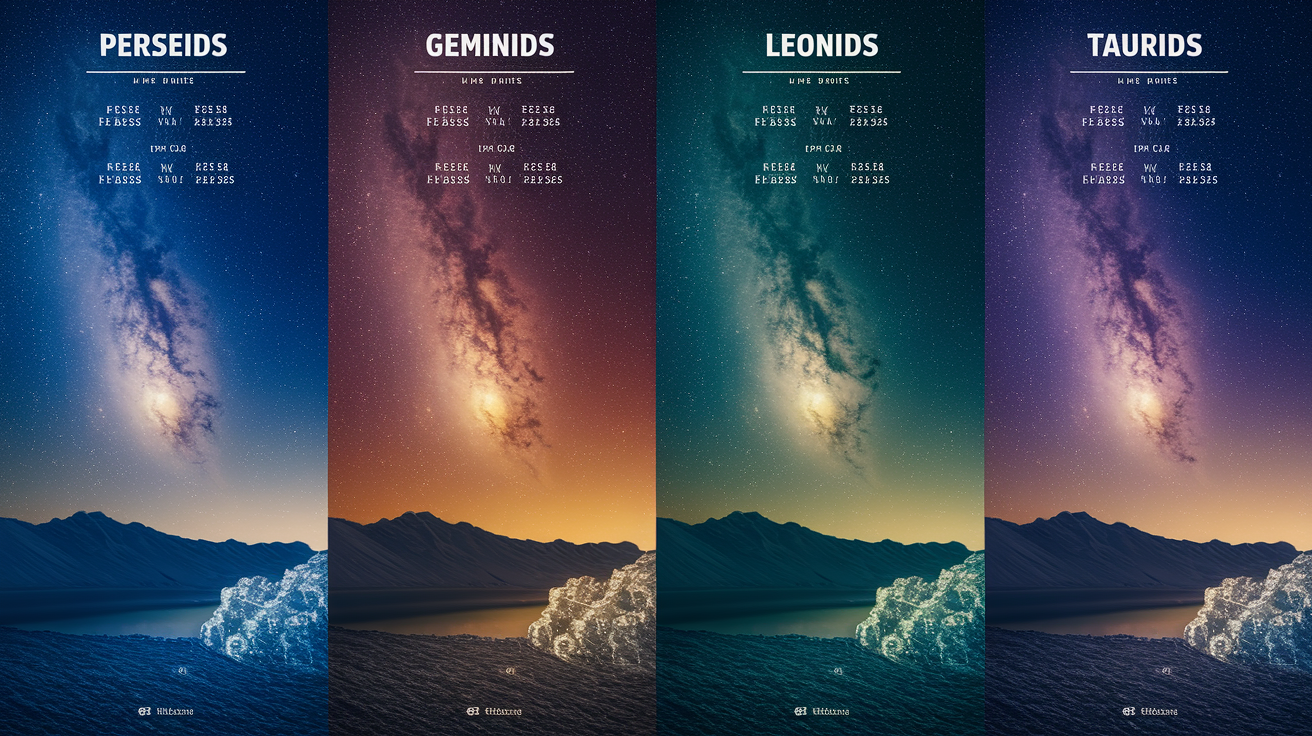
Different showers have different personalities. The timing, speed, brightness, and color of meteors vary depending on which comet’s debris stream Earth is crossing. Some showers are known for frequent fireballs, others for colorful streaks or long persistent trains. Here’s what four of the most popular showers look like when conditions are good.
The Perseids
The Perseids peak around August 12–13 each year and are famous for colorful meteors, frequent persistent trains, and high rates. Often 90 meteors per hour or more under dark skies. Many Perseid meteors are bright, and a good percentage leave glowing trails that hang in the air for a few seconds. The radiant sits in Perseus, which rises in the northeast after midnight and climbs higher toward dawn. Best viewing is in the hours before sunrise. Colors range from white and yellow to green and blue, and fireballs are common enough that you’ll likely see at least one or two during a good night.
The Geminids
The Geminids peak in mid-December and are one of the most reliable showers, often exceeding 120 meteors per hour. Geminid meteors are bold, bright, and sometimes vividly colored. White, yellow, green, and blue streaks that stand out even under modest moonlight. The radiant is in Gemini, which rises in the east around sunset and reaches its highest point near midnight, so you can start watching in the evening rather than waiting until 2 a.m. The Geminids come from an asteroid (3200 Phaethon) rather than a comet, which is unusual. The meteors tend to be slower than the Perseids, giving you a slightly longer look at each one.
The Leonids
The Leonids peak in mid-November and are known for their speed. Among the fastest meteors you’ll see, producing thin, sharp streaks that appear and vanish in a blink. Most years, rates are modest, around 10 to 15 per hour. But the Leonids are capable of producing rare meteor storms, with thousands of meteors per hour during exceptional years (most recently in 1999 and 2001). The radiant is in Leo, which rises after midnight, so the best viewing window is the pre-dawn hours. Even in a typical year, Leonid meteors are striking because of their speed and occasional bright fireballs.
The Taurids
The Taurids are actually two overlapping showers (the South Taurids and North Taurids) peaking in late October and early November. Rates are low, typically around 5 to 10 meteors per hour combined, but the Taurids are famous for producing slow, bright fireballs. The meteoroids move relatively slowly compared to other showers, so the streaks appear to drift across the sky rather than flash. Many Taurid meteors are intensely bright, and in exceptional years, the fireball rate can spike. Worth it if you’re patient and hoping for one or two unforgettable bright meteors rather than a high count.
Fireballs, Fragmentation, and Rare Meteor Phenomena
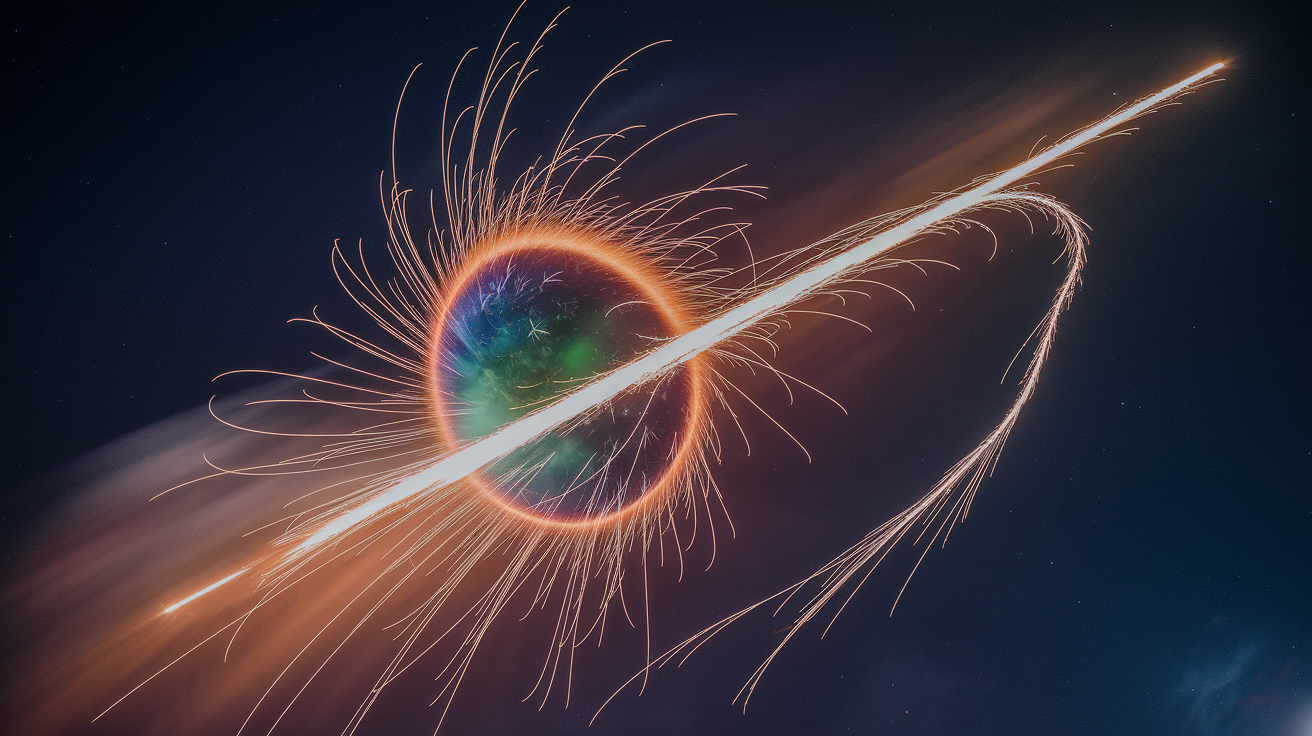
Fireballs are meteors brighter than magnitude –4, often bright enough to cast shadows and light up the landscape for a moment. They can appear in any shower, but some showers (like the Taurids and Perseids) produce them more frequently. When you see a fireball, the color is often more intense than a typical meteor. Vivid green, orange, or blue. And the brightness can be startling. Some fireballs fragment as they fall, breaking into two or three pieces that separate and streak downward in parallel. You’ll see a main streak suddenly split into smaller sparks, each one burning out independently.
Very bright meteors, sometimes called bolides, can leave persistent trains that glow for minutes rather than seconds. These trains are rare, but when they happen, they’re eerie. A faint, twisting ribbon of light hanging in the upper atmosphere, slowly fading and distorting as high-altitude winds push it around. Only the brightest meteors leave trains that last more than a few seconds. Occasionally, observers report hearing faint hissing or crackling sounds at the same moment a fireball appears. These electrophonic sounds are poorly understood but may be caused by very low frequency radio waves generated by the meteor interacting with objects near the observer. Most meteors are silent. The few that produce meteorites (rocks that survive to the ground) are exceptionally large and bright, often fragmenting with visible sparks and leaving a long-lasting smoke trail.
- Fireball brightness: Often bright enough to illuminate the ground, sometimes rivaling the full moon
- Color intensity: Fireballs display more vivid colors. Intense greens, oranges, blues, because of the extreme heat
- Fragmentation patterns: A single streak suddenly splits into two or more parallel streaks, each fading independently
- Persistent train duration: Most trains last a few seconds. Rare, very bright meteors leave glowing trails for a minute or longer
How to Tell a Meteor from Satellites, Airplanes, and Other Sky Phenomena
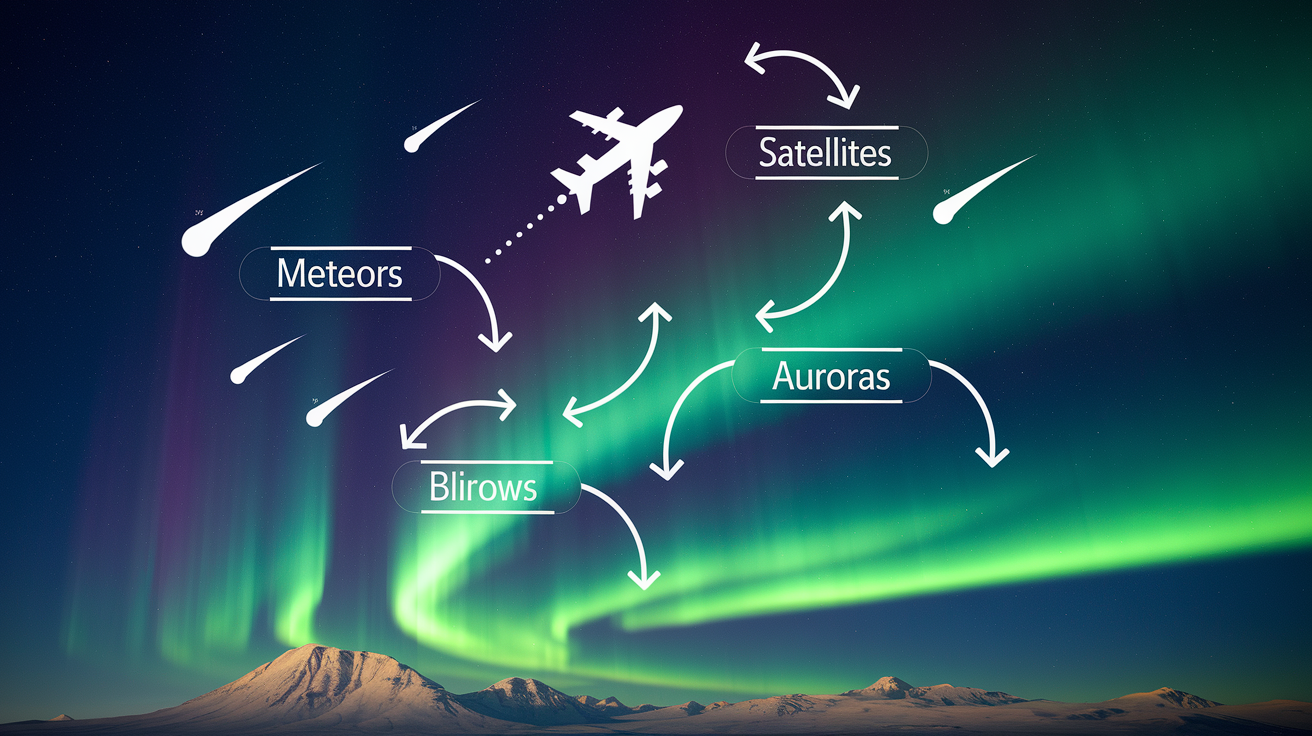
Meteors appear and disappear in less than two seconds, usually closer to a fraction of a second. If the streak lasts longer or moves steadily without vanishing, it’s probably a satellite. Satellites drift slowly across the sky, taking several minutes to cross from horizon to horizon. They don’t flash or change brightness suddenly, and they move at a constant speed. The International Space Station is one of the brightest satellites, and it looks like a steady white dot gliding smoothly overhead. Airplanes have blinking navigation lights (red, green, or white strobes) and they move more slowly than meteors. If you see a moving light that blinks, it’s an airplane.
Auroras are entirely different. They don’t streak. They glow in broad, shifting curtains or bands of green, red, or purple light, usually visible near the northern or southern horizon. Auroras can last for hours and change shape slowly, rippling and pulsing. Meteors are quick, linear, and gone. Bolides (extremely bright meteors) can be confusing because they’re so bright and sometimes fragment, but they still follow a fast, straight path and disappear within a few seconds. If you see something bright that moves quickly in a straight line and vanishes, it’s a meteor. If it drifts, blinks, or hangs in the sky, it’s something else.
Best Conditions and Locations for Seeing Meteor Showers Clearly
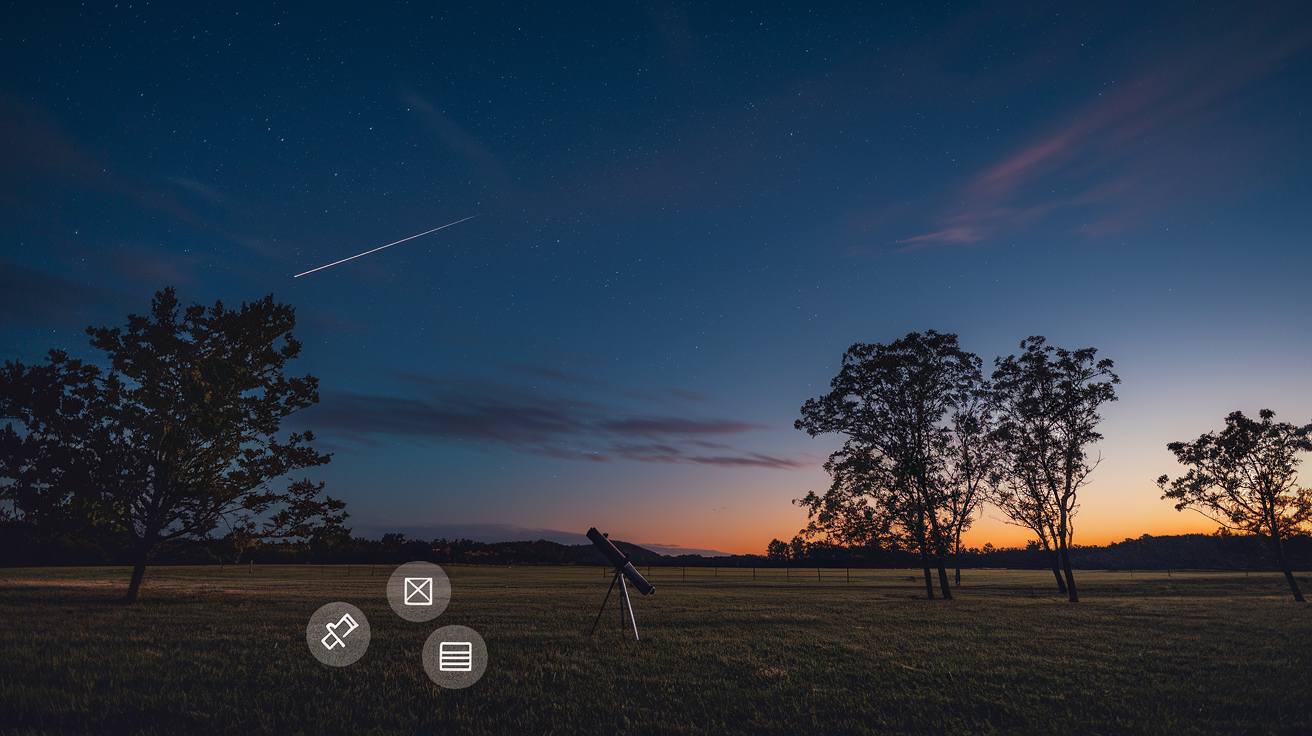
Dark skies make the biggest difference. Even a small amount of light pollution (streetlights, porch lights, or the glow from a nearby town) erases faint meteors and cuts your visible count in half or more. Rural locations far from cities are ideal. Dark-sky parks and reserves are specifically managed to minimize artificial light, and they’re excellent places to watch showers. If you can’t travel to a dark-sky site, find the darkest spot you can within a reasonable drive. Even moving ten miles outside a suburban area can improve your counts noticeably.
Moon phase is just as important as location. A full or gibbous moon floods the sky with enough light to hide all but the brightest meteors. Plan your viewing around new moon or during the days when the moon sets early in the evening. Check the moon’s rise and set times for your location and choose nights when the moon is below the horizon during the peak viewing hours. Your eyes need time to adapt to the dark, at least 20 to 30 minutes, so arrive early, turn off your headlights and phone screen, and let your vision adjust. Lie back in a reclining chair or on a blanket so you can see a wide swath of sky without craning your neck.
To maximize what you’ll see:
- Block moonlight — If the moon is up, position yourself so a building, tree, or hill blocks it from your direct view.
- Use dark-sky maps — Tools like the Light Pollution Map or Dark Site Finder show where the darkest skies are near you.
- Arrive early — Give yourself time to set up, adapt, and settle in before the peak hours.
- Allow full eye adaptation — Avoid white lights. Use a dim red flashlight if you need to check notes or gear.
- Minimize local lights — Turn off porch lights, car headlights, and phone screens. Even a neighbor’s floodlight can ruin your dark adaptation.
Photography and Video: Capturing What a Meteor Shower Looks Like
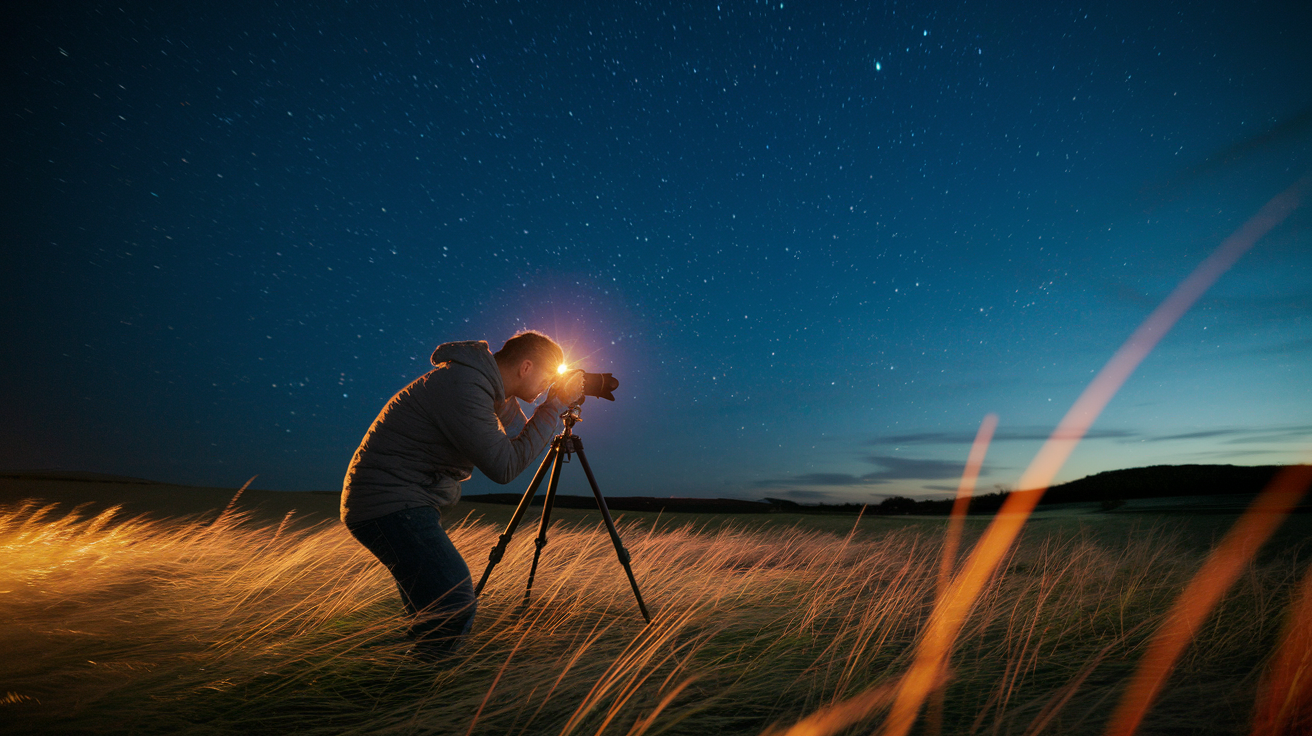
Photographing meteors requires a camera that can handle long exposures and high ISO settings. A DSLR or mirrorless camera with a wide-angle lens works best because it captures a large portion of the sky in each frame, increasing your chances of catching a meteor. Set your ISO between 1600 and 6400, open your aperture as wide as it will go (f/2.8 or wider is ideal), and use exposures of 10 to 30 seconds. Shorter exposures reduce the chance of washing out the stars or picking up too much ambient light. Longer exposures increase the odds of capturing a meteor but can blur stars if your tracking isn’t perfect.
Meteor trails look different from star trails. Star trails are smooth arcs caused by Earth’s rotation during a long exposure. Meteor trails are short, straight lines that appear suddenly in a single frame. To capture multiple meteors, shoot continuously throughout the night and stack the frames later in software. Some photographers use intervalometers to automate the process, taking hundreds of exposures over several hours. Video can also work, especially for catching fireballs or persistent trains, but you’ll need a camera with good low-light performance and a frame rate high enough to catch the brief flash.
| Technique | Key Setting |
|---|---|
| Long exposure basics | 10–30 second exposures. Wide-angle lens (14–35 mm). Tripod required for stability |
| ISO and aperture guidance | ISO 1600–6400. Aperture f/2.8 or wider. Manual focus set to infinity |
| Stacking methods | Shoot continuously. Combine multiple frames in post-processing to show many meteors in one composite image |
First‑Time Viewer Checklist: What a Meteor Shower Looks Like and How to Prepare
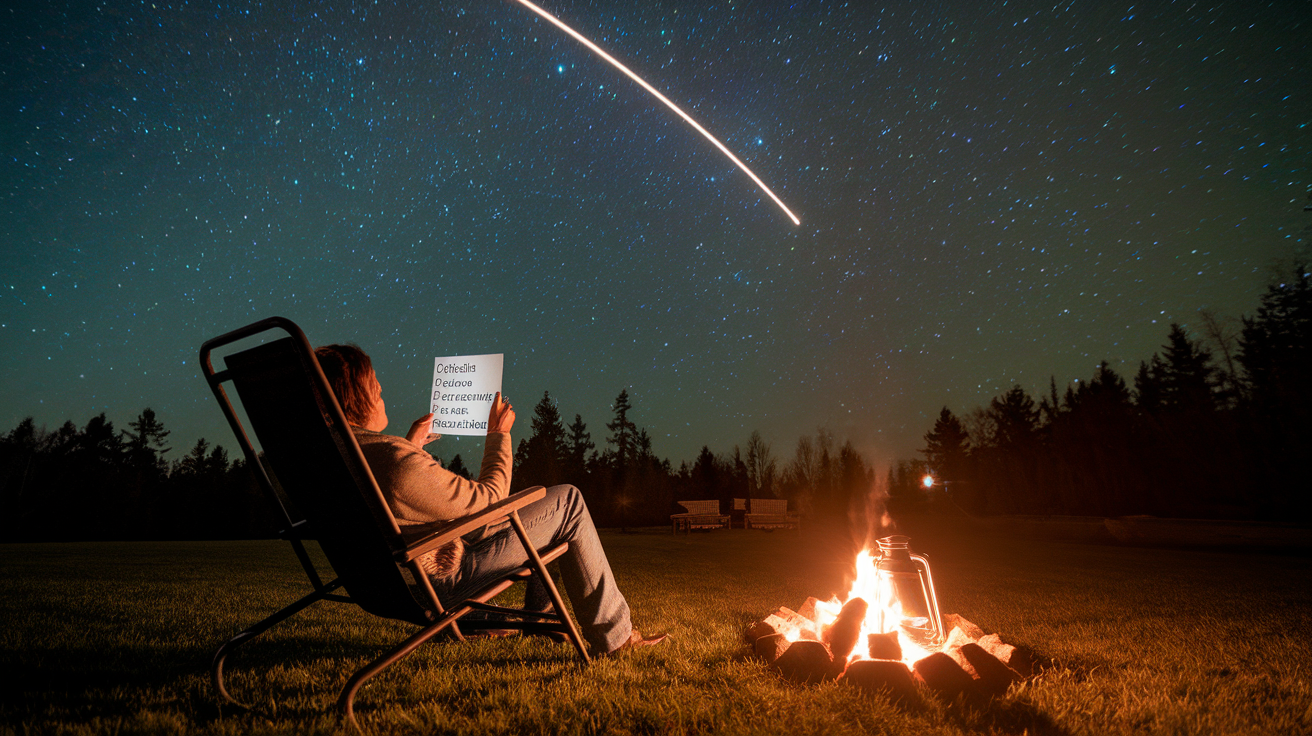
You don’t need a telescope or binoculars. Meteor showers are best viewed with the naked eye, looking at a wide section of sky rather than zooming in on one small area. The key is comfort and patience. Bring a reclining lawn chair or a sleeping bag so you can lie back and watch without straining your neck. Dress warmer than you think you’ll need. Even summer nights can get chilly after midnight, and you’ll be sitting still for an hour or more. A thermos of something warm helps. A red flashlight preserves your night vision if you need to check your phone or read notes.
Smartphone apps like SkySafari, Star Walk, or Stellarium can help you locate the radiant and identify constellations, but keep the screen brightness low and use night mode if available. Some apps will notify you of upcoming meteor shower peaks. If you want to record meteors with your phone, use a tripod or prop it against something stable, switch to a long-exposure mode if your camera app has one, and point it toward a wide section of sky. You probably won’t catch many meteors with a phone, but fireballs are bright enough to register.
- No telescope needed — wide-sky, naked-eye viewing is most effective
- Bring warm layers — temperatures drop after midnight. Blankets, jackets, and a sleeping bag improve comfort
- Reclining chair or mat — lie back to see the most sky without neck strain
- Red flashlight — preserves dark adaptation if you need light
- Meteor shower apps — track peaks, locate radiants, and get notifications
- Realistic expectations — expect variability. Some hours are busy, others quiet
- Patience and quiet — meteor watching is slow. Bring a friend, a thermos, and time to enjoy the sky itself
Final Words
There they are: quick, bright streaks cutting across a dark sky. We showed what they look like, why colors and persistent trains appear, and how the radiant shapes the view.
We set realistic expectations for hourly rates, moon and light pollution effects, and the visual differences between major showers and rare fireballs. You also got practical tips for spotting, photographing, and telling meteors from planes or satellites.
If you’re still asking what does meteor shower look like, picture short colored streaks, the occasional fireball, and faint lingering trains — and then go watch; it’s worth it.
FAQ
Q: What does a real meteor shower look like?
A: A real meteor shower looks like dozens of quick, bright streaks across the sky, from faint pinpricks to occasional fireballs, often with short-lived glowing trains and a mix of white, green, or red hues.
Q: How to tell if there is a meteor shower?
A: You can tell there’s a meteor shower when skywatchers report many more meteors than normal, a known radiant is active, and forecasts from observatories or astronomy groups list a predicted peak for your location.
Q: What time is the meteor shower on October 21st?
A: The meteor shower on October 21st usually peaks between late evening and pre-dawn local time; exact peak hour changes each year and by time zone, so check an up-to-date meteor shower calendar.
Q: What time is the meteor shower on July 29th?
A: The meteor shower on July 29th tends to favor late-night to pre-dawn hours in your local time; the precise peak varies yearly and by location, so consult current predictions from astronomy sources.