

Could a palm-sized helicopter change how Mars rovers do science?
In 2023 Ingenuity stopped being a one-off test and became an active scout for the Perseverance rover.
The mission goals shifted from proving flight to delivering usable reconnaissance: scouting routes, mapping hazards, preserving battery and thermal health, and testing autonomy in a thinner, colder atmosphere.
That meant longer flights, faster rotors, tight power trade-offs, and careful comms through the rover.
It’s about those objectives, the fixes engineers used, and why Ingenuity’s extended role mattered for Perseverance’s science plan.
Core Ingenuity 2023 Operational Objectives and Mission Priorities
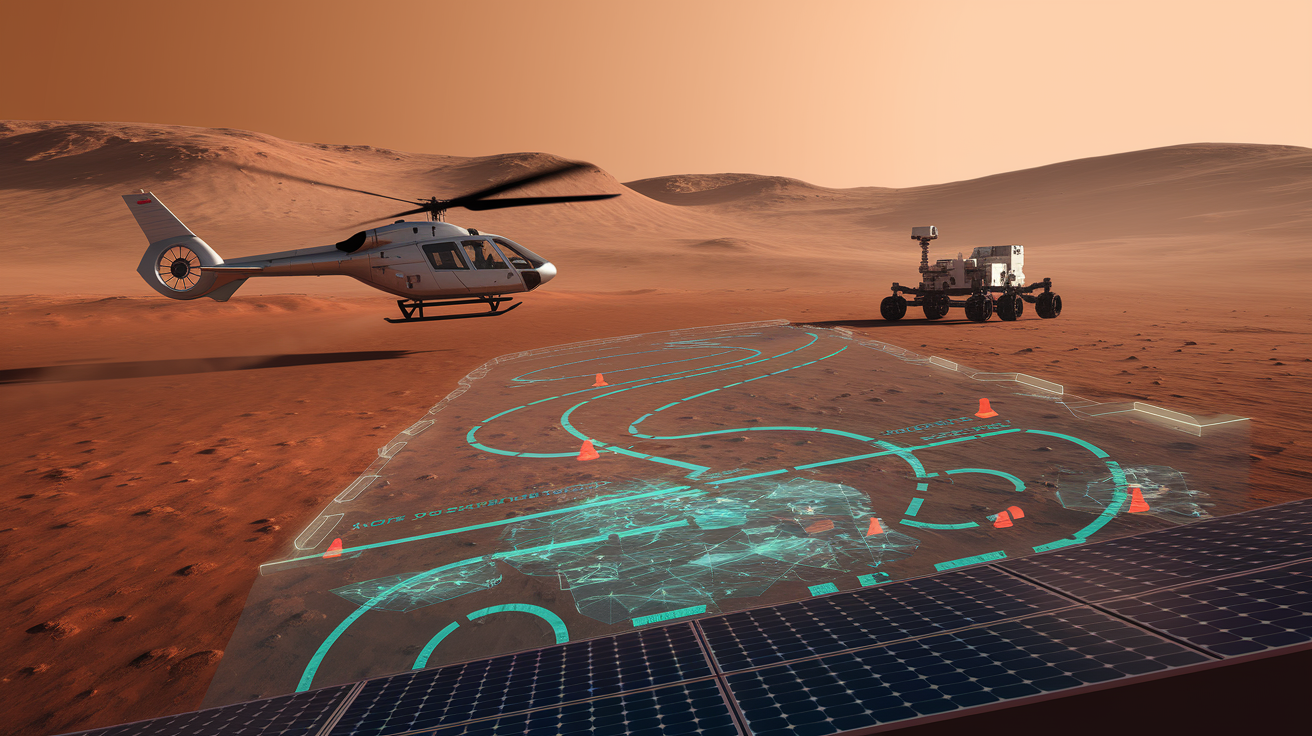
Ingenuity’s 2023 mission objectives marked a fundamental shift from proving that powered flight was possible on Mars to becoming an operational asset directly supporting the Perseverance rover’s science campaign. The helicopter’s original 30-day technology demonstration ended in mid-2021, but by 2023 it had evolved into a sustained reconnaissance platform with clear strategic goals: scout terrain ahead of the rover, map potential hazards and science targets, maintain flight readiness under worsening environmental conditions, and demonstrate long-duration survival far beyond its design life. By April 23, 2023, Ingenuity had completed 51 flights, covering nearly 12 kilometers of accumulated distance and logging roughly 90 minutes of total flight time.
These objectives weren’t picked at random. Perseverance’s mission depends on finding safe, scientifically valuable paths through Jezero Crater, and aerial reconnaissance gives the rover team eyes on terrain features that ground-based cameras can’t see until it’s too late. Ingenuity’s 2023 goals centered on delivering actionable intelligence. High-resolution images of routes weeks ahead of the rover’s arrival, identifying rocky patches or soft sand that could delay or trap Perseverance, and flagging areas worth closer investigation. Keeping the helicopter flight-ready also required managing power budgets carefully, maintaining a stable communications link through the rover, and adapting to seasonal shifts in atmospheric density that made every flight incrementally harder.
Environmental constraints shaped every 2023 priority. Mars’ atmosphere, already just 1% the density of Earth’s at sea level, dropped another 30% during seasonal cycles. Engineers had to spin Ingenuity’s rotors faster, from the nominal 2,400 rpm up to 2,700 or even 2,800 rpm. That pushed blade tips to roughly 80% of the local speed of sound, increasing vibration stress and power draw. Dust accumulation on the solar panel and falling nighttime temperatures threatened the batteries needed to survive the Martian night. Every objective had to account for these realities.
High-Level 2023 Mission Objectives:
- Reconnaissance and route scouting. Fly ahead of Perseverance to identify safe traverses and flag obstacles before the rover commits to a path.
- Terrain and hazard mapping. Capture aerial imagery to build detailed maps of surface features, slopes, and potential wheel hazards.
- Flight-frequency sustainability. Maintain operational tempo while balancing battery health, recharge cycles, and thermal stress during seasonal temperature swings.
- Winter survival and power management. Preserve enough stored energy to survive cold Martian nights when temperatures drop well below battery operating limits.
- Communications reliability. Ensure consistent radio link to Perseverance within keep-out zone limits and relay all telemetry, flight logs, and imagery through the rover to orbiters and Earth.
Ingenuity’s 2023 Reconnaissance Outputs and Terrain-Mapping Deliverables
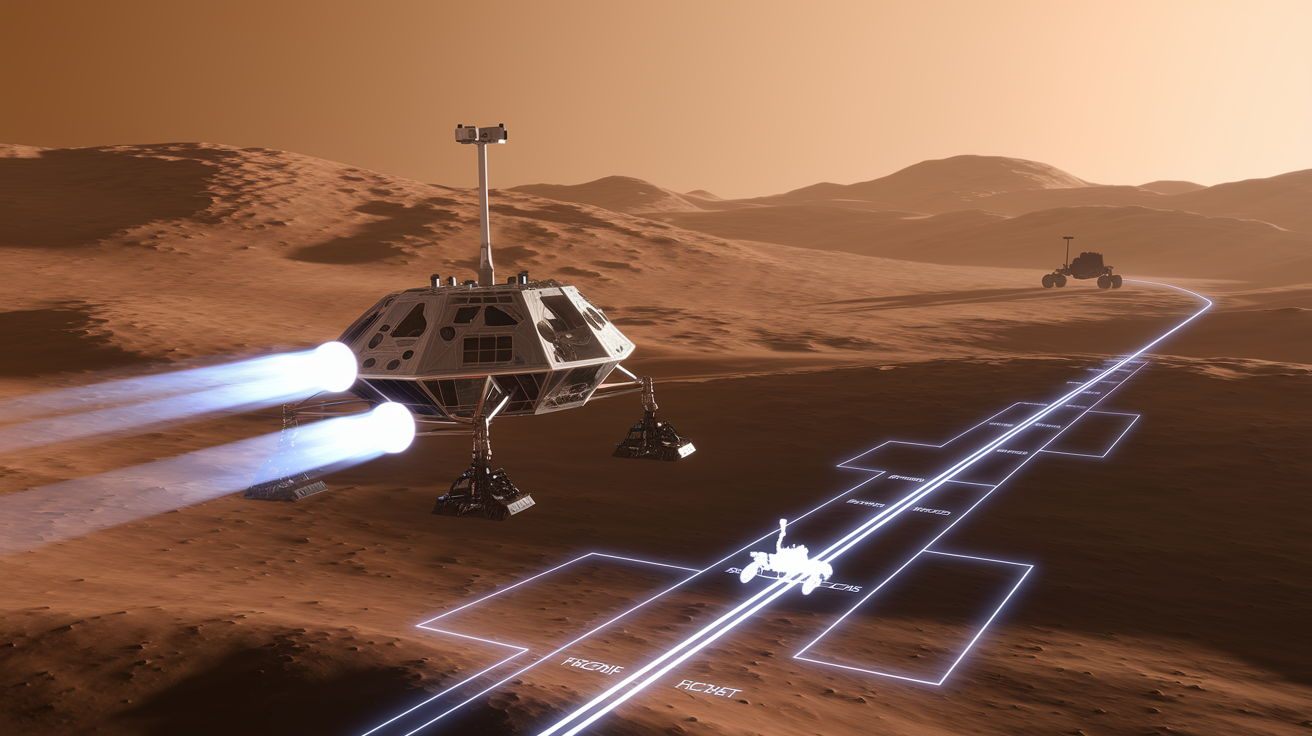
Ingenuity’s reconnaissance workflow in 2023 relied on a simple but effective loop: fly to a waypoint ahead of Perseverance, hover long enough to capture overlapping images with the helicopter’s downward-facing navigation camera and color imager, then land and transmit the data back through the rover’s relay. Those images were stitched into mosaics and analyzed on Earth, where mission planners could spot boulder fields, steep slopes, or intriguing outcrops that warranted closer rover inspection. The imaging wasn’t random. Each scouting flight targeted specific corridors the rover science team had already identified as possible routes, giving them a chance to assess trafficability and science value before committing Perseverance’s time and energy.
Extended-range flights pushed the reconnaissance envelope. During the extended mission, Ingenuity hit a single-flight distance record of 709 meters, climbed as high as 18 meters to get better vantage over ridgelines, and stayed aloft for up to 170 seconds to maximize coverage per sortie. Those benchmarks mattered in 2023 because they allowed the helicopter to scout farther ahead. Covering multiple candidate paths in a single flight and giving the rover team more options. The mapping products helped identify potential sample-collection zones where Perseverance could drill and cache rock cores, a critical objective for the broader Mars Sample Return campaign.
| Flight Objective | Representative Metric | 2023 Relevance |
|---|---|---|
| Long-range route scouting | 709 m max single-flight distance | Enabled multi-path reconnaissance weeks ahead of rover arrival |
| High-altitude terrain imaging | 18 m max altitude ceiling | Provided vantage over ridges and slopes invisible from ground level |
| Extended hover for overlapping imagery | 170 s max flight duration | Allowed detailed mosaic capture of hazard zones and science targets |
Ingenuity 2023 Flight Operations, Cadence, and Timeline Updates
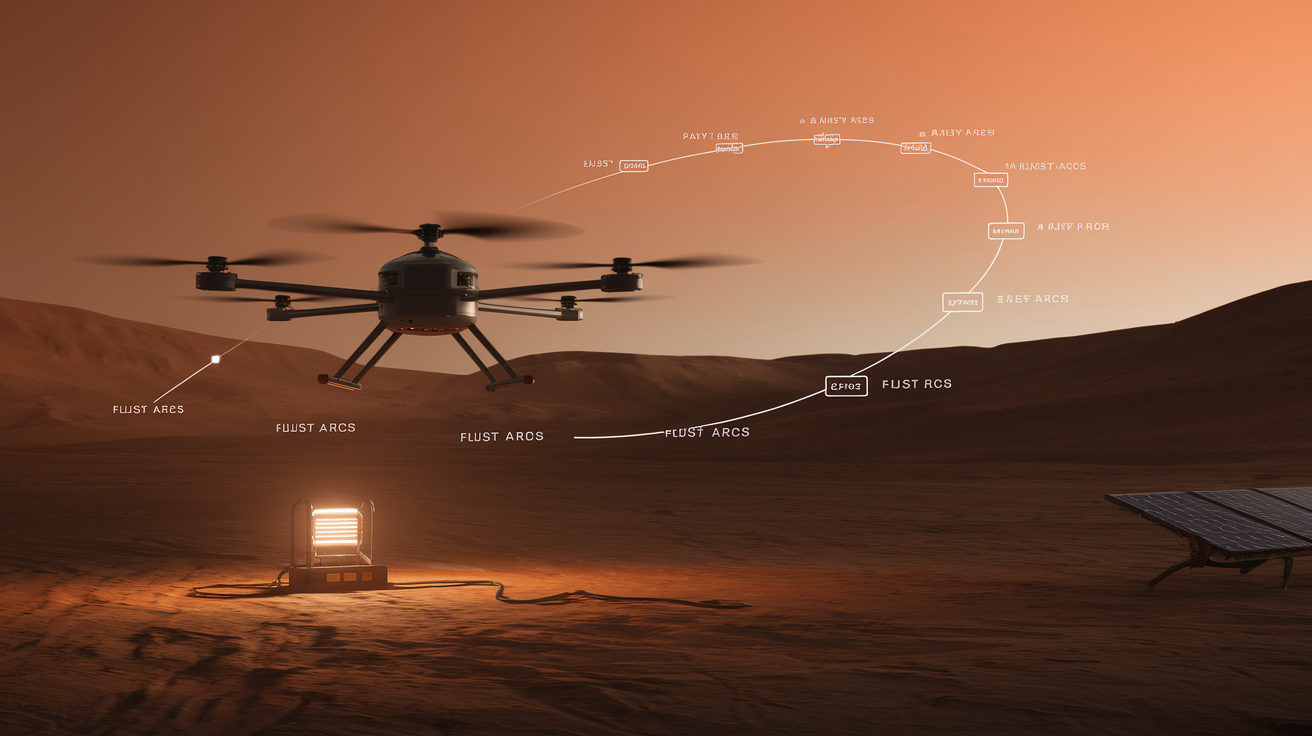
Flight cadence in 2023 wasn’t steady. Early in the year, when Martian spring brought relatively warmer temperatures and denser air, Ingenuity could fly more frequently, sometimes completing a flight every few sols (Martian days) when rover support demanded it. But as the season shifted toward winter, power availability dropped, nighttime temperatures fell, and the team had to throttle back. Some weeks saw no flights at all. Ingenuity parked on the surface, recharging its six lithium-ion batteries from the small solar panel mounted on top of its body box. Each recharge cycle took roughly one Martian day under good sunlight, and any dust on the panel or low sun angles stretched that timeline.
Winter conditions forced longer pauses. During the coldest months, engineers expected to halt routine flights entirely, possibly until mid-October, to preserve battery health and avoid pushing the helicopter’s thermal limits. The batteries had to stay warm enough overnight to survive, and that required enough stored energy to run heaters through the frigid Martian night. If a flight drained too much power, the helicopter might not make it to sunrise. The team planned conservatively, spacing flights farther apart and sometimes skipping opportunities when the risk outweighed the reconnaissance value.
Ingenuity’s timeline had to sync with Perseverance’s science plan. The rover didn’t just wander. It followed carefully plotted traverses toward high-priority geology, and the helicopter’s job was to scout those paths ahead of time. Flight 51 on April 23, 2023, covered 191 meters in 134 seconds. A modest sortie by earlier standards but timed to check a specific corridor the rover team wanted to evaluate. That kind of coordination meant every flight window had to balance what the rover needed, what the helicopter could safely do, and what the environment allowed. When those three things lined up, Ingenuity flew. When they didn’t, it waited.
Navigation, Guidance, and Autonomy Experiments Conducted in 2023
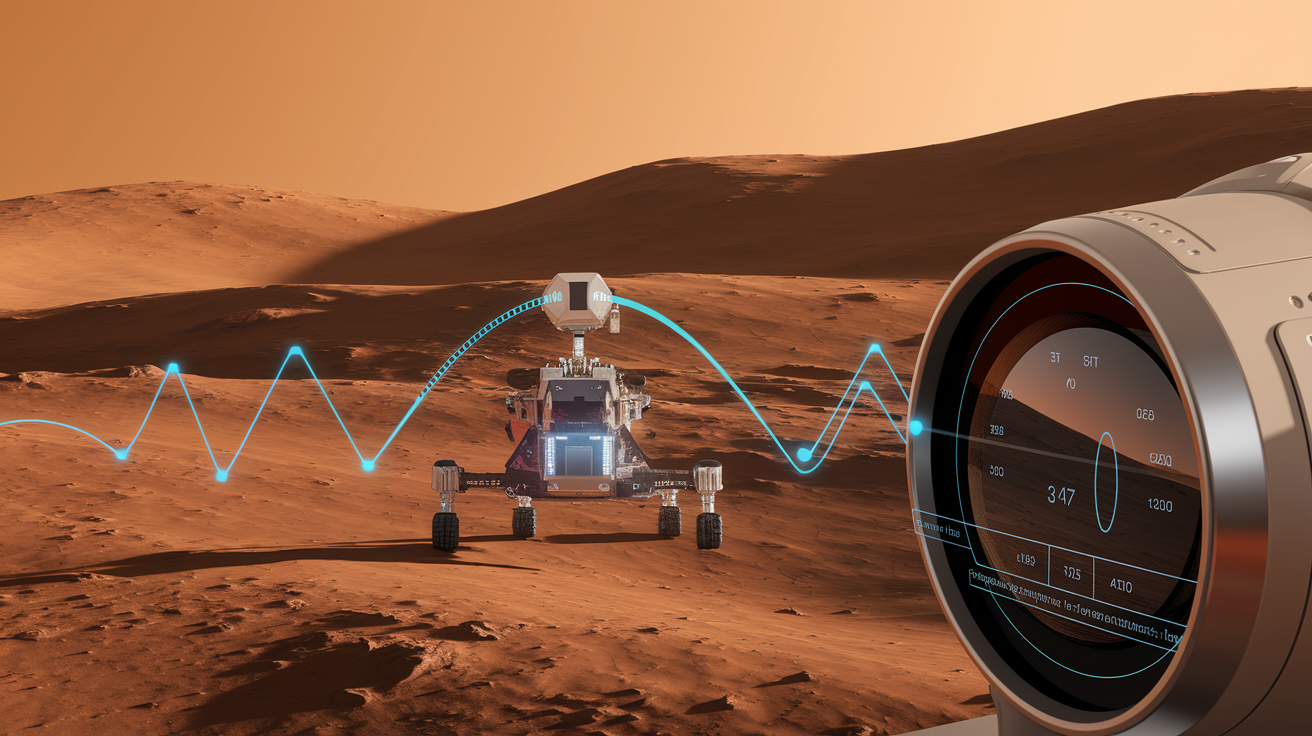
Ingenuity’s navigation system in 2023 continued to validate the autonomy algorithms that let it fly without real-time human control. The helicopter relied on visual odometry, tracking features in the surface below using its navigation camera, to estimate position and velocity during flight. An inertial measurement unit cross-checked those estimates, and onboard software fused the two data streams to keep the helicopter stable and on course. In 2023, these systems operated under harsher conditions than originally tested. Higher rotor speeds and greater vibration as blade tips approached 80% of the local Martian speed of sound. Those stresses tested whether the sensors could still deliver accurate readings when structural dynamics got more aggressive.
Hazard-avoidance behavior also saw real-world use. Ingenuity didn’t carry sophisticated terrain-mapping lidar, but it could spot large obstacles in its navigation camera’s field of view and adjust its flight path slightly to avoid landing on rocks or in steep-sided craters. The 2023 flights provided ongoing validation of these reflexes, especially in areas where the surface turned out rougher than orbital imagery suggested. Engineers also gathered data on how well the helicopter’s simultaneous localization and mapping routines held up over longer flights and in varied lighting. From early-morning shadows to midday glare.
2023 Autonomy and Navigation Validation Areas:
- Visual odometry stability. Tested whether feature-tracking algorithms maintained accuracy during high-vibration, high-speed flights and over diverse terrain textures.
- Hazard-detection responsiveness. Evaluated onboard obstacle recognition and whether the helicopter could safely abort or redirect landings when the intended zone proved unsuitable.
- Inertial measurement unit performance. Monitored IMU drift and noise levels under elevated rotor speeds and temperature swings to ensure sensor fusion remained reliable.
- Autonomous flight-termination logic. Validated decision rules that allowed Ingenuity to safely land itself if navigation uncertainty exceeded thresholds or if battery voltage dropped unexpectedly mid-flight.
Ingenuity’s 2023 Engineering Challenges and Technical Adaptations
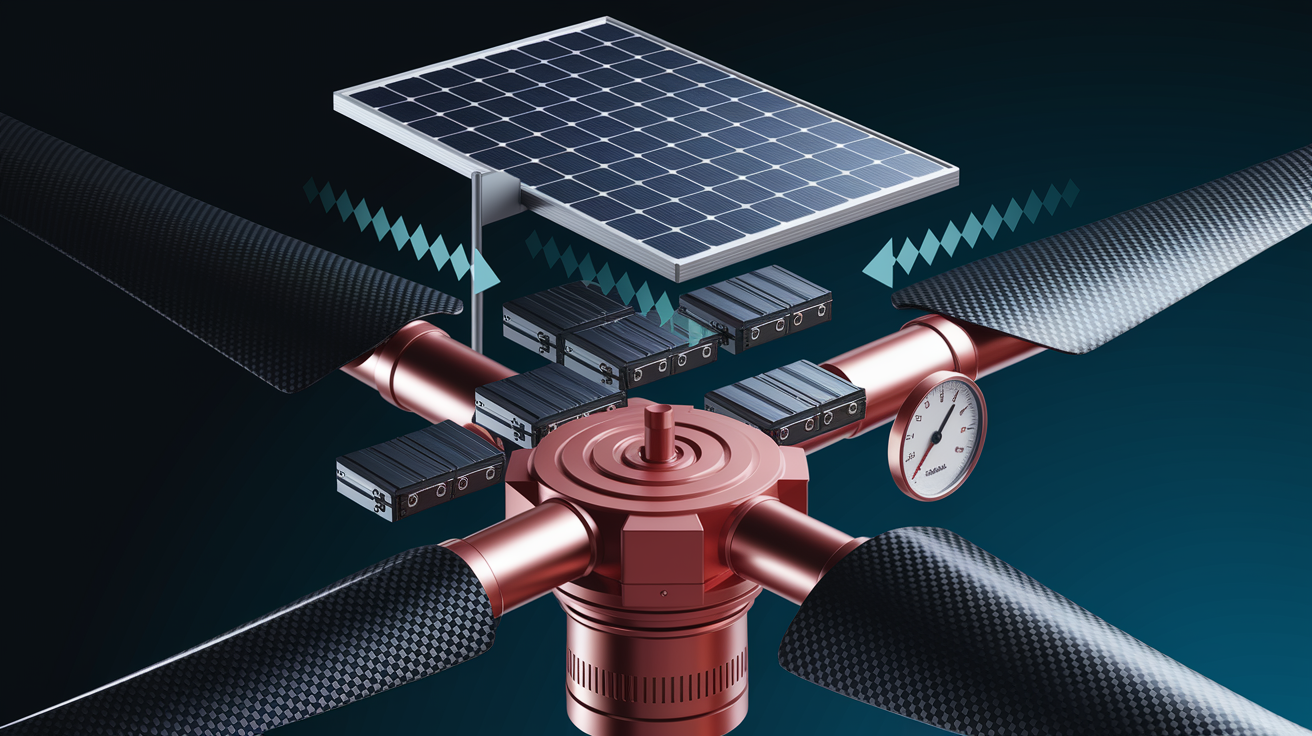
Power and battery management dominated Ingenuity’s 2023 engineering challenges. The helicopter’s six lithium-ion cells had to store enough energy to survive nighttime temperatures that could drop well below the batteries’ safe operating range, then provide the power needed for a high-rpm rotor spin-up and flight the next day. As seasonal temperatures fell, the team had to choose: fly less often to preserve battery longevity, or push the limits and risk a night the batteries couldn’t survive. Dust accumulation on the solar panel complicated recharge timing, though so far the buildup hadn’t critically reduced available power. Still, every percentage point of panel efficiency mattered when the margin between a successful recharge and a dead battery was narrow.
Rotor-speed adaptations introduced new structural and aerodynamic concerns. When atmospheric density dropped roughly 30% during seasonal cycles, engineers increased rotor speeds from the nominal 2,400 rpm to around 2,700 or even 2,800 rpm to maintain lift. That pushed blade tips closer to transonic flow regimes, where shock effects and vibration could fatigue the carbon-fiber blades or stress the rotor hub. The team monitored vibration data closely after every flight, looking for early signs of wear or dynamic instability. So far, the blades held up. But the higher speeds consumed more power and generated more heat in the motors, tightening the already constrained energy budget.
Radio-link limitations tied directly to the rover’s position and Perseverance’s keep-out zone. Ingenuity had to stay within line-of-sight range of the rover to transmit flight data, imagery, and telemetry, and it couldn’t fly into certain areas where the rover might need to operate. That meant some scientifically interesting routes were off-limits simply because the helicopter couldn’t get there and still talk to Perseverance. Earlier in the mission, the team experienced communication blackouts lasting over two months when the helicopter sat out of relay range. A reminder that Ingenuity’s operational radius was always tethered to the rover’s schedule and location.
Ingenuity 2023 Communications Relay, Telemetry, and Data Handling
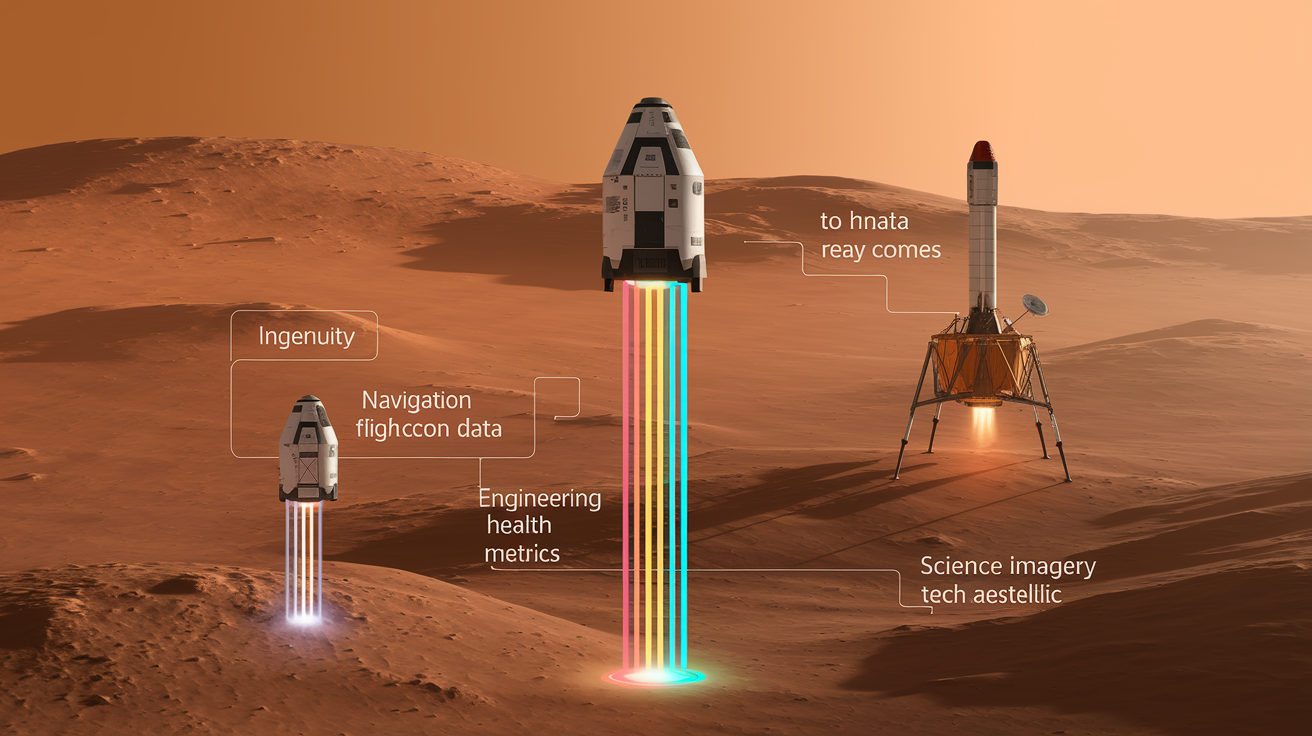
Ingenuity relied entirely on Perseverance for all communications with Earth. The helicopter carried no direct-to-orbit radio, so every byte of telemetry, every image, and every flight log had to pass through the rover’s higher-power relay system before being transmitted to Mars orbiters and eventually back to mission control. That relay chain required careful coordination. Ingenuity had to land within line-of-sight of Perseverance, usually within a few hundred meters, and the rover had to schedule dedicated communications windows to receive the helicopter’s transmissions. If the rover was busy with its own science operations or parked behind a ridge, Ingenuity’s data sat in its onboard buffer until the next available pass.
Data prioritization became essential as flight complexity increased. Not all telemetry had equal value, so the team developed a downlink hierarchy that ensured the most critical information made it back first. Engineering health data (battery voltage, motor temperatures, rotor speeds, IMU readings) went out on the first available pass so engineers could assess whether the helicopter was safe to fly again. Navigation logs followed, giving the team the trajectory and position estimates needed to plan the next flight. High-resolution imagery came last, sometimes delayed by several sols if bandwidth was limited or the rover’s schedule was tight.
2023 Telemetry Downlink Priorities:
-
Navigation and flight-control data. Position estimates, velocity logs, altitude records, and control-surface commands, transmitted immediately after landing to confirm the helicopter landed safely and to reconstruct the flight path.
-
Engineering health and diagnostics. Battery state-of-charge, rotor-speed telemetry, motor temperatures, vibration levels, and sensor performance metrics, all critical for determining readiness for the next flight.
-
Science and reconnaissance imagery. Color images from the RTE camera and grayscale frames from the navigation camera, lower priority but essential for route planning and hazard mapping, transmitted when relay bandwidth allowed.
Contribution of Ingenuity’s 2023 Flights to Mars Sample Return Planning
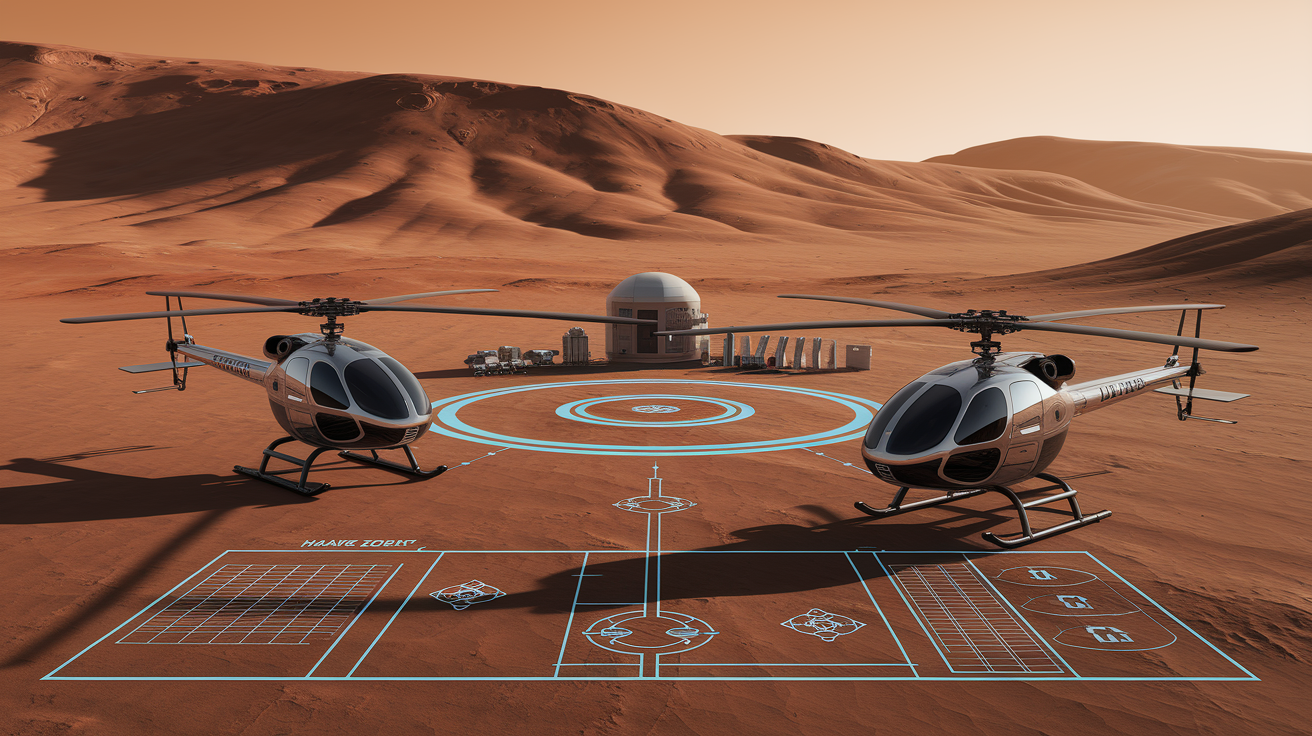
Ingenuity’s extended-mission success in 2023 directly influenced how NASA and ESA designed the Mars Sample Return architecture. Originally, the plan relied on Perseverance alone to deliver cached sample tubes to a lander that would launch them into Mars orbit. But after watching Ingenuity fly dozens of sorties well beyond its design life, mission planners added two helicopter variants as backup retrieval assets. If the rover couldn’t reach the cache depot, the helicopters could fly out, pick up individual sample tubes with small robotic arms, and ferry them back to the lander. That concept only made sense because Ingenuity proved rotorcraft could operate reliably over long timescales in Mars’ harsh environment.
The reconnaissance and hazard-mapping work Ingenuity performed in 2023 also fed into sample-return landing-site analysis. The helicopter’s aerial surveys helped identify safe zones where a future lander could touch down without hitting boulders or slopes too steep for stable operations. Those datasets, combined with orbital imagery, gave engineers higher confidence in site selection. Beyond site reconnaissance, Ingenuity’s engineering data (battery performance over hundreds of sol cycles, rotor durability under variable density, autonomous navigation accuracy) became design inputs for the planned sample-retrieval helicopters. Those would be heavier, roughly 2.3 kg versus Ingenuity’s 1.8 kg, and equipped with wheels and manipulator arms.
| Role | Supporting 2023 Insight | MSR Application |
|---|---|---|
| Backup sample retrieval | Demonstrated multi-flight reliability and autonomous landing precision | Two helicopters with robotic arms to retrieve tubes if rover unavailable |
| Landing-site hazard mapping | Provided high-resolution aerial surveys of surface roughness and slope | Informed safe-zone selection for sample-return lander touchdown |
| Long-duration operations validation | Proved batteries, solar panels, and rotors can survive seasonal extremes | Design confidence for extended helicopter deployment on MSR timeline |
| Rotor scaling and power budgets | Generated data on high-rpm performance and energy consumption trade-offs | Informed rotor-blade design and battery sizing for heavier MSR variants |
Long-Term Impact of Ingenuity’s 2023 Engineering Results on Future Rotorcraft
Ingenuity’s 2023 performance accelerated the timeline for larger, more capable Mars rotorcraft. Concepts for 30-kilogram multi-rotor drones (roughly 16 times Ingenuity’s mass) moved from speculative proposals to serious engineering studies. These larger platforms would carry science instruments, deploy multiple rotors for redundancy and lift, and traverse distances over a kilometer while hovering for minutes to collect samples or perform in-situ measurements. The engineering lessons from Ingenuity’s extended mission, especially around power management, rotor dynamics at high speeds, and long-term component survival, gave designers the confidence that scaling up was feasible.
The data also influenced Dragonfly, the nuclear-powered rotorcraft scheduled to launch to Saturn’s moon Titan in 2027. Titan’s thick atmosphere makes flight easier than on Mars, but Dragonfly’s mission planners still borrowed heavily from Ingenuity’s autonomy algorithms, hazard-avoidance logic, and flight-control architecture. The validation work Ingenuity performed in 2023 (proving that visual odometry and IMU fusion could handle real-world terrain variability and that autonomous decision-making could safely manage unexpected conditions) reduced risk for Dragonfly’s much larger and more expensive mission.
Beyond specific missions, Ingenuity fundamentally changed how planetary scientists and mission architects think about exploration. Aerial mobility is no longer a curiosity. It’s a tool. The 2023 flights showed that helicopters can scout inaccessible terrain, extend rover range by identifying efficient paths, and deliver reconnaissance data that orbital assets can’t match. Future missions will likely deploy rotorcraft as standard reconnaissance elements, not experimental add-ons, and the engineering database Ingenuity built (flight by flight, sol by sol, through 2023 and beyond) will guide every one of those designs.
Final Words
In the action, Ingenuity moved from a technology demo into an operational partner for Perseverance. Its 2023 focus was reconnaissance, mapping, managing power and communications, and adapting to thin-air flight limits.
It produced usable aerial maps, stretched flight envelopes, validated navigation and autonomy experiments, and taught engineers how to handle dust, cold, and high rotor speeds.
Those Ingenuity 2023 mission objectives paid off: they fed sample-return planning and gave clear lessons for bigger Mars rotorcraft. A small heli, big payoff.
FAQ
Q: What was Ingenuity’s mission and what is the main goal of the Ingenuity Project?
A: The Ingenuity mission and main goal were to prove powered flight on Mars, then serve as a scout for Perseverance, testing rotorcraft flight, autonomy, and aerial imaging in thin Martian air.
Q: Why did Ingenuity’s mission end?
A: Ingenuity’s mission ended because engineers couldn’t restore its communications link through Perseverance, preventing command uplink and data relay, so without contact it couldn’t continue operations.
Q: What was Ingenuity’s last message?
A: Ingenuity’s last message was a routine telemetry packet reporting its status and an attempt to contact the rover, and NASA received no further usable telemetry after that.